The Mainstream Crossover Quietly Matching Lexus And Volvo On Safety Scores
8 minutes reading
Sunday, 20 Sep 2026 02:30 0 7 autotech
Two names dominate any conversation about safety in the compact crossover class, and they are understandably Volvo and Lexus, brands that have spent decades building reputations on crash-test dominance and premium price tags to match. So when a mainstream, mid-pack crossover quietly lands the same dual crown—both agencies’ top honors in the same model year—it’s worth asking how. The answer isn’t a fluke or a single standout test. It’s a set of deliberate engineering decisions, most of them invisible on a test drive, that add up to a genuinely unusual result for this price bracket.
Let’s start with the numbers, because they’re the whole story. The 2026 Mazda CX-50 earned NHTSA’s five-star overall rating, built from a five-star frontal crash score, a five-star side crash score, and a four-star rollover resistance rating, with rollover risk calculated at 15.5 percent. That’s a strong result on its own, but the IIHS side is where the CX-50 separates itself from the rest of the compact crossover pack.
To win Top Safety Pick+, a vehicle needs “Good” ratings across the IIHS’s crashworthiness tests, plus “Superior” ratings in both vehicle-to-vehicle and daytime vehicle-to-pedestrian front crash prevention. The CX-50 cleared all of it for 2026. Superior-rated pedestrian detection in daylight is one of the harder benchmarks in the current IIHS test suite, and plenty of established rivals, including versions of the CR-V, RAV4, and Tucson, fall short of it depending on trim and headlight configuration.
Rear 3/4 shot of a gray 2026 Mazda CX-50 parked in front of buildingMazda
Zoom out and the pattern gets bigger. Mazda leads the entire industry with eight 2026 IIHS Top Safety Pick+ winners, more than any other automaker, premium brands included. That’s the third consecutive year Mazda has topped that list. The CX-50 isn’t an outlier win buried in a lineup of mediocre performers. It’s the flagship example of a company-wide safety strategy that’s been quietly compounding for years while the marketing conversation stayed fixated on infotainment and horsepower.
Mazda Spent Money On One Area Most Crossover Buyers Never Think About
Front 3/4 shot of an orange 2026 Mazda CX-50 Hybrid parked in front of housesMazda
Here’s where the story gets interesting, because ratings don’t happen in a vacuum. Mazda made specific structural investments to get the CX-50 there, and most of them live in places a test drive will never reveal. The headline addition is rear seat belt pretensioners and load limiters, paired with advanced airbags aimed squarely at improving rear occupant protection.
In plain terms, a pretensioner cinches the seatbelt tighter in the milliseconds after a crash begins, removing the slack that would otherwise let a rear passenger, often a child, jolt forward before the belt catches. A load limiter then does the opposite job a fraction of a second later, easing tension slightly to reduce the risk of the belt itself causing chest or rib injury. It’s a coordinated system that most buyers will never think about, and one that a lot of competitors still treat as a front-seat-only feature.
Interior shot of a 2026 Mazda CX-50 showing driver’s side cabinMazda
Rear-seat safety has become one of the biggest gaps in the industry’s crash-test scorecard, largely because automakers have historically over-engineered the front seats, where dummies and testing attention traditionally concentrated, while leaving the back seats comparatively under-protected. Mazda closing that gap on a mainstream-priced crossover, rather than reserving it for a range-topping trim or a luxury nameplate, is the kind of decision that doesn’t show up in a brochure but shows up in a test result.
Mazda also went back and specifically upgraded the CX-50’s pedestrian front crash prevention system to meet the IIHS’s tougher current standards. That’s the difference between a system that satisfies yesterday’s bar and one built to clear tomorrow’s, and it’s part of why the CX-50’s superior pedestrian rating holds up against tests that have gotten meaningfully harder in recent crash test cycles.
Structural upgrades explain the crash scores — but crash tests only measure what happens after impact. The bigger question is whether Mazda’s choices hold across the entire lineup, or whether buyers on tighter budgets end up with a stripped-down version of the safety case.
Every CX-50 Gets The Safety Equipment That Rivals Often Reserve For Higher Trims
Profile shot of a red 2026 Mazda CX-50 parked in lotMazda
This is the part of the story that should actually change how shoppers cross-shop, because it’s about access, not just capability. Every 2026 CX-50 trim, from the base model on up, comes standard with Blind Spot Monitoring, Rear Cross Traffic Alert, Smart Brake Support (Mazda’s name for automatic emergency braking), and Lane Departure Warning.
That standardization is a bigger deal than it looks. A lot of the CX-50’s direct competitors treat their most meaningful driver-assist features as trim-level bargaining chips, reserving blind spot monitoring or cross-traffic alert for trims that sit two or three rungs up the price ladder. It’s a common enough industry practice that shoppers have mostly stopped questioning it. But it means the base-trim buyer, statistically the buyer most likely to be cross-shopping on price rather than options, often ends up with the thinnest safety net in the lineup.
Interior shot of a 2026 Mazda CX-50’s rear seatsMazda
Mazda flipped that logic for the CX-50. The safety suite that helps a vehicle avoid the kind of front and side impacts NHTSA measures, and the kind of pedestrian encounters the IIHS scores, isn’t a premium add-on here. It’s baseline equipment. For a family cross-shopping a compact crossover on a budget, that’s not a marketing footnote. It’s the difference between getting the safety case for the price they’re paying and getting a stripped-down version of it.
The Headlight Details Reveal Why This Mazda Cleared The IIHS Bar
2026 Mazda CX-50 Front EndMazda
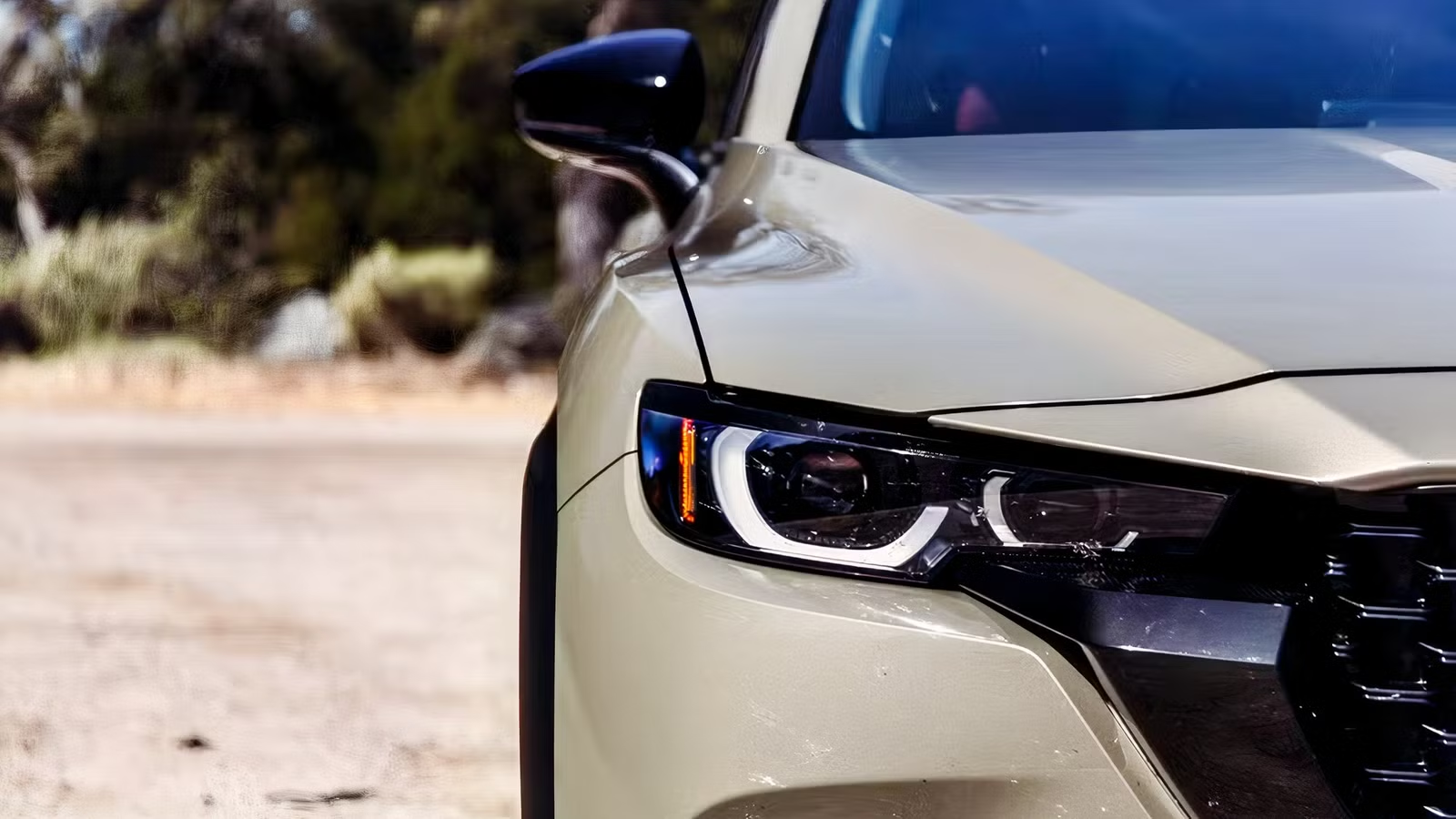
Headlights don’t sound like a safety story until you remember how much of real-world driving happens after dark, and how much of the IIHS’s evaluation weight has shifted toward exactly that. The 2026 Mazda CX-50’s headlight performance splits by trim. Turbo trims come with curve-adaptive LED projector headlights that earn a “Good” rating from the IIHS, the top mark available. Non-Turbo trims run static LED projectors instead, which earn an “Acceptable” rating. Both ratings clear the bar required for Top Safety Pick+, but they’re not identical, and Mazda’s own lineup makes that distinction visible rather than papering over it.
Why That Size Gap Is Worth Highlighting
2026 Mazda CX-50 rear fascia viewMazda
“Acceptable” to “Good” is a much narrower spread than the gap between a passing headlight grade and the “Marginal” or “Poor” scores that knock plenty of competitors’ trims out of TSP+ contention entirely. In other words, even the CX-50’s non-Turbo, lower-cost headlight setup is closer to best-in-class than it is to failing, while rival crossovers often have specific trims that miss the award altogether because of headlight performance alone.
Headlights are one of the most common single reasons an otherwise-competitive vehicle gets excluded from the IIHS’s top award, and it’s a detail few shoppers think to check. The CX-50’s split shows Mazda engineered enough margin into even its base lighting hardware that the whole lineup clears the threshold.
The CX-50’s Biggest Safety Advantage Has Nothing To Do With Its Price
The CX-50’s real advantage is that Mazda built its safety case the hard way: structural changes to protect rear passengers, a pedestrian detection system upgraded to meet harder standards rather than older ones, a driver-assist suite that isn’t rationed by trim level, and headlight hardware engineered with enough margin that even the “lesser” option still clears a demanding bar. None of that is about undercutting Lexus or Volvo on sticker price. It’s about matching their engineering priorities without asking buyers to pay a premium badge tax to access them.
Close-up shot of a 2026 Mazda CX-50 engine bayMazda
Here, the safety case doesn’t depend on how much you spend on a 2026 CX-50, and it’s proof a compact crossover doesn’t need a luxury emblem to earn it. For families cross-shopping this segment on the specific tests that actually predict real-world safety outcomes, that’s the detail worth remembering long after the spec sheet is closed.








No Comments