
The Long-Lasting Japanese Luxury SUV That Rarely Needs Repairs
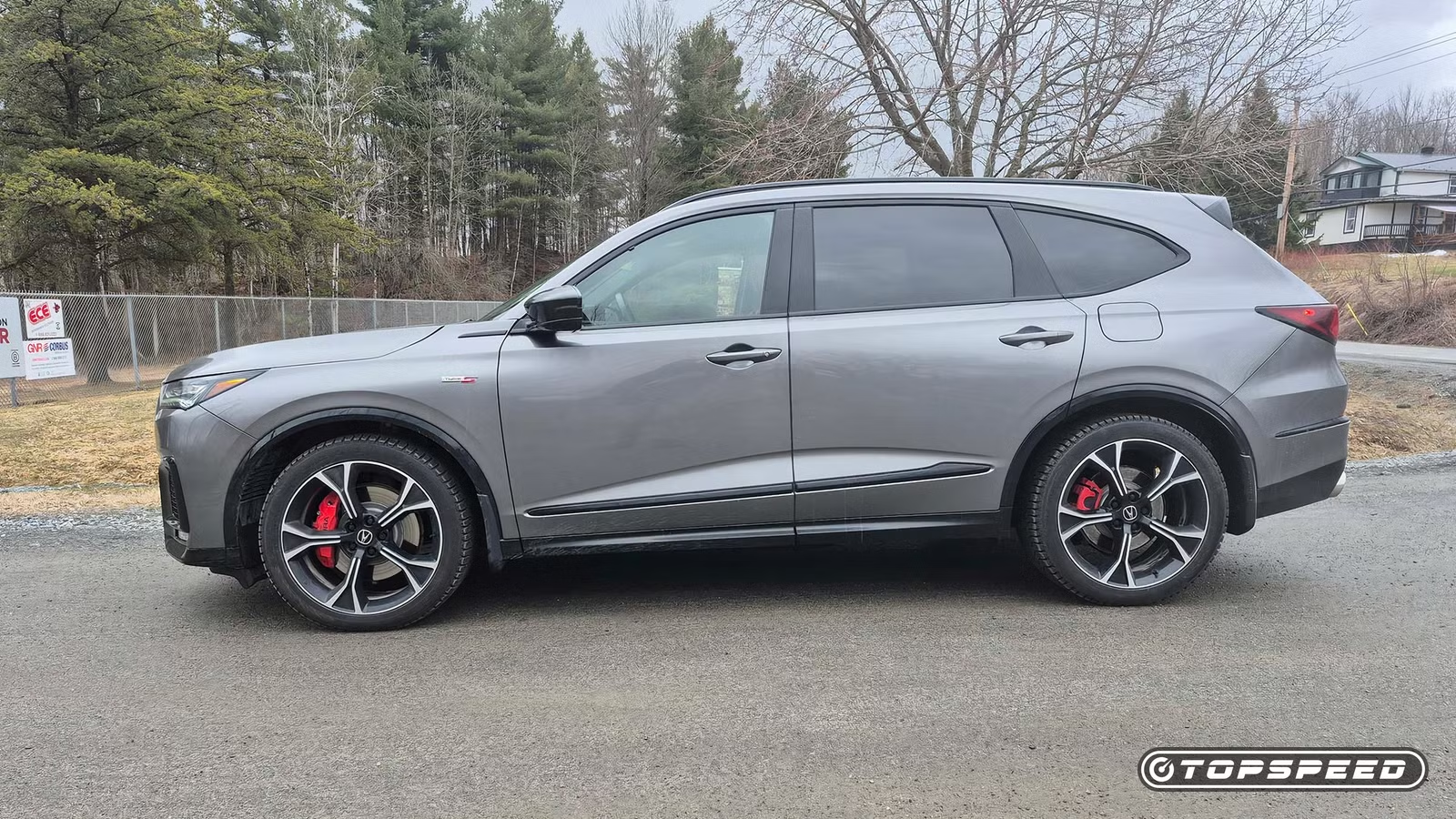
While BMW X5 owners average $1,200 in annual repairs and Mercedes GLE drivers face $1,500 yearly maintenance costs, there’s one luxury SUV whose owners spend just $571 annually—and it’s not the Lexus everyone assumes.

Few luxury SUVs have managed to balance dependability, comfort, and performance quite like this one. Since its debut in 2001, it has quietly built a legacy as one of the most reliable premium SUVs on the market, a vehicle that combines Honda’s engineering discipline with understated luxury. While German rivals often promise cutting-edge sophistication, this model’s appeal lies in its proven mechanics and long-term value. It’s a family SUV that doesn’t demand constant attention, making it a favorite among buyers who prize durability over flash.
What Makes Some Luxury SUVs Age Better Than Others
Long-term durability in the luxury SUV segment often comes down to restraint. The models that continue running smoothly well past the 200,000-mile mark are usually the ones that avoid overcomplicated engineering and instead focus on refinement, proven mechanicals, and consistent quality control. That balance is difficult to achieve in modern luxury vehicles, where excessive tech and highly stressed powertrains can sometimes create long-term ownership headaches.

A good luxury SUV stands out because it follows a different philosophy. Rather than constantly reinventing itself, it builds on a foundation of incremental improvements, conservative engineering, and meticulous assembly standards — an approach that Japanese luxury brands have become known for over the years.

Many luxury SUVs struggle today with simplicity in execution. Even with advanced technology onboard, drivers want systems that are generally intuitive and well-integrated rather than overly experimental. They value something that delivers luxury that still feels solid and dependable long after the novelty wears off.
How The Acura MDX Earned Its Bulletproof Reputation

The Acura MDX’s reliability didn’t happen by accident; it was engineered into every generation of the vehicle. Acura, Honda’s luxury division, has always leaned on Honda’s philosophy of “kaizen,” or continuous improvement. Each iteration of the MDX builds on the success of its predecessor without introducing unnecessary complexity. While competitors often chase trends with new turbocharged engines, dual-clutch transmissions, or intricate air suspensions, Acura has focused on refining its core mechanical systems. This conservative engineering approach means fewer things can go wrong, and that translates directly into fewer trips to the mechanic.

Owners frequently praise the MDX for its consistency over the years. According to multiple consumer reliability surveys, including those by J.D. Power and Consumer Reports, the MDX consistently scores above average for dependability. Even older models, some with over 200,000 miles, are still on the road, performing reliably with only routine maintenance. This long-term sturdiness has earned it a devoted following among families and commuters alike. When other luxury SUVs start showing their age, the MDX simply keeps doing what it was built to do.
Hondas/Acuras are reliable cars, I’ve driven many for decades, currently have two 2011 MDXs with 185k each and going strong. – Reddit user
Much of this reputation also comes from Acura’s refusal to over-engineer for the sake of prestige. The brand has always favored real-world usability over gimmicks. While others offer fragile adaptive suspensions and complex drivetrain setups, Acura keeps the MDX’s systems relatively straightforward yet robust. The result is a luxury SUV that feels sophisticated but never fragile. It’s the kind of vehicle you can confidently hand down to the next generation, knowing it’ll keep running smoothly for years to come. But the real surprise isn’t just how reliable the MDX is—it’s how Acura engineers built that reliability into a luxury package that costs less to maintain than its competitors.
The Luxury Hybrid SUV That Perfectly Balances Performance And Low Running Costs
A rare blend of speed, sophistication, and sensible ownership costs makes this hybrid SUV a standout in a segment often defined by excess.
200,000+ Miles Longevity: The 3.5-Liter V6 Engine That Refuses To Die

When your luxury SUV needs a new transmission at 80,000 miles, horsepower becomes irrelevant. What matters is whether your engine will still be running smoothly when your competitors are headed to the scrapyard. At the heart of the MDX’s longevity is Acura’s 3.5-liter naturally aspirated V6 engine, one of the most time-tested powerplants in the industry.

This engine design has evolved gradually over two decades, benefiting from Honda’s legendary engineering discipline. Producing between 290 and 295 horsepower depending on the model year, the V6 delivers smooth, effortless power without the added strain or maintenance complexity of turbochargers. Its simple yet durable architecture is key to why so many MDXs reach high mileages with minimal mechanical drama.
One of the major advantages of this engine is its proven reliability under real-world conditions. With proper maintenance, it’s not uncommon for owners to surpass 300,000 miles without major repairs. The use of an intelligent variable valve timing (i-VTEC) system ensures efficient combustion while reducing wear on internal components. Pair that with a sturdy torque converter automatic transmission and a time-tested all-wheel-drive system, and you have a powertrain that’s as durable as it is refined.

Even the hybrid variant of the MDX, which incorporates a 3.0-liter V6 paired with electric motors, was engineered with the same reliability ethos. Acura’s hybrid systems are known for being less intrusive and more seamlessly integrated than rival setups. Whether in traditional or hybrid form, the MDX’s drivetrain is built for longevity and ease of ownership. It’s not uncommon for service technicians to comment on how “unproblematic” the MDX is compared to other luxury models.
The Japanese SUV That Performs Better Than Most German Rivals
This Japanese SUV quietly challenges Germany’s performance SUV hierarchy by blending turbocharged V6 power, AWD precision, and real-world usability.
Inside The MDX’s Interior

Step inside an Acura MDX, and you’ll find a cabin that reflects both Japanese craftsmanship and long-term durability. The materials used throughout the interior, whether it’s soft-touch leatherette, genuine leather, or wood trim, are chosen not just for luxury appeal but also for how well they age. Many MDX models from the early 2010s still retain their premium feel today, with seats that haven’t sagged and controls that still operate like new. It’s this sense of enduring quality that distinguishes Acura from many European rivals, whose interiors often show wear after only a few years.
Acura’s design philosophy favors function and refinement over extravagance. The buttons, switches, and displays are built to last, avoiding fragile capacitive controls that tend to fail or date quickly. This balance of physical and digital interfaces has helped the MDX age gracefully. The seats are another highlight, bolstered for comfort during long drives yet firm enough to maintain their shape over time. Even the climate control and sound insulation systems are engineered to withstand years of use without deteriorating performance.
The MDX Also Prioritizes Practical Luxury

It’s a three-row SUV that genuinely accommodates families without sacrificing refinement. The leather upholstery resists cracking, the headliner doesn’t sag, and even small details like the tactile feel of the steering wheel and door handles show Acura’s attention to long-term usability. Where some luxury cabins feel indulgent but fragile, the MDX’s interior delivers the kind of robust sophistication that makes it feel timeless, not just trendy.
2026 Acura MDX Interior Dimensions
|
Headroom (front/second row/third row) |
38.5 inches / 38.1 inches / 36.2 inches |
|---|---|
|
Legroom (front row/second row/third row) |
41.6 inches / 38.5 inches / 29.1 inches |
|
Shoulder Room (front row/second row/third row) |
61.9 inches / 60.3 inches / 55.2 inches |
|
Hip Room (front row/second row/third row) |
59.3 inches / 57.8 inches / 40.6 inches |
|
Cargo Space (all seats in place/all seats folded) |
18.1 cubic feet / 95 cubic feet |
Technology That Endures
Acura’s Approach To Simple, Sustainable Innovation

In an era where luxury vehicles often overload their dashboards with tech gimmicks, Acura takes a more sustainable approach. The MDX features advanced driver assistance systems and infotainment technologies, but Acura’s focus is always on reliability and ease of use. Rather than chasing the bleeding edge of innovation, Acura refines existing systems to ensure long-term functionality. This philosophy results in technology that stays relevant and operational well into the SUV’s later years, without the software glitches or hardware failures that plague more experimental systems.

For example, Acura’s infotainment interfaces, though sometimes criticized for being conservative, rarely malfunction or become obsolete quickly. Regular software updates and simple architecture mean owners can enjoy consistent performance for years. Acura’s ELS Studio audio systems, developed in partnership with Grammy-winning engineer Elliot Scheiner, are another testament to longevity, offering audiophile-grade sound quality. Even features like adaptive cruise control and lane-keeping assist are implemented with reliability in mind, using sensors and hardware that are proven rather than experimental.
This pragmatic approach also reduces repair costs significantly. Whereas brands like BMW or Mercedes may charge thousands for malfunctioning infotainment modules or failing radar sensors, Acura’s systems are easier to maintain and replace. The brand’s restraint in adopting untested features ensures that MDX owners can enjoy technological sophistication without worrying about future repair bills. In short, Acura has mastered the art of building tech that enhances ownership instead of complicating it, a rare trait in today’s luxury SUV market.
Review: 2025 Acura ZDX Had Me Scratching My Head, But Not Because It’s Bad
Joint ventures can lead to great things. In the Acura ZDX’s case, the feelings are mixed.
The MDX Beats The Competition In Real-World Ownership Costs

Perhaps the most impressive testament to the MDX’s design philosophy is how well it holds up in real-world ownership. According to repair cost analyses from sources like RepairPal and Edmunds, the Acura MDX consistently ranks among the lowest in annual maintenance costs for luxury SUVs.
Maintenance, Safety, And Reliability Snapshot
- Annual Maintenance: $571 (RepairPal)
- 10-Year Maintenance: $10,565 (CarEdge)
- Reliability Scores: 4/5 (RepairPal), 77/100 (JD Power, 2026 model year), 7.6/10 (iSeeCars)
- Recalls: 0 (2026 model year), 2 (2025 model year)
- Safety Scores: 5-Star (2026 model year), 5-Star (2025 model year)
Its average repair cost sits well below those of rivals like the BMW X5, Mercedes-Benz GLE, or Audi Q7. The difference isn’t just in cost, it’s in frequency. MDX owners visit the shop less often, and when they do, repairs tend to be minor and affordable.

This translates to long-term savings that extend beyond the initial purchase. Because the MDX maintains high reliability ratings and lower depreciation rates, it offers stronger resale value than many of its European peers. Buyers shopping for a used luxury SUV often find that older MDXs are still commanding premium prices, a reflection of their durability and desirability. For families and professionals who plan to keep their SUV for a decade or more, that means thousands of dollars saved in both maintenance and depreciation.
2026 Acura MDX Edmunds’ True-Cost-To-Own Figures
|
Year 1 |
Year 2 |
Year 3 |
Year 4 |
Year 5 |
Total |
|
|---|---|---|---|---|---|---|
|
Insurance |
$718 |
$743 |
$769 |
$796 |
$824 |
$3,850 |
|
Maintenance |
$268 |
$556 |
$481 |
$2,296 |
$930 |
$4,531 |
|
Repairs |
$0 |
$0 |
$0 |
$379 |
$580 |
$959 |
|
Taxes & Fees |
$4,911 |
$37 |
$37 |
$37 |
$37 |
$5,059 |
|
Financing |
$4,257 |
$3,436 |
$2,554 |
$1,604 |
$582 |
$12,433 |
|
Depreciation |
$11,141 |
$6,652 |
$5,434 |
$6,093 |
$5,325 |
$34,645 |
|
Fuel |
$2,542 |
$2,618 |
$2,697 |
$2,778 |
$2,861 |
$13,496 |
|
True Cost to Own® |
$23,837 |
$14,042 |
$11,972 |
$13,983 |
$11,139 |
$74,973 |
*Based on a five-year estimate with 15,000 miles driven per year
In practical terms, the MDX is built for owners who value peace of mind. It’s not trying to be the flashiest SUV on the block, nor is it chasing records for horsepower or lap times. Its purpose is simpler and arguably more important: to deliver reliable luxury year after year. That’s what separates the Acura MDX from the competition. It’s a luxury SUV that feels good to drive, comfortable to own, and most importantly, built to last.
Sources: Acura, Edmunds, J.D. Power, iSeeCars, Repairpal, CarEdge

Related posts




Latest Post


No Comments