
Lexus Now Sells The ES As Both A Hybrid And A Full EV — Here’s What That Means For Luxury Sedan Buyers
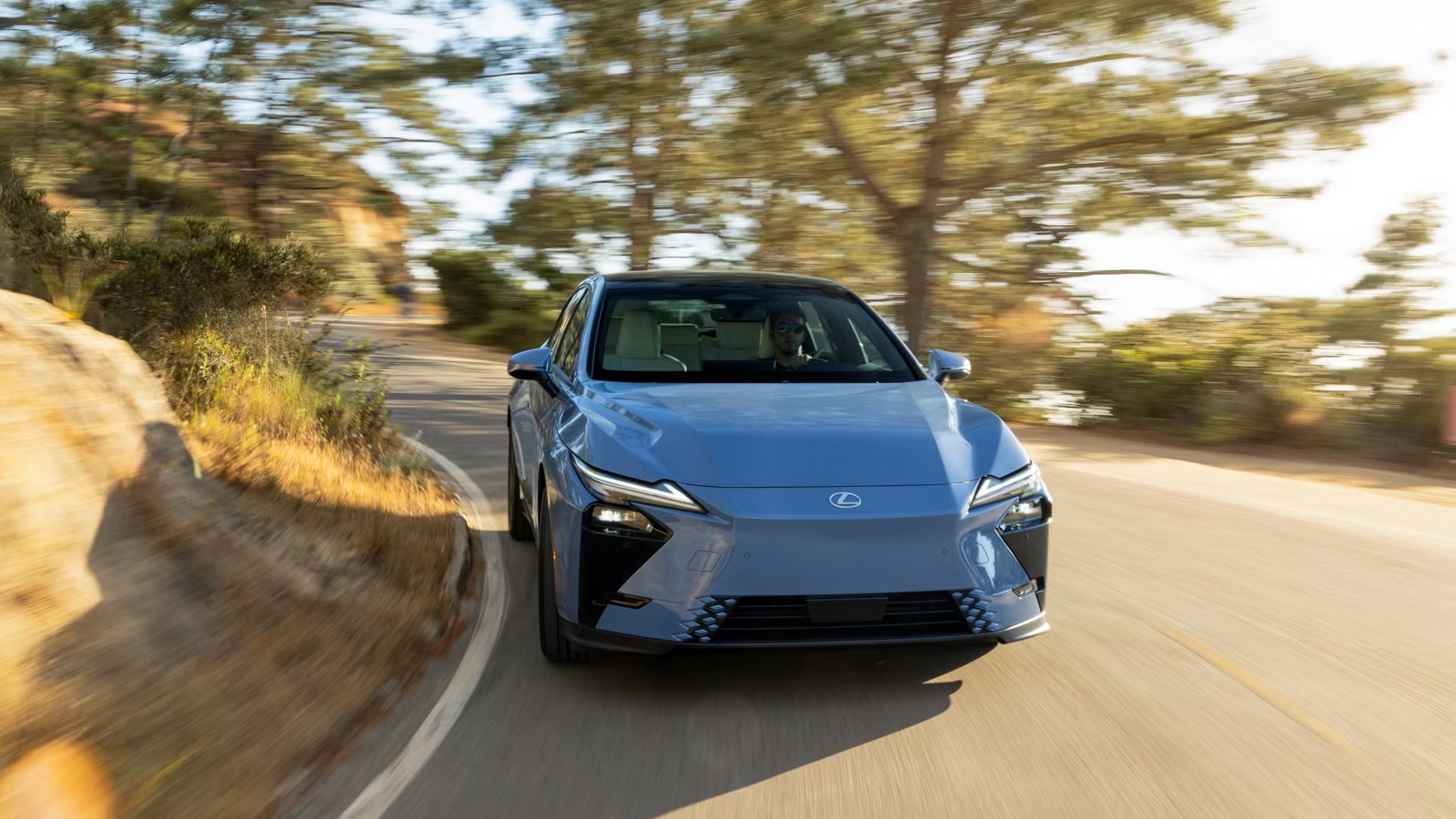
Lexus is selling the ES in two genuinely different forms right now — a proven hybrid and a fully electric variant — and a Detroit News road test published this morning put both through their paces on the same roads. The result is one of the cleaner buyer-decision moments in mainstream luxury: same nameplate, same cabin refinement, two completely different ownership realities.

The choice isn’t just about fuel versus electrons. Range anxiety, home-charging access, commute patterns, and upfront cost all push different buyers toward different answers. Here’s what the real-world comparison actually reveals.
Two Powertrains, One Model Line — What Lexus Is Actually Offering
The ES has long been Lexus’s volume luxury sedan, built on a platform shared with the Toyota Camry but tuned for a quieter, more isolated driving experience. For 2026, Lexus is offering two electrified paths: the ES 350h, a conventional hybrid pairing a 2.5-liter four-cylinder with an electric motor for a combined output around 215 horsepower, and the ES 500e, a battery-electric sedan with instant torque delivery and a targeted EPA range in the 280-to-300-mile neighborhood.

The hybrid carries no charging requirement and no range ceiling beyond a standard gas tank. The EV delivers stronger off-the-line acceleration and can be fueled entirely at home — but only if home charging is actually available to you. Lexus isn’t positioning one as superior; the bet is that buyers will self-select based on how they actually live.
Real-World Performance: Where Each Version Wins

The Detroit News test found the ES 500e noticeably quicker in everyday driving — the electric motor’s instant torque makes city traffic and highway on-ramps feel effortless in a way the hybrid’s stepped power delivery doesn’t quite match. For buyers who spend most of their time in urban or suburban traffic, that difference is tangible every single day.
The ES 350h, by contrast, is the smoother long-distance companion. Its hybrid system is mature and well-calibrated; the transition between gas and electric power is nearly imperceptible, and the car returns real-world fuel economy in the 42–44 mpg range on mixed driving. That translates to roughly 550 miles of total range on a full tank — a number no battery-electric luxury sedan currently touches.
Charging Reality vs. Fill-Up Convenience

This is where the two cars diverge most sharply for real buyers. The ES 500e supports DC fast charging, and a 10-to-80-percent charge takes roughly 30 minutes at a compatible fast charger. For drivers with a Level 2 home charger, overnight charging is straightforward — plug in before bed, wake up to a full battery. If your daily commute is under 60 miles round-trip, you may rarely touch a public charger at all.
For road trips, the math shifts. The hybrid’s 550-plus-mile range and three-minute fill-up time make it the practical choice for anyone regularly driving beyond 250 miles in a day. The EV requires planning — identifying fast-charger locations along the route and building in 30-minute stops. That’s manageable for occasional long drives, but it’s a real lifestyle adjustment for frequent highway travelers. Buyers without access to home charging should weigh this carefully; relying entirely on public infrastructure adds friction that the hybrid simply doesn’t have.
Cost to Own: Upfront Price vs. Long-Term Fuel Savings

The ES 350h starts at a lower price point than the ES 500e — the EV commands a premium that typically runs several thousand dollars higher for comparable trim levels. Over time, electricity costs can offset that gap. At average U.S. residential electricity rates, fueling the ES 500e at home costs roughly $3–4 per 100 miles. The hybrid, at 42 mpg and current national gas prices near $3.20 per gallon, runs about $7.60 per 100 miles. For a driver covering 15,000 miles annually, that’s a potential savings of $500–$650 per year on fuel alone — meaningful, but it takes several years to close the upfront price difference.
Maintenance also favors the EV over time: no oil changes, fewer brake replacements thanks to regenerative braking, and a simpler drivetrain. The hybrid still requires conventional oil service and has more mechanical complexity than the EV, though its long-term reliability record in the ES is well established.
Which Buyer Should Choose Which Version

The ES 350h is the right call for buyers who regularly drive long distances, live in apartments or homes without easy charging access, or simply want zero range anxiety without changing any habits. It’s also the lower-risk entry point for buyers curious about electrification but not ready to commit to EV ownership logistics.
The ES 500e makes the most sense for buyers with a home charger — or the ability to install one — who drive predictable daily routes under 200 miles. The lower running costs, stronger acceleration, and the simplicity of never stopping at a gas station are genuine advantages for that lifestyle. It’s also worth noting that the EV version positions the ES against a growing field of electric luxury sedans from BMW, Mercedes-Benz, and Genesis, where instant torque and technology features matter to buyers cross-shopping the segment.
Lexus’s dual-powertrain strategy is a pragmatic read on where the luxury sedan market actually is right now: some buyers are ready for full electrification, many aren’t, and a single model line that serves both without forcing a compromise is a more honest answer than pushing everyone toward one technology.

Related posts



Latest Post


No Comments