The Lexus Sedan That Just Beat Every EV And German Rival On Dependability
11 minutes reading
Monday, 31 Aug 2026 16:00 0 32 autotech
For the most part, tech in both the mainstream and luxury car markets today has all but taken over. We have bigger screens, more computers controlling powertrain and suspension functions, and hybrid and EV technology is no longer a niche. For all the good things about this, though, comes a downside.
There is more to go wrong. Recent studies have blamed the reliance on technology in the auto market as a leading contributor to reliability problems. However, Lexus is doing things a little differently, and this sedan beats every new EV and luxury rival in terms of reliability.
Front 3/4 view of a 2026 BMW i7 xDrive60 parkedIsaac Atienza | TopSpeed
The modern luxury car is less a machine with a computer in it and more a computer with four wheels attached. For most functions, technology is now involved, whether that be engine or powertrain speed, gear shifts, or just around the cabin for entertainment. Take the new BMW i7: you get a massive curved display, a huge 31.3-inch rear Theater Screen, electrically adjustable seats, climate control, ambient lighting, air suspension, and driver assistance—all of which depend on networks of control modules, sensors, and software.
Even the hardware outside is increasingly electronic, with adaptive lighting, cameras, and a managed chassis system needing input from a computer. It makes the i7 exceptionally capable, but it also shows how quickly the list of things that have to work has grown. A mechanical failure is one thing; a software glitch, failed sensor, control module, or communication fault can potentially affect an entirely different part of the car.
All That Tech Is Creating A New Kind Of Reliability Problem
Shot of 2025 Lucid Gravity DashboardWilliam Clavey | TopSpeed
According to the 2026 U.S. Vehicle Dependability Study (VDS), technology is no longer just something that can go wrong; it is increasingly shaping how we perceive a vehicle’s reliability in the first place. The study says that our perceptions of dependability are increasingly being influenced by technology performance and software glitches, with infotainment remaining the study’s most problematic category at 56.7 problems per 100 vehicles (PP100).
The study also mentions how phone integration accounts for a lot of problems, with Apple CarPlay and Android Auto accounting for 8.9 PP100, Bluetooth systems accounting for 5.5 PP100, wireless charging pads accounting for 5.1 PP100, and OEM app connectivity accounting for 4.7 PP100. Problems have also increased across all electrified powertrain types, with PHEV powertrains accounting for 281 PP100, BEV systems accounting for 237 PP100, and hybrid systems accounting for 213 PP100.
Front 3/4 action shot of 2025 Lucid Gravity drivingWilliam Clavey | TopSpeed
On the other hand, though, gas-powered vehicles are seeing slightly better reliability rates and have actually improved in terms of long-term dependability. The study says that gas-powered vehicles have slightly improved by two PP100, and now account for 198 PP100. It may still seem high, but it still makes the humble gas engine the most dependable over the long term.
The Lexus IS Is Quietly Beating The Luxury Field
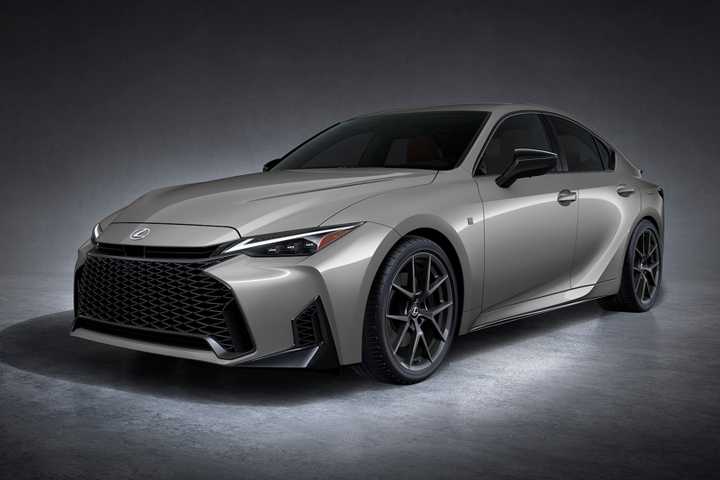
Front 3/4 shot of 2026 Lexus IS 350 F SPORT parkedLexus
Maybe looking back a bit or not rushing to the next best thing pays dividends then? The 2026 Lexus IS sedan proves that in spades. Long known for its Lexus-grade eye for detail, calm and luxurious cabin, and understated sporty character, this Lexus sedan is making a comeback at the moment and has seen a massive surge in sales.
Lexus Scored 151 PP100, While The Industry Average Hit 204
Profile shot of 2026 Lexus IS 350 F SPORT parkedLexus
Lexus has always been seen as one of the most reliable brands on the market, and once again, they have proved themselves as being the top of the top. According to the same 2026 VDS, the market average is 204 PP100; Lexus models experience only 151. This makes Lexus the brand with the fewest problems, whether luxury or mainstream, for the fourth year running.
The closest brand to Lexus is Buick, which experiences 160 PP100, while the likes of Porsche, BMW, Mercedes-Benz, Audi, and Volkswagen all experience far more problems per 100 vehicles. Porsche, 182 PP100; BMW, 198 PP100; Mercedes-Benz, 235 PP100; Audi, 244 PP100; and Volkswagen, 301 PP100.
The IS Takes The Top Spot Among Every Model
Front 3/4 shot of 2026 Lexus IS 350 F SPORT parkedLexus
J.D. Power ranks the Lexus IS as the most dependable vehicle model in 2026, and despite its luxurious breeding, that means it beats highly regarded models like the Toyota Corolla, the Honda Civic, the Kia Forte, the Toyota Camry, and the BMW 3 and 4 Series.
Models like the 2026 Tesla Model 3 are rated highly on J.D. Power for reliability, at 82 out of 100; the 2026 3 Series gets 81 out of 100; the 2026 BMW 4 Series gets 84 out of 100; and the 2026 Porsche Macan gets 78 out of 100. The 2026 Lexus IS is rated 91 out of 100 on J.D. Power and is rated 4.5 out of 5 for dependability on Kelley Blue Book, with 83 percent of owners saying they’d recommend buying one. The numbers don’t lie — but they raise a bigger question: how did Lexus pull this off while every rival was racing to add more tech?
Lexus Won By Refusing To Chase The Tech Arms Race
Shot of 2026 Lexus IS 350 F SPORT interior showing front cabinLexus
The V8-equipped Lexus IS, the IS 500, is no longer, and all 2026 IS models are 350 models. While the luxury market has taken full advantage of the evolution of turbo tech, Lexus has refrained from it here. The new IS 350 lineup is equipped with a naturally aspirated 3.5-liter 2GR-FKS V6, good for 311 horsepower at 6,600 rpm and 280 pound-feet of torque at 4,800 rpm.
The engine gets DOHC, VVT-iW on the intake, and VVT-i on the exhaust; most importantly, there is no turbocharger or hybrid system to complicate things and less to go wrong. The 2GR engine family is exceptionally tested; having been in service for around 20 years now, it has been refined over the years, and the Toyota D-4S injection system features both direct and port injection, which helps to avoid some of the carbon buildup of direct-injection-only mills.
EVs And PHEVs Are Getting Buried Under Software And Feature Bloat
Close-up shot of 2026 Lexus IS 350 F SPORT rearLexus
If you look at something like the Tesla Model 3, its minimalist cabin puts a huge amount of the car’s functionality into the central touchscreen, while software controls everything from navigation and media to climate functions and a growing list of driver-assist features.
The 2026 Toyota Prius PHEV takes a different route but is heading in the same general direction, with connected services, Intelligent Assist, OTA updates, Advanced Park, a panoramic-view monitor, and a 12.3-inch multimedia display on the higher trims. With all the added gear, even in the mainstream market, it is easy to see why the VDS points to an abundance of technology as a driver of more problems. There is simply so much more that has to work correctly for basic functions to operate.
Shot of 2026 Lexus IS 350 interior showing front cabinLexus
In comparison, the 2026 Lexus IS is hardly stuck in the past, but it does things slightly differently. This year’s model gets a 12.3-inch Lexus Interface, a 12.3-inch digital instrument cluster, wireless smartphone connectivity, and Lexus Safety System+ 3.0 as standard. This includes Pre-Collision System, Dynamic Radar Cruise Control, Lane Departure Alert, and Road Sign Assist. There is also available navigation, a 10-speaker Premium Sound System, and a HUD.
However, Lexus has been careful about what gets added and where. The displays sit within a cockpit designed around you driving, and visibility, hands-on operation, and keeping you focused on the road take priority over making things look flashy. The touchscreens provide ample space for navigation, vehicle information, and other functions, but they do not attempt to make every aspect of the car dependent on them.
Close-up shot of 2026 Lexus IS 350 F SPORT front cabinLexus
That means you get a cabin that feels modern without falling into the trap of making tech the centerpiece. You can use the digital features when you want, but the car does not constantly demand your attention. That kind of philosophy extends beyond the screens as well, right down to the way Lexus handles the controls.
The Buttons Everyone Said Were Outdated May Have Been The Smarter Choice
Close-up shot of 2026 Lexus IS 350 F SPORT center consoleLexus
The new IS also retains something that has become rare in the market: a proper collection of physical controls. On the center console, there is still a reassuring amount of hardware you can actually touch, rather than a blank expanse of glossy plastic. It may not sound revolutionary, but that means not everything is buried inside a touchscreen menu.
The new IS keeps push-button start and dedicated physical controls, while the center console provides a proper place for your phone, wireless charging, and USB-C connectivity rather than trying to make the touchscreen responsible for everything.
2026 Lexus IS interior shotLexus
The reason this matters: a physical control does not need a software update, does not disappear because you are on the wrong screen, and does not make you look away from the road to find it. Not only is it useful, but it also fits Lexus’ Takumi mastery, which is built around obsessing over small details and continually improving them, rather than adding complexity simply because the tech exists.
Lexus has not rejected modern technology, but it has drawn a line between technology that genuinely improves the experience and technology that merely makes the spec sheet look impressive.
The Lexus IS Is Proof That Boring Cars Might Outlast The Future
Compared to some of the most tech-laden cars on the market, the 2026 IS 350 may seem a little ‘boring’ on the spec sheet. Horsepower and torque output are not particularly impressive compared to the likes of the new M340i, which is equipped with a 386-horsepower/398-pound-foot mild-hybrid 3.0-liter turbo-six that gets you to 60 mph in as little as 3.8 seconds. The new IS 350 can hit 60 mph in around 5.9 seconds.
You can get the new IS as the IS 350 F SPORT DESIGN or the IS 350 F SPORT, both with either rear-wheel drive or all-wheel drive. The F SPORT DESIGN is the more basic setup but still gets you the 3.5-liter V6, while the F SPORT is equipped with Lexus’ Adaptive Variable Suspension (AVS), which gets you continuously adjusting damping to balance ride comfort with sharper handling when you want to push it.
Rear shot of 2026 Lexus IS 350 F SPORT parked in desertLexus
The cabin may not look the most modern, and you do not get all the advanced features of some of its rivals, but you do get a refined, calm aesthetic that has come to define the luxury Japanese marque. While luxury sedans do not always have the best reputation for dependability, Lexus is something different, and its dedication to refinement and not chasing trends seems to be paying dividends while future-proofing the Lexus IS.
According to iSeeCars, the average lifespan of a 2026 Lexus IS 350 is 180,628 miles or approximately 16.8 years. They have also rated it the most reliable small luxury car and the most reliable small luxury car for under $50,000, and rated it 8.7 out of 10 for reliability. In comparison, the 2026 BMW 3 Series is rated 7 out of 10 and has an average lifespan of 120,850 miles; the BMW 4 Series has a 6.9 out of 10 reliability rating and an average lifespan of 116,962 miles; and the new Rivian R1S has a J.D. Power reliability rating of 69 out of 100.
Front shot of 2026 Lexus IS 350 F SPORT parkedLexus
The 2026 Lexus IS 350 will not win the showroom arms race, and frankly, that may be missing the point. While rivals pile on power, software, and increasingly complicated ways of doing familiar things, Lexus has spent its time refining a formula that has long proven itself.
The naturally aspirated V6 isn’t chasing outrageous power, the cabin isn’t trying to be a smartphone, and the engineering isn’t constantly reaching for the next big trick. It is simply a well-proven car, thoughtfully developed and deliberately uncomplicated—in 2026, that might be a much better way to build a car that will last a long time.
Base Trim Engine
3.5-liter V6
Base Trim Transmission
8-Speed Automatic
Base Trim Drivetrain
Rear-Wheel Drive
Base Trim Horsepower
311 HP @6600 RPM
Base Trim Torque
280 lb.-ft. @ 4800 RPM
Make
Lexus
Model
IS
Segment
Compact Luxury Sedan
Sources: Lexus, J.D. Power, Kelley Blue Book, and iSeeCars.









No Comments