
The Jeep That Does Wrangler Things Without Wrangler Prices
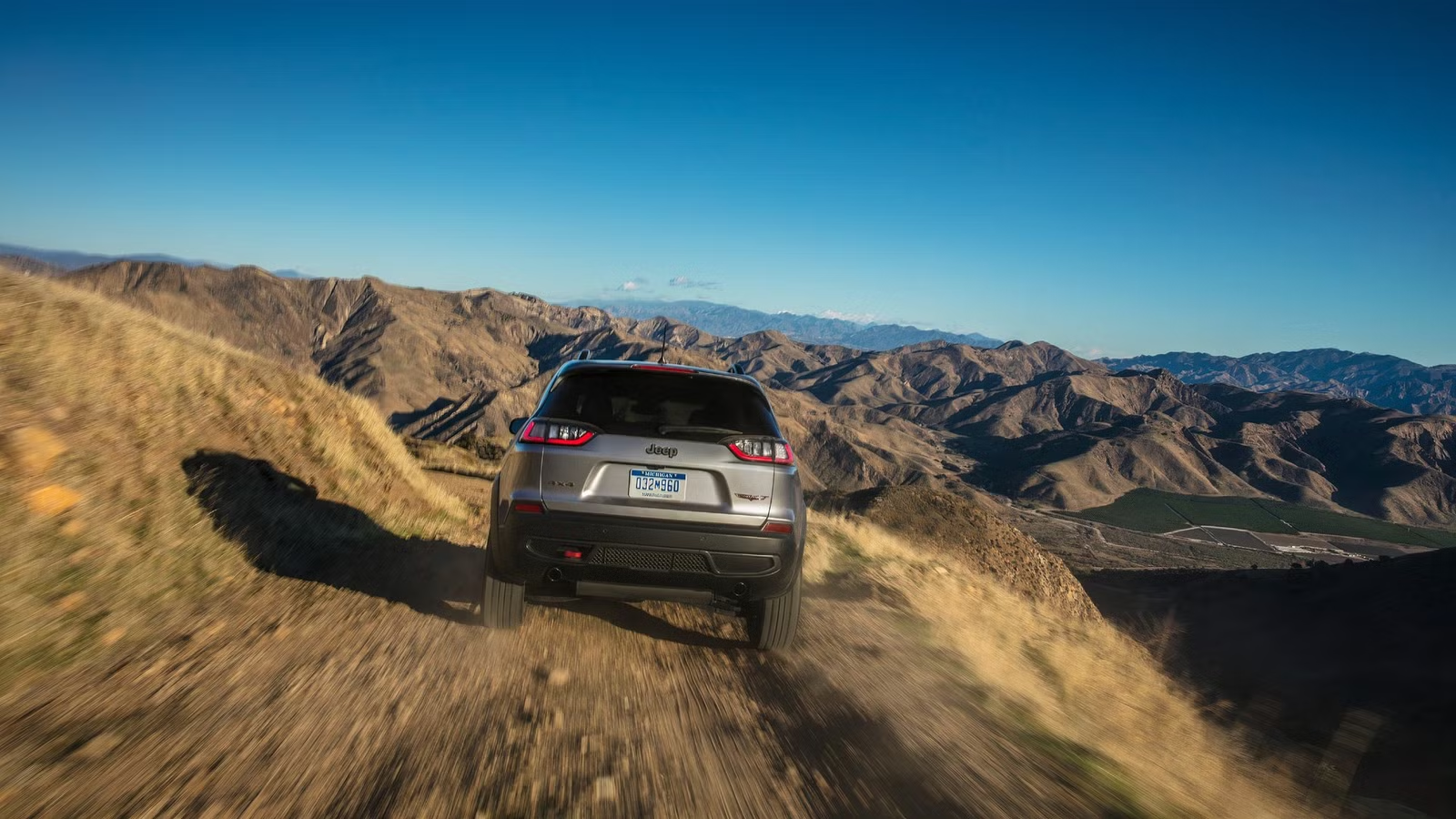
Up there with Ford and Chevrolet, Jeep is one of the most well-respected American brands still in existence. Because of that, a lot of them are still in the hands of their original owners, and many more sit on the used market waiting to be taken back out on the trails and in the woods.

The Willys-era models and the Wrangler are by far the most iconic Jeep names, and they get the most attention from off-road aficionados and seven-slot fans. However, the overlooked Cherokee still offers what Jeep does best.
Some Used SUVs Are Better Bargains Than Their Reputation Suggests
A Jeep badge may be one of the go-tos for an old off-roading SUV, but the used market is still full of overlooked models that can get you out on the trails without breaking the bank. Some are ready to go, but don’t have the badge or the cult following that makes them as easy to recommend as many Jeeps.

Take the 2011–2015 Nissan Xterra PRO-4X; it gets a 261-horsepower 4.0-liter V6, low-range gearing, Bilstein shocks, and an electric locking rear differential. Today, you can pick one up for between $10,000 and $18,900.
Likewise, the 1998–2002 Subaru Forester is a different sort of bargain. It is equipped with a 2.5-liter boxer engine with standard AWD, a five-speed manual with a 50:50 torque split viscous center differential, and around 7.5 inches of ground clearance. Today, used prices are in the $1,600 to $3,600 ballpark.
Depreciation Can Put Serious Off-Road Capability Within Reach

CarEdge says the average SUV holds around 49 percent of its value at five years old, and around 30 percent at around ten years old. So, unless you have your eye on something collectible like a first-gen Bronco or G-Wagen, you should see some real off-road SUVs fall in price over the first couple of years.
According to Kelley Blue Book, the 2021 Ford Bronco Sport has an average used price of $22,500, while a four-door Bronco Wildtrak has an average used price of just $36,500, down from $50,970. Even a top-tier 2021 Land Rover Defender 110 X has dramatically fallen in price from $84,250 originally to $44,900. Here, you get luxury and serious off-road guts.
The Jeep Cherokee Has More Than A Seven-Slot Grille

The Cherokee is often overlooked in favor of the Grand Cherokee and the Wrangler. However, today, you can get a 2020–2022 Jeep Cherokee with all its hardware and off-road gear for much less than you can buy a lot of other used Jeeps.
The V6 And Trailhawk Hardware Give It Real Capability

The fifth-generation Cherokee may look slightly like a soft-roader, but it gets a good amount of poke to make up for it. Between 2020 and 2022, a 270-horsepower/295-pound-foot 2.0-liter DOHC turbo-four was originally an optional upgrade to a 180-horsepower 2.4-liter NA Tigershark MultiAir inline-four. The real engine you should consider, though, is the 3.2-liter Pentastar V6 available for Cherokee models.
This unit churns out 271 horsepower and 239 pound-feet of torque, and allows you to tow up to 4,500 pounds. In the most off-roady flavor, the Cherokee Trailhawk, power is routed through a nine-speed automatic. You also benefit from proper trail-rated gear hidden beneath the relatively gentle facade. The Trailhawk is equipped with Selec-Terrain Management, Select-Speed Control, which acts as low-speed off-road cruise control, tow hooks, and skid plates.
Real 4WD Without Wrangler Prices

Unlike many SUVs today, you get a proper 4WD system, not AWD. The Cherokee Trailhawk gets Jeep Active Drive Lock, which includes a real mechanical rear locker, a two-speed transfer unit with 4-low, and a neutral switch, which means it can be towed behind an RV, if you are reserving it just for off-road duties.
The best bit: Kelley Blue Book says a 2020 Cherokee Trailhawk has an average used price of $17,100, while the 2021 and 2022 models have average used prices between $17,000 and $20,900. Today, a 2020–2022 Wrangler has average used prices of between $19,750 and $31,000.
The Right Cherokee Can Deliver More SUV For The Money

According to J.D. Power, the 2020 Cherokee has an overall rating of 84 out of 100 and a reliability rating of 87 out of 100, and the 2021 model, 83 out of 100 overall and 85 out of 100 for reliability. The 2022 model isn’t rated on J.D. Power, but 65 percent of owners on Kelley Blue Book recommend it and rate it 3.8 out of 5 overall. For true off-road hardware and a badge many off-roaders would be proud of, the Cherokee does offer good value for money.
Which Cherokee Engines And Model Years Are Worth Hunting Down?


The 3.2-liter Pentastar V6 in the Cherokee is prone to oil filter leaks, cam lobe wear, high oil consumption, and at high mileage, timing chain stretch. Despite that, it is still a useful, durable mill that should last some time with proper care. However, when it comes to used Cherokees you should keep an eye out for, there is one that stands out the most: the legendary Cherokee XJ.
Introduced in 1984, the XJ has become one of the most iconic Jeeps outside the Wrangler. Classic.com says the average auction price today is still an affordable $12,682, with the highest recent auction reaching $38,000 for a mint-condition one. Would it be worth it, despite the older tech? Yes, especially if you find a ’91-onward model with the 4.0-liter AMC inline-six fitted.
These engines are good for over 300,000 miles and put out a respectable 190 horsepower and 225 pound-feet of torque. You also get a solid front axle, a traditional leaf-spring solid rear axle, either Command-Trax (NP231) part-time 4WD or Selec-Trac (NP242) full-time 4WD, and a compact, body-on-frame construction.
A Used Fifth-Gen Jeep Cherokee Is Worth Serious Consideration

So, it may not be the poster-boy Wrangler or the classic XJ, but a Cherokee from the last few years still makes for a savvy choice. This is most true if you don’t mind not having a more rounded look to your off-road SUV.
The 2020–2022 Cherokee was never the most tech-forward iteration, and you get a relatively small 7- or 8.4-inch touchscreen as standard and wired phone connectivity. The cabin is more functional than fancy, and, for the most part, durable fabric seating is standard fare. Storage capacity, though, is more than adequate, at 54.7 cubic feet, while hidden underfloor cargo compartments and a covered top-dash bin make it easy to keep the cabin looking tidy.
You are probably not going to get the nods of approval and a duck appearing on the hood like you would with a Wrangler, but for undercover off-road prowess and a hardy, useful build, a used Cherokee offers a lot that more popular models don’t.
Sources: Jeep, Classic.com, J.D. Power, Kelley Blue Book, and CarEdge.

Related posts



Latest Post


No Comments