
The Japanese V8 Coupe That Delivers Porsche 911 Thrills Without The Service Calendar
Every conversation about elite sports car ownership eventually arrives at the same uncomfortable topic: the service calendar. Buy the wrong car and every calendar reminder starts to feel like a bill in disguise. Lexus has spent two decades building a reputation for making that stress disappear entirely, and it has done so while keeping one of the last naturally aspirated V8s in its segment alive. That reputation gets tested directly against Porsche’s most iconic sports car, and the results are not what most enthusiasts expect.
The Real Cost Of Owning A Modern Performance Car

Sports car ownership sells itself on the test drive and collects on the invoice. High-revving engines, track-tuned suspensions, and motorsport-derived components all come with a maintenance philosophy attached, one built around strict factory intervals rather than the loose, whenever-it’s-convenient scheduling most drivers are used to. European performance brands in particular have built entire service cultures around this idea, treating maintenance as a non-negotiable part of ownership rather than an afterthought. Owners who buy in are typically well aware of what they are signing up for. Those who are not tend to find out the hard way, usually around the second or third trip to the dealership.
None of this makes those cars worse. It simply means the true cost of entry extends well past the sticker price on the windshield, into a calendar of appointments that can run into the thousands of dollars every single year regardless of how the car is actually driven. For buyers chasing a specific kind of driving experience—a high-revving engine, sharp responses, real mechanical feedback—that calendar becomes part of the deal whether they want it or not. The assumption has always been that this tradeoff is unavoidable, that genuine performance simply demands genuine upkeep. That assumption turns out to be only half true.
An Unlikely Rival Offers The Same Engine Character Without The Stress


One manufacturer with almost the opposite reputation has quietly been building a case against that assumption for years. Better known for bulletproof sedans and SUVs that owners drive for a decade without drama, this brand has never been the first name that comes up in conversations about visceral, high-revving performance. Yet buried in its lineup sits a coupe built around a genuinely old-school engine—naturally aspirated, high-revving, and completely uninterested in the turbocharging and electrification trend that has swallowed most of its rivals. It has stayed in production almost entirely because enough people quietly wanted exactly that engine badly enough to keep buying it.
That combination, a dependability-obsessed brand attached to a genuinely characterful engine, is rarer than it sounds. Most manufacturers chase one reputation or the other, not both. Building an engine with real personality tends to mean accepting some amount of extra maintenance complexity as the cost of admission, while building for pure dependability tends to mean smoothing away exactly the kind of mechanical character enthusiasts crave. This particular coupe manages to sit in the middle of that tradeoff, delivering an engine experience that punches well above its badge’s reputation for excitement, without asking owners to accept the ownership stress that usually comes attached to it.
The Lexus LC 500 Keeps A Dying Breed Of V8 Alive

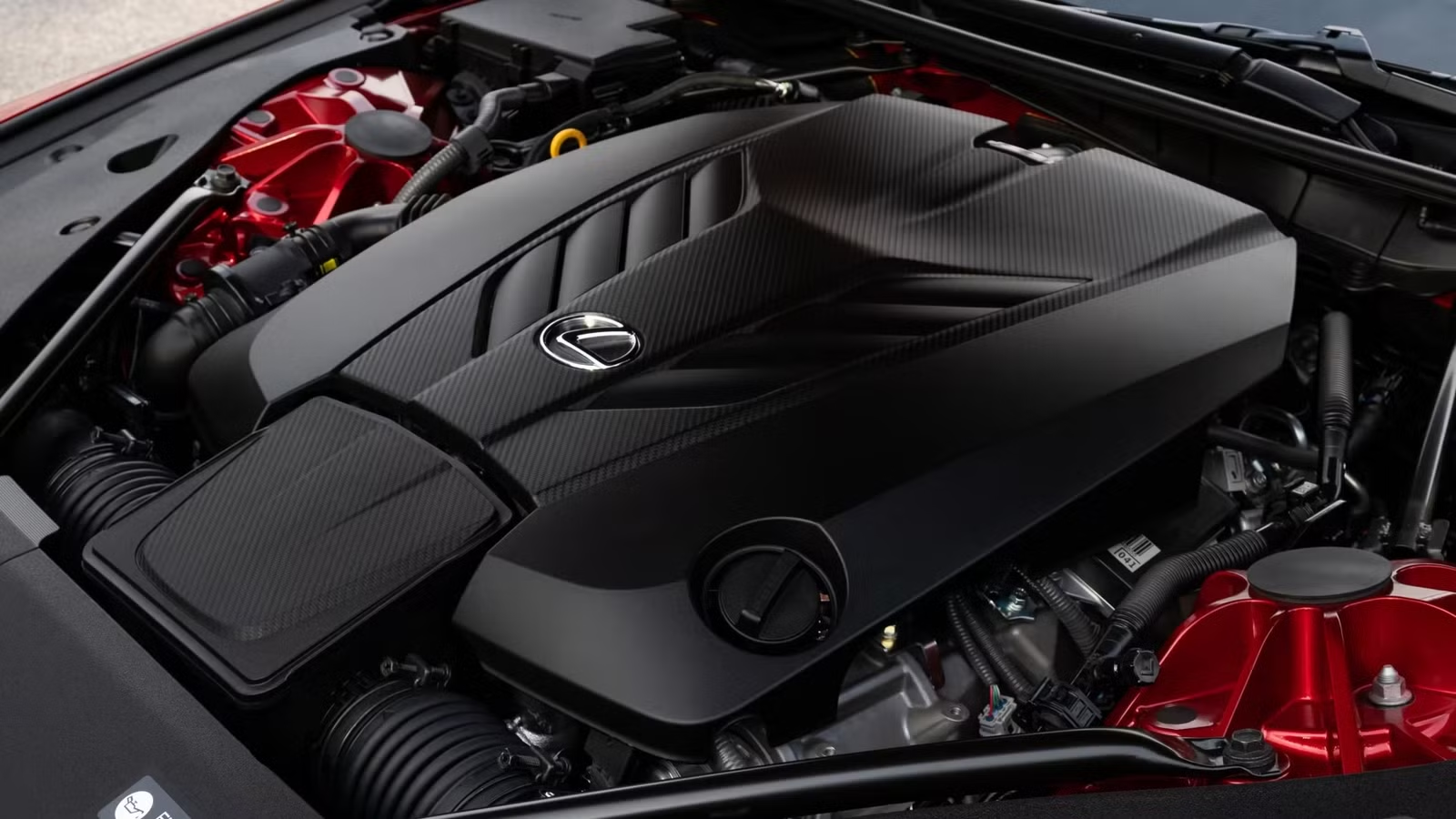
That coupe is the Lexus LC 500, and its 5.0-liter naturally aspirated V8, badged 2UR-GSE and co-developed with Yamaha, produces 471 horsepower and 398 lb-ft of torque while revving to a genuinely high 7,300 rpm redline. Nothing about that engine is turbocharged, hybridized, or artificially amplified through the exhaust, and its throttle response reflects that directness in a way few remaining V8s can match. It is worth being precise about what that means and what it does not. The LC 500 pairs that engine with a 10-speed torque-converter automatic and a full suite of modern driver assistance technology, so this is not a stripped-down, unassisted sports car in the traditional sense. The engine is the genuine old-school holdout. The rest of the car is thoroughly, comfortably modern.
The Last Naturally Aspirated V8 Of Its Kind

That engine is also running out the clock. Lexus has confirmed the LC 500 will end production in August 2026, and with it goes the 2UR-GSE, an engine that has powered the brand’s F-series performance cars since 2008 but now survives in nothing else Lexus currently builds. The wider industry has been moving away from naturally aspirated V8s for years, trading displacement for turbocharging and hybrid assistance in the name of emissions targets, and Lexus has followed that trend everywhere except this one car. When this generation ends, so does an entire category of car.
How The LC 500 Compares To The Porsche 911 On Ownership

Comparing the LC 500 to the Porsche 911 on raw performance numbers alone misses the actual point of putting them side by side. Both deliver a genuinely engaging driving experience built around a high-revving engine and real mechanical feedback. What separates them is not how they perform on a back road, but what each one asks of an owner once the excitement of the test drive wears off and the calendar of ownership actually begins.
The Porsche 911’s Service Calendar Comes At A Price

Independent long-term data backs up the difference. Lexus ranked first overall in the 2024 dependability study with a score of 135 problems per 100 vehicles after three years of ownership, while Porsche ranked second among premium brands at 175—a meaningfully worse result. That gap shows up directly in the shop. Independent Porsche specialists quote annual maintenance on a modern 992-generation 911 at current independent shop rates of $1,500 to $2,800 a year, with dealer pricing climbing as high as $4,500 in major service years. Porsche’s own earlier GT3 variants called for oil changes on the tighter GT3 interval of 6,000 miles, and even today’s more relaxed factory interval tightens up considerably for cars that see any real track use. None of that makes the 911 unreliable. It simply makes ownership a more structured, more expensive commitment than the Lexus asks for.
The Tradeoff Every Buyer Should Understand

For a buyer who plans to keep a car for a decade rather than flip it in three years, the LC 500’s real advantage has less to do with any single dollar figure and more to do with what ownership actually feels like day to day. There is no looming major service interval to budget around, no anxiety about whether a used example was maintained by the book, and no need to build a relationship with a specialist independent shop just to keep the car healthy. It is the rare performance coupe that lets an owner simply drive it, year after year, without the ownership calendar becoming a second job.
That stress-free case does come with a real cost attached, and pretending otherwise would not do readers any favors. According to recent five-year depreciation data, the Porsche 911 loses just 26.3 percent of its value over five years, while estimates for the Lexus LC 500 run higher, landing anywhere from roughly 34 to 41 percent over the same period depending on which tracker is consulted. Whichever end of that range proves closest, the direction is not in question: the LC 500 depreciates meaningfully faster than the 911 does. The 911 remains one of the strongest resale performers in the entire industry, regardless of Lexus’s dependability reputation. Buyers chasing pure financial return should weigh that gap heavily. Buyers who simply want to keep driving a characterful V8 for the next decade without the shop bills that usually come attached to one are paying for a very different kind of value, and for that buyer, the math tells only part of the story.
Sources: J.D. Power, Mecum, Lexus USA, Porsche, iSeeCars.

Related posts




Latest Post


No Comments