The Japanese SUV That Holds Its Value Better Than Any German Rival
9 minutes reading
Wednesday, 24 Jun 2026 12:00 0 94 autotech
Luxury SUVs have long been associated with German engineering, premium badges, and six-figure ownership experiences. Yet a growing number of buyers are discovering that the smartest luxury SUV purchase isn’t always the one with the most prestigious nameplate. As vehicle prices climb and long-term ownership costs become harder to ignore, factors such as depreciation, reliability, warranty coverage, and resale value are carrying more weight than ever before. The result is a shift in buyer priorities, one that is rewarding SUVs that deliver genuine capability, comfort, and quality while holding onto their value far better than many traditional luxury rivals.
Imagine driving an SUV that offers luxury levels of performance, comfort, safety, and technology without the luxury price. Add to that strong parts support, a brand with one of the strongest reputations for reliability, resale, and quality, along with pricing that undercuts every luxury rival. This is an SUV that you might think is too good to be true, but that is simply not the case.
Why More Buyers Are Walking Away From German Luxury SUVs
The Real Ownership Cost Gap Goes Far Beyond The Sticker Price
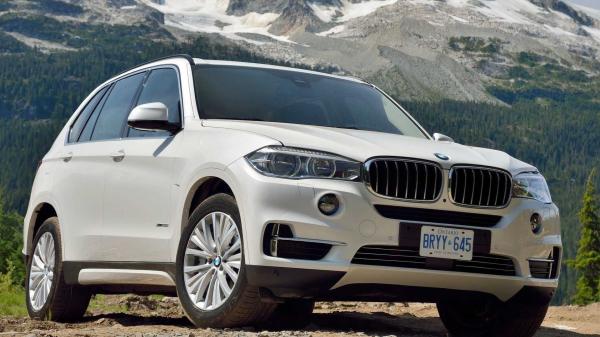
2026 BMW X5 front driving shotBMW
Choosing a German luxury SUV wearing the Audi, BMW, Porsche, or Mercedes-Benz badge brings prestige, recognition, and immediate admiration, but it comes with a flip side. On the other side, steep depreciation, limited warranty coverage, high maintenance costs, and optional equipment packages quickly increase the total price of any German luxury SUV.
The list of SUVs with the highest depreciation over five years is filled with luxury nameplates, including the Audi Q5, Audi Q7, and BMW X5, to name a few. To be completely fair, the Infiniti QX80 depreciates the most over five years, and several American and British names also appear on the list.
Reliability Has Become A Bigger Luxury Feature Than Badge Prestige
2026 Porsche Macan in red front driving shotPorsche
Reliability and dependability are not what they used to be. Very few modern vehicles will leave you stranded on the side of the road, which was once considered part of the charm of driving certain cars in the 1950s and 1960s. Still, modern buyers expect dependable vehicles with low repair risk and low repair costs. These factors can be much more important to many shoppers than brand recognition, high-end materials, or adding horsepower that’s only useful on a track.
In the JD Power Vehicle Dependability Study, BMW ranks only slightly above the industry average, while Audi and Mercedes-Benz fall near the bottom with a high number of problems reported. With that said, Porsche is one of the highest-ranking brands on the market, placing in the top half of the study, but the higher cost of Porsche vehicles compared to those of other brands could make many drivers turn to the brand that ranks just below Porsche in the study.
Why A Decade-Old German SUV Is The Ultimate Bargain Buy
10-Year-Old German SUVs are not only alluring for their exquisite designs, but they can also make for some pocket-friendly bargain buys.
The Toyota Land Cruiser Quietly Beats German Rivals At Their Own Game
The 2026 Land Cruiser Delivers More Torque Than The BMW X5 40i
Front 3/4 shot of 2026 Toyota Land Cruiser in blue parkedToyota
The 2026 Toyota Land Cruiser beats luxury rivals at their own game without wearing a luxury badge. The Toyota badge keeps the Land Cruiser affordable, but its prestige elevates it above the brand’s typical positioning. The Land Cruiser is powered by a 2.4-liter turbocharged four-cylinder engine and two hybrid electric motors, producing 326 horsepower and 465 pound-feet of torque.
Base Trim Engine
2.4L I-FORCE MAX I4 Hybrid
Base Trim Transmission
8-speed automatic
Base Trim Drivetrain
Four-Wheel Drive
Base Trim Fuel Economy (city/highway/combined)
22/25/23 MPG
Base Trim Battery Type
Nickel metal hydride (NiMH)
Make
Toyota
Model
Land Cruiser
Segment
Full-Size SUV
This power reaches the wheels via an eight-speed automatic transmission, and 4WD is standard on this Toyota SUV. Compared to the BMW X5 xDrive40i, the Land Cruiser produces 67 more pound-feet of torque, which is useful for towing, off-road driving, and acceleration.
Standard Equipment Helps The Land Cruiser Feel Like A Better Deal
Shot of 2026 Toyota Land Cruiser undersideToyota
Toyota built the Land Cruiser as an off-road SUV and elevated itto a premium luxury level. With that in mind, you’ll find standard full-time 4WD, skidplates, a full-size spare tire, locking center and rear differentials, crawl control, and a full roster of practical features that many German SUVs charge extra for.
Instead of dealing with quickly inflated pricing for high-end luxury nameplates, the Toyota Land Cruiser starts with a strong feature set that makes even the base model feel complete. By comparison, the starting price for a 2026 Toyota Land Cruiser is $57,600, while a 2026 BMW X5 starts at $69,750. That is for a rear-wheel-drive version; the xDrive all-wheel-drive system costs extra.
The Hybrid SUV With Toyota Reliability And Lexus-Level Comfort
These two hybrid SUVs offer reliability that’s similar to a Toyota, along with comfort levels that are already on par with Lexus.
Depreciation Is Where The Financial Advantage Becomes Impossible To Ignore
The Land Cruiser Holds Its Value Far Better Than The BMW X5
Front 3/4 shot of 2026 Toyota Land CruiserToyota
If given the option between a Toyota and a BMW, you might initially want to drive the BMW, but if you have to own what you drive and keep it for five years, which would you choose? The list of vehicles that depreciate the least over five years is packed with Toyota models, but not a single BMW makes it. To be fair to BMW, the same goes for Audi and Mercedes-Benz, with only Porsche making the low depreciation list with the 718 Cayman and 911 sports cars.
The real price gap between the Land Cruiser and the BMW X5 isn’t the $10,000 difference in MSRP, but the $25,000 difference that emerges over five years when depreciation is factored in. The 2025 Land Cruiser retains 60.05 percent of its original value after five years, compared to 43.89 percent for the BMW X5, a potential saving of up to $14,548 in depreciation.
Toyota’s Warranty And Reputation Reduce Ownership Anxiety
Shot of 2026 Toyota Land Cruiser seatsToyota
Toyota provides significantly longer powertrain coverage for the Land Cruiser than BMW does for the X5. Toyota covers this part of the SUV for five years/60,000 miles, while the X5 is covered for only four years/50,000 miles. This means that the vehicle you choose to keep for five years could be out of warranty if you select the BMW. Additionally, Toyota offers a hybrid warranty that is much longer than required, covering hybrid components for 10 years/150,000 miles, exceeding the industry standard of eight years/100,000 miles.
The average annual maintenance and repair costs for these two SUVs are more than the industry average, but that’s to be expected. The Land Cruiser is significantly more affordable to maintain and operate, at an average annual cost of $843 compared to $1,166 for the BMW X5. Additionally, the Toyota SUV delivers much better fuel economy figures, at 22 city/25 highway mpg compared to 17 city/22 highway mpg for the BMW X5.
10 Mid-Size SUVs That Depreciate The Most After 5 Years Of Ownership
These models could prove to be a bad long-term investment, though some praise the incredible bargain they pose when used.
German Luxury SUVs Still Win In A Few Important Areas
The BMW X5 Still Feels More Refined On The Road
Front 3/4 shot of 2026 BMW X5 M parkedBMW
BMW understands driving — that is simply a fact and impossible to argue with. The 3.0-liter inline-six is smooth and legendary for its reliability. This engine and its ZF eight-speed automatic transmission are a winning combination that makes the X5 feel great on the road. The X5 feels planted, solid, and capable between the lines.
The Toyota Land Cruiser is not without capability on the road and can be perfectly satisfying for most drivers during their daily commute, but it does not match the on-road presence of a BMW X5. The Land Cruiser’s off-road roots and equipment make it more capable on the trails, but the X5 is more enticing and refined on the road.
Cabin Materials And Luxury Presentation Still Favor Germany
Static shot of the 2027 Mercedes-Benz GLE Class interior dashboard design and layoutMercedes-Benz
When you’re looking for an SUV with in-cabin sophistication, futuristic tech, and the elegance that only comes at the top of the luxury market, several German names will come to mind. You might never think about choosing a Toyota SUV for these things, and that makes perfect sense. The Toyota Land Cruiser is comfortable, modern, and well-equipped, but it can’t compare with the comfort, higher-class materials, or technology offered by Mercedes-Benz, Porsche, Audi, or BMW.
The Market Is Already Shifting Toward High-Value Japanese SUVs
Lexus And Toyota Sales Numbers Reveal What Buyers Actually Want
Front 3/4 action shot of 2025 Lexus RX in black driving on roadLexus
In 2025, the Lexus RX outsold the BMW X5 by nearly 40,000 units (113,256 vs. 76,246), highlighting the market shift toward reliable, value-packed Japanese luxury alternatives. This shift shows that shoppers understand the big difference in support, depreciation, and ownership costs associated with each brand. Considering the Toyota Land Cruiser wears a mainstream badge and costs thousands less than the X5, it is easy to see why many shoppers choose Toyota and Lexus over legacy luxury nameplates.
Buyers No Longer Need A German Badge To Feel Premium
Today’s premium SUV buyer has more choices than ever, and many are realizing that luxury is about far more than the badge on the grille. Comfort, technology, refinement, capability, and long-term satisfaction can now be found in vehicles that also deliver stronger reliability and better value retention. While German SUVs still excel in certain areas, the gap has narrowed dramatically, and ownership costs have become increasingly difficult to overlook. For buyers who want a vehicle that feels upscale every day while protecting their investment over time, the smartest luxury purchase may no longer come from Germany at all.
Sources: iSeeCars, J.D. Power, Toyota, Auto Companion












No Comments