
The Japanese Luxury SUV That Beats The BMW X3 On Price, Power, And Warranty
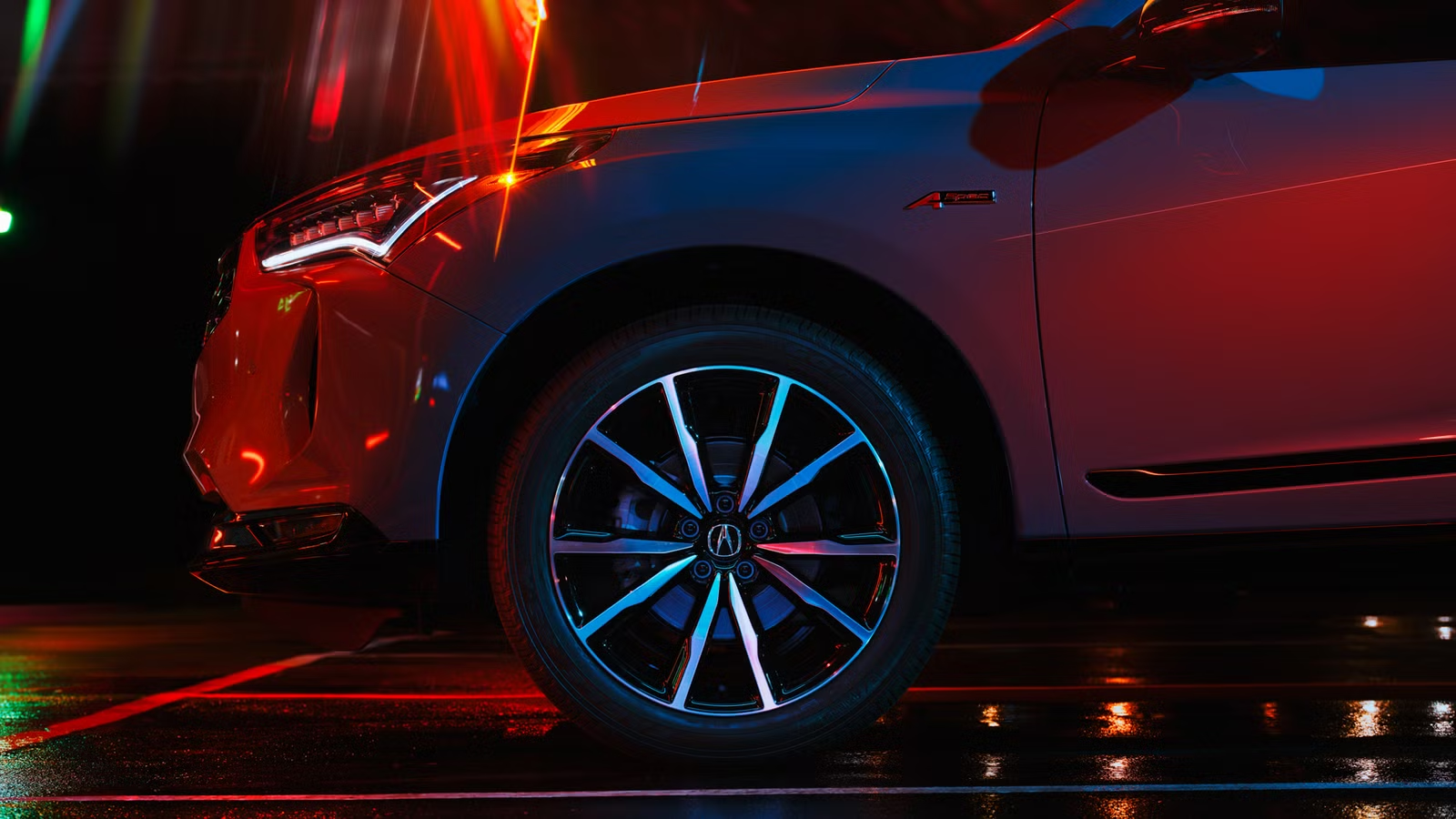
For nearly two decades, the compact luxury crossover segment has belonged to a very specific set of rules written primarily in Munich. The BMW X3 established the blueprint for what a premium compact SUV ought to be: precise, dynamic, prestigious, and engineered with an uncompromising focus on the driver. For drivers seeking an elevated ride height without sacrificing sports-sedan agility, the X3 became the undisputed benchmark against which every rival was measured. Yet, behind the iconic kidney grille and Bavarian badge lies an increasingly familiar European tax, rising MSRPs, expensive option packages, and conservative standard powertrains that require costly upgrades to reach their full potential.

Enter Acura, Honda’s premium division. The brand has spent years sharpening its edge specifically to challenge German dominance in the compact luxury crossover space. Instead of playing catch-up, Acura crafted a direct counter-argument to the European establishment: give buyers aggressive performance right out of the box, load the vehicle with standard luxury equipment that competitors relegate to option groups, and wrap the entire package in a longer warranty at a significantly lower entry price. When lined up side by side against the BMW X3, Acura’s compact contender does not merely hold its own; it beats the Bavarian stalwart across three crucial pillars that matter most to real-world luxury buyers: price, power, and long-term coverage.
Under The Hood: Outmuscling The Bavarian Benchmark
Standard Turbocharged Muscle
When comparing baseline luxury performance, numbers on paper tell an immediate story. The entry point to the BMW X3 lineup typically relies on a 2.0-liter TwinPower Turbo inline-four-cylinder engine generating roughly 255 horsepower and 295 pound-feet of torque. While undeniably refined and responsive around town, BMW’s entry engine is intentionally tuned to leave breathing room for higher-tier, significantly more expensive M Sport or six-cylinder variants.

Acura takes a completely different strategy with its compact crossover. Standard across the entire lineup is a direct-injected 2.0-liter VTEC Turbo four-cylinder engine derived from the high-performance Honda Civic Type R heritage. In this crossover application, the unit produces a stout 272 horsepower and 280 pound-feet of torque. That gives the base Acura a distinct 17-horsepower advantage straight out of the factory over a standard X3. Tap the throttle from a complete stop or drop down a gear to pass on the highway, and the broad torque curve delivers immediate, linear thrust. By refusing to detune its entry model, Acura ensures that every buyer experiences genuine performance without being forced to pay a premium for an upper-trim badge to access greater horsepower.
Agile Handling Dynamics

Power alone does not make a luxury crossover dynamic; translating that muscle to the pavement is where the true test lies. To rival BMW’s legendary chassis tuning, Acura pairs its 2.0-liter turbo with a fast-shifting 10-speed automatic transmission and its crown jewel drivetrain technology: Super Handling All-Wheel Drive (SH-AWD).
Unlike conventional all-wheel-drive systems that primarily act as traction guardians when slip is detected, SH-AWD is a full-time mechanical torque-vectoring setup. Under hard driving, the system can send up to 70 percent of torque to the rear axle, and up to 100 percent of that rear torque can be directed to either the left or right wheel. In sharp corners, the outside rear wheel is overdriven, actively yawing the vehicle into the turn and virtually eliminating understeer. While BMW’s xDrive system remains a masterpiece of balance and rear-biased feel, Acura’s SH-AWD delivers a level of clawing cornering grip and confidence that turns everyday suburban commutes into engaging canyon drives.
Unveiling The First-Generation Acura RDX
The 2007 Debut

To understand how the modern RDX achieved its razor-sharp focus, one must trace its roots to its groundbreaking debut. The first-generation Acura RDX made its dramatic debut for the 2007 model year as a high-concept, tech-forward answer to the emerging luxury crossover craze. At a time when competitors were fitting smooth, heavy V6 engines into small SUVs, Acura took a radical risk by engineering its first-ever turbocharged gasoline production engine: the legendary 2.3-liter K23A1 inline-four with a variable-flow turbocharger.
Outputting 240 horsepower and 260 pound-feet of torque, the original 2007 RDX was an uncompromised, firm-riding performance machine. It introduced early iterations of SH-AWD to a compact utility chassis, offering sports-car-like reflexes that caught the industry off guard. It was raw, aggressive, and undeniably ahead of its time, establishing Acura as a brand willing to disrupt traditional luxury norms through turbocharging and active torque vectoring long before those technologies became industry standards.
Evolution To Modern Excellence

The path from that 2007 debut to today’s refined crossover involved key evolutionary shifts. The second-generation RDX smoothed out the original’s aggressive edges, adopting a naturally aspirated V6 and a more comfort-oriented suspension to cater to mainstream luxury buyers. While successful, it temporarily traded away some of the driving soul that defined the original model.
Recognizing its core identity, Acura completely reimagined the RDX for its third generation. Engineers returned to the original recipe—a high-output turbocharged four-cylinder engine paired with full mechanical SH-AWD—but executed it with modern chassis rigidity, adaptive damping, and high-end cabin materials. Today’s RDX represents the absolute peak of that evolution: an SUV that retains the high-revving athletic DNA of its 2007 ancestor while delivering the whisper-quiet isolation and technological polish expected of a modern luxury flagship.
The Price Tag And Warranty Edge
Upfront Savings

Where the comparison between these two crossovers becomes most striking is on the window sticker. The BMW X3 carries a premium starting price, often opening thousands of dollars above the RDX before a single option is added. Furthermore, European pricing structures notoriously rely on option packages; basic features such as keyless entry, adaptive cruise control, heated seats, and upgraded audio frequently require adding pricey equipment groups that push the actual transaction price significantly higher.
Acura operates on a simplified, high-value packaging model. A base Acura RDX or an RDX with the Technology Package enters the market substantially lower than a comparably equipped BMW X3. When you line up an RDX with a similar feature set—panoramic roof, premium audio, driver-assist suites, and all-wheel drive—the price gap can easily stretch between $5,000 and $8,000 in favor of the Acura. That upfront savings gives buyers immediate financial relief or the freedom to step up to top-tier A-Spec or Advance packages while remaining below the cost of an optioned-out base X3.
Long-Term Peace Of Mind

Value extends far beyond the dealership finance office; it is defined over years of ownership. German luxury vehicles are renowned for engineering excellence, but they are equally famous for steep out-of-warranty repair costs and complex routine maintenance schedules. BMW covers the X3 with a standard four-year/50,000-mile limited warranty that covers both basic and powertrain components.
Acura, backed by Honda’s legendary reputation for mechanical durability, offers a standard four-year/50,000-mile bumper-to-bumper warranty paired with a superior six-year/70,000-mile powertrain warranty that provides vital protection for critical mechanical components—including the engine, transmission, and differentials—long after lease terms expire. That additional two years and 20,000 miles of powertrain coverage offer vital protection for critical mechanical components, including the engine, transmission, and differentials, long after lease terms expire. Combined with lower average routine maintenance bills and historically lower depreciation rates, the RDX minimizes total cost of ownership over a typical five-to-seven-year holding period.
Cabin Luxury And Everyday Practicality
Standard Features Packed In


Step inside the Acura RDX, and the brand’s “value-forward luxury” philosophy becomes immediately apparent. Rather than nickel-and-diming buyers for basic comfort, Acura includes a vast array of high-end features as standard equipment across the line.
Every RDX comes equipped with an ultra-wide panoramic sunroof, power-adjustable heated front sport seats, active noise cancellation, and a comprehensive suite of safety features known as AcuraWatch (including Adaptive Cruise Control, Lane Keeping Assist, and Collision Mitigation Braking). Audio enthusiasts will appreciate that even non-advanced trims feature rich, multi-speaker sound systems, while stepping up to the available ELS STUDIO 3D system delivers studio-grade acoustics tuned by Grammy-winning producer Elliot Scheiner—a setup that rivals those found in top-tier European SUVs.
Spacious Cargo And Passenger Comfort

While performance and technology grab headlines, a compact luxury SUV must ultimately excel at daily tasks: grocery runs, road trips, and carpooling. The 2026 Acura RDX makes exceptional use of its interior footprint, offering a cabin that feels remarkably airy and ergonomic. Rear-seat passengers enjoy generous legroom and headroom, making long cross-country journeys comfortable for adults, not just children.
Behind the rear seats, the RDX boasts approximately 29.5 cubic feet of dedicated cargo space, which expands to a massive 58.9 cubic feet when the 60/40 split rear seats are folded flat. Furthermore, Acura engineered smart under-floor storage compartments, allowing owners to stow valuables, charging cables, or sports equipment out of sight. Combined with intuitive center-console storage and accessible cupholders, the RDX balances a sporty cockpit with uncompromised daily usability.

The BMW X3 earned its reputation as a segment benchmark through decades of sharp engineering and dynamic excellence. It remains a formidable, highly prestigious machine for buyers who prioritize the brand badge and are willing to pay extra for every incremental option. However, for the discerning buyer who evaluates luxury through the lens of overall performance, engineering value, and long-term reliability, the Acura RDX emerges as the smarter choice.
By delivering more standard horsepower out of the box, offering sophisticated torque-vectoring SH-AWD, equipping the vehicle with thousands of dollars’ worth of standard features, and backing it all with a longer powertrain warranty at a significantly lower price, Acura proves that you don’t need to pay a German premium to drive a world-class luxury SUV.
Sources: Acura, BMW, RepairPal

Related posts



Latest Post



No Comments