
The Japanese Cruiser That Quietly Became A Long-Term Favorite
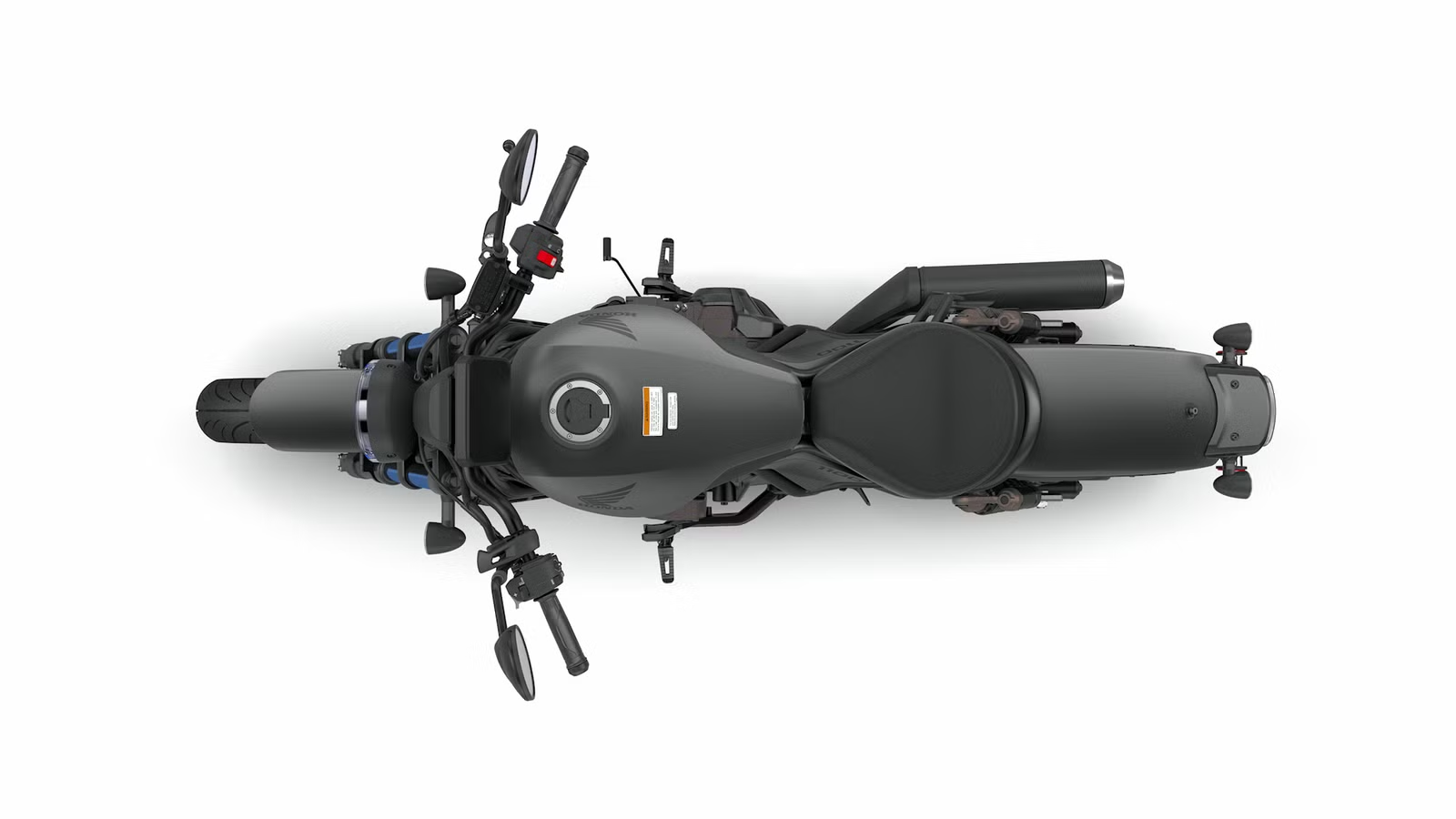
Walk into any dealership and the cruiser pitch is always the same. You buy the look, the badge, and the soundtrack first, then you find out what all of that costs to actually live with. Depreciation bites. Servicing bites harder. And a year later, plenty of those riders are back on the forums asking what their bike is worth. There is one cruiser that skips the whole circus. It never shouted for attention, it never leaned on heritage, and it quietly turned into the bike its owners refuse to sell. It comes from Japan, and it has been hiding in plain sight.
Japanese Cruisers Undercut The American Cruiser Market On Value

The cruiser segment runs on emotion. American metal dominates the mindshare, and the entire sales pitch is built on image, exhaust note, and a name stitched into the tank. That works right up until the invoice lands. Big-inch V-twins carry big sticker prices, and the ownership math rarely gets talked about at the point of sale. You pay a premium to get in, you pay again at every service interval, and you eat a chunk of that money back when it is time to sell.
Japanese cruisers play a different game. They rarely win the bar-stool argument about heritage, but they quietly win the one that matters over five years of ownership. The build quality holds up. The running costs stay sane. And the resale figures do not fall off a cliff the moment you ride out of the showroom. It is a less romantic story, sure. It is also the one that keeps money in your pocket.
Reliability Reputation Often Does The Heavy Lifting

This is where Honda has an unfair advantage, and it has spent decades earning it. The company’s reputation for building engines that simply refuse to quit is not marketing spin, it is lived experience for millions of owners. That reputation does real work in the used market. A buyer looking at a used Honda cruiser is not gambling, and both sides of the deal know it, which is exactly why these bikes hold their value. Reliability is not a footnote on the spec sheet here. It is the whole reason one particular Honda has become a long-term favorite.

How The Honda Rebel 1100 Quietly Becomes A Long-Term Favorite

That bike is the Honda Rebel 1100, and it makes the case the moment you look at the numbers. It landed in 2021 with no heritage to trade on and one genuinely strange idea: a cruiser you could option with an automatic gearbox, and the motorcycle press did not quite know what to make of it. Then people rode it. Now it sits near the top of nearly every best-midsize-cruiser list, and it does so on merit rather than nostalgia. Our full rundown of the Rebel 1100 goes deeper on why.
The pricing is a big part of the appeal. For 2026, the Rebel 1100 starts at around $9,699, the DCT automatic version runs about $10,399, and the range-topping DCT SE sits near $11,199, with the fully faired 1100T DCT bagger stretching the ceiling toward $11,599. Set that against an American cruiser of similar capability and the Honda routinely undercuts it by thousands. You are not buying a stripped-out budget bike to hit that number either. You are getting a properly modern machine that happens to cost sensible money.
The Honda Rebel 1100 Is Better Than Ever In Its Current Avatar

Pop the headline spec and the Rebel stops looking like a gentle starter cruiser. Its 1,084cc liquid-cooled parallel-twin is lifted straight from the Africa Twin adventure bike, retuned for the street, and it makes roughly 87 horsepower and 72 pound-feet of torque. In cruiser terms, that is a strong hand.
The 270-degree crank gives it a V-twin-style pulse without the tingling numbness, and the torque arrives early and stays flat, so rolling away from a light or squeezing past traffic never involves hunting for gears. It is quick enough to embarrass riders who assumed the badge on the tank told the whole story. Sport mode sharpens the throttle, the front end goes light on demand, and suddenly the relaxed cruiser has a mean streak.
Built To Clear 100,000 Miles

Here is the part that turns a good bike into a keeper. That engine is built to last, and owner experience backs it up. With regular servicing, the Rebel 1100 is realistically good for 100,000 miles and more, and the maintenance it asks for is refreshingly straightforward.
Valve checks use simple adjusters, oil and chain jobs are easy to do at home, and parts availability is never a worry with a bike that shares its core with the rest of Honda’s big-twin family. As every seasoned buyer knows, the odometer reading matters far less than the service history behind it, and a well-kept Rebel with six figures on the clock has plenty of road left. That is the quiet math behind long-term ownership.
The DCT And The Accessory Catalog Are What Hook People

The Rebel’s party trick is its optional Dual Clutch Transmission, and no rival cruiser offers anything like it. The DCT swaps gears for you with a smoothness a human left foot cannot match, and it will shift automatically or hand control back through paddle triggers on the bar. It kills stalling, cuts fatigue in traffic, and completely changes who this bike is for.
Then there is the customization. Honda treats the Rebel as a rolling blank canvas and backs it with more than 30 factory accessories, from screens and seats to luggage and bar-end mirrors. You buy the bike you want on day one, then keep making it yours. That is how ownership turns into attachment, and attachment is how a bike survives a decade in the same garage.
Why Honda Chose Proven Over Exotic — And Why That Decision Saves You Money

Under the skin, the Rebel keeps things deliberately honest. A steel frame with a bold trellis section carries a lightweight aluminum subframe, a pairing Honda uses to balance rigidity against weight. Suspension is a fat 43mm fork up front and twin remote-reservoir Showa shocks at the rear, tuned to soak up city scars without turning to mush on the highway.
Braking is handled by a big 330mm front disc gripped by a radial-mount four-piston caliper, with a 256mm rear disc and dual-channel ABS backing it up. None of this is exotic, and that is the point. Proven hardware with no fragile party pieces is exactly what keeps a motorcycle running cheaply and reliably for years, long after the fashionable stuff has worn out.
Cruise Control, Ride Modes, And Smartphone Connectivity — Standard, Not Optional

For a bike that looks so pared back, the Rebel is quietly loaded. Throttle-by-wire unlocks a proper electronics suite, with three ride modes plus a customizable user setting, Honda Selectable Torque Control with built-in wheelie control, and adjustable engine braking.
It is also the only bike in its class to ship with cruise control as standard, which matters enormously the first time you point it at a long interstate haul. Add all-LED lighting and smartphone connectivity through Honda’s RoadSync app, and you have a cruiser that keeps pace with technology instead of freezing in time. That breadth is a big reason the Rebel stays relevant year after year rather than feeling dated after two.
The Rebel 1100 Is A Keeper, Not A Trade-In

No motorcycle is flawless, and the Rebel has its honest limits. The suspension can feel firm over really broken pavement once the miles pile up, the DCT can shuffle a little awkwardly at crawling speeds, and this was never built to out-muscle a big-inch American V-twin in a traffic-light drag. But focus on that and you miss the whole point.
The Rebel 1100 is the cruiser you actually live with. It is cheap to buy, cheaper to run, tough enough to clear six figures on the odometer, and good company whether you are commuting on a wet Tuesday or eating up a weekend of highway. Bikes like that do not get flipped for the next shiny thing. They earn a permanent parking spot, and their owners quietly stop shopping. That is what a long-term favorite looks like, and the Rebel 1100 has quietly become one of the best.
Sources: Honda Motorcycles

Related posts
Latest Post


No Comments