
The Honda SUV That Feels Tailor-Made For Families
Honda is an automaker known for a lot of things. Thanks to their engineering-first approach to car design, you may know their cars primarily for their well-tuned driving dynamics, particularly their legendary performance machines. On a less exciting note, you also know Honda for designing highly practical cars that defy expectations of functionality.

Honda has a term for its ingenuity in space efficiency: Man Maximum, Machine Minimum. The Honda Fit is the pinnacle of this philosophy. How can such a petite hatchback have similar space and functionality as an MPV? And yet, the Fit isn’t even a penalty box to drive. It’s genuinely fun, nimble, yet very efficient and reliable.
Today, however, the Fit has already been discontinued. SUVs and crossovers have taken over all segments. People would rather splurge on an HR-V instead of a Fit. Honda’s best-selling model worldwide, and in the United States, is also a crossover—the CR-V. But among all of Honda’s SUVs and crossovers, which of them is the most tailor-made for families?
Honda’s Space Ingenuity

Honda has left a mark when it comes to interior space and flexibility, and thankfully, that principle still lives on in 2026. Besides, without the Man Maximum, Machine Minimum principle, what is a Honda? To understand how well this has been executed over the years, let’s take a look at the Honda models that fully embodied this engineering principle.
If It Fits, I Sits

Contrary to popular belief, cars are liquid. They have a motto that “if it fits, it sits,” but I digress. In the iconic Honda Fit, this small hatchback offers practicality that is unthinkable for its size class. One of its hallmarks across generations is its centrally located fuel tank, which sits under the front seats instead of in the rear. This enables clever packaging solutions, namely the famous Magic Seats, which not only can be folded low and flat like in a minivan, but also have their seat cushions raised for carrying tall items. Fold down the rear and the front seats, and you’ve got a bed for two adults.
The spaciousness of the Honda Fit is reflected in its EPA interior volume rating of 112.3 cubic feet, making it one of the leaders in its segment. For reference, the Kia Rio Hatchback offers 107.9 cubic feet, while the Ford Fiesta offers just 100 cubic feet. Yet despite the spaciousness, the Fit was still fun to drive and relatively peppy in its acceleration. It’s mighty reliable, too. The best starter car? Absolutely, but SUVs and crossovers killed one of America’s best affordable cars.
A STEP In The WGN Direction

But to appreciate the absolute pinnacle of Honda’s space ingenuity, you’ll have to fly to Japan and check out the Honda STEPWGN. The Honda STEPWGN is a highly popular minivan in Japan that is also exported to select right-hand drive Asian markets. With a low floor and a boxy design that prioritizes space efficiency, the STEPWGN is a vehicle whose practicality is only limited by your imagination. The interior is also ultra-configurable, letting you use it as a family carrier or a panel van by removing all the rear seats. The STEPWGN has been produced through six generations, and arguably the quirkiest of them all is the previous fifth-generation (2015-2021) model due to its “Waku Waku Gate.”
What’s the Waku Waku Gate, you may ask? Rather than having a traditional lift or swing-out tailgate, the Waku Waku Gate combines both. Want to utilize the wide and tall opening of the STEPWGN’s rear? Just lift it like you would in any other vehicle. But if you only need to place a narrow or small item, you can simply open its swing-out rear door—all from the same tailgate assembly. Unfortunately, the sixth-generation model dropped this feature due to manufacturing complexity. Plus, it didn’t resonate as well with Japanese consumers as Honda expected. Besides, the resulting complex mechanism also made the tailgate heavy to lift.
The Honda Hybrid That Makes The Most Sense In 2026
Honda’s most balanced HEV sells well in the U.S. for good reason.
Piloting The Family

Now, if you want an SUV that truly embodies the pinnacle of Honda’s Man Maximum, Machine Minimum philosophy that’s available in the United States, then look nofurther than the 2026 Honda Pilot.
Exceptionally Practical
Unsurprisingly, practicality will be the main topic of the Pilot, because this is exactly what this SUV is known for. The overall dash design is premium enough, but it mostly focuses on function rather than poshness. For that, the Kia Telluride or Hyundai Palisade are better choices. If practicality is a concern, though, the Pilot easily impresses with its wide center console and doors that are dotted with numerous storage bins. The doors alone already have two tiers of storage, because why would you need to store all your clutter at home if you can do it in your SUV, right?
Move towards the rear seats, however, and this is where you’ll notice Honda’s space and practical ingenuity. As a midsize three-row SUV, having generous leg and headroom is already a given. But in the Pilot, you don’t need to choose between a second-row bench or captain’s chairs. That’s because a Multi-Function second-Row is fitted on all but the Sport and TrailSport variants. The center seat can be a flexible storage area with soft armrests, or it can be removed completely and stored under the rear cargo area to give you second-row captain’s chairs. Also, the Pilot’s third row is one of the segment’s most spacious, as Honda aims to make the Pilot just as spacious, practical, and flexible as a minivan—albeit with raised ground clearance, optional all-wheel drive (AWD), and rugged styling.
Smooth V-6 Operator

All of this practicality and space is powered by an exceptionally reliable and smooth J35Y8 3.5-liter V-6. The Honda J series V-6 engines have legendary reliability, while also being renowned for their smoothness. Our team has already taken the 2026 Pilot for a drive, and they were left impressed with the 285 horsepower and 262 pound-feet of torque that this engine delivers. Its 10-speed automatic is obedient, too. Fuel efficiency-wise, being a V-6, it isn’t the most efficient relative to hybrid rivals, but versus comparable gas models, the Pilot is still pretty good. FWD models are EPA rated to achieve 22 MPG, while AWD models are EPA rated to achieve 21 MPG. Meanwhile, the rugged TrailSport is EPA rated to achieve 20 MPG. All of these efficiency figures are in mixed conditions.
|
Engine |
3.5-liter V6 |
|
Transmission |
10-speed automatic |
|
Horsepower |
285 HP @ 6,100 RPM |
|
Torque |
262 LB-FT @ 5,000 RPM |
|
EPA Combined Fuel Economy |
22 MPG (FWD) 21 MPG (AWD) 20 MPG (TrailSport) |
|
Towing Capacity |
3,500 lbs (FWD) 5,000 lbs (AWD) |
As for handling, this is a three-row SUV, and so Honda’s engineering team can only do so much to manage the laws of physics. Yet, in terms of handling, Honda is able to balance dynamism with refinement and comfort. The ride is always supple and composed, while doing a good job of keeping body roll manageable for its size. Acoustic front glass is fitted on most variants, which, together with a good amount of sound deadening, provides a refined environment.

The Honda Pilot Might Just Beat Toyota At Its Own Game
Choosing between the 2025 Honda Pilot and the 2025 Toyota Highlander is rightly high-stakes: two of the most popular three-row family SUVs in America.
What’s New For 2026

The Honda Pilot receives a mid-cycle facelift for 2026, giving the popular midsize three-row SUV a better fighting chance in the segment as automakers like Hyundai and Kia introduce fully redesigned models.
More Rugged Looks

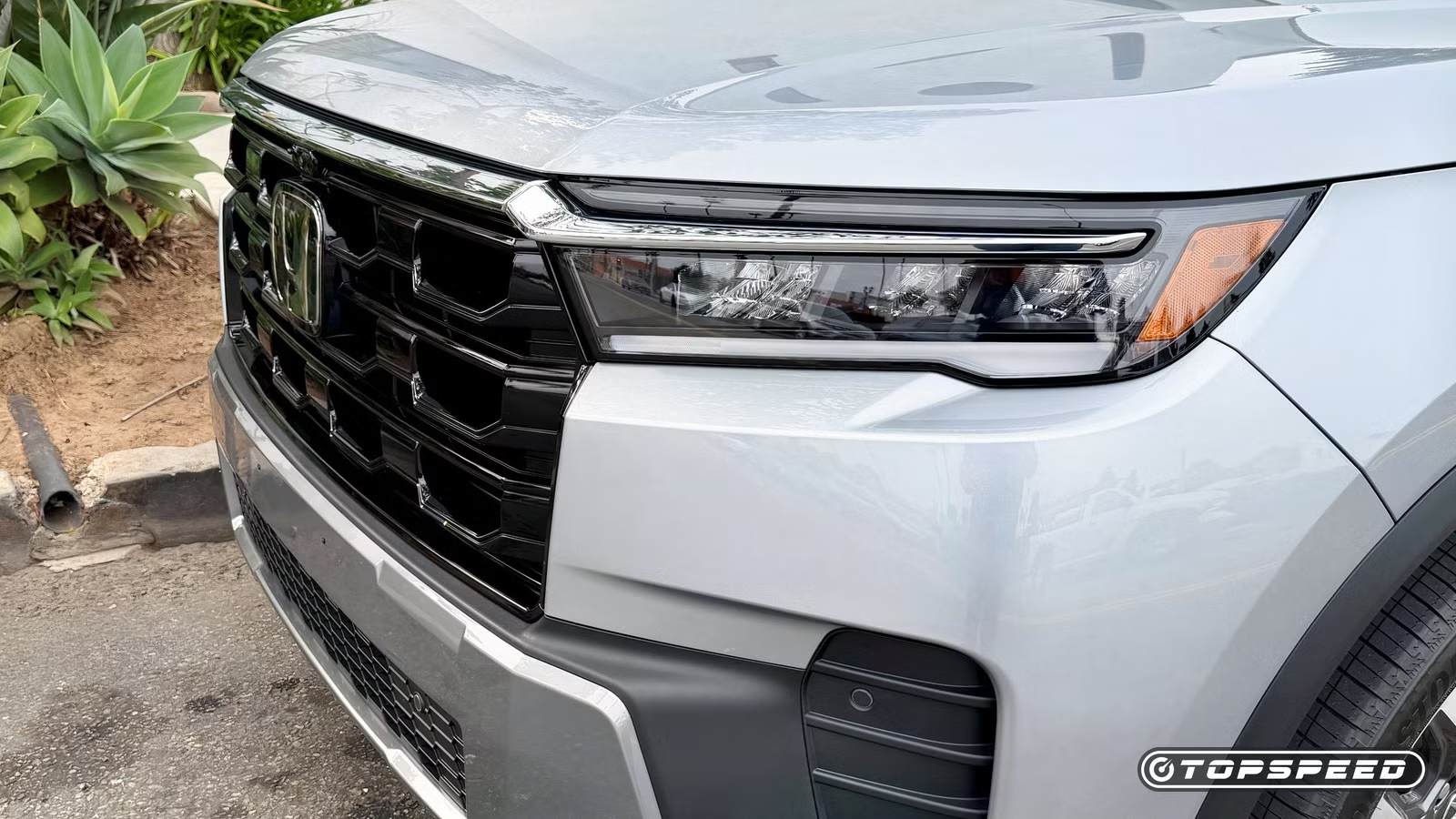
Honda knows that there’s a growing trend toward more rugged designs, and so that’s exactly what Honda has focused on with the 2026 Pilot. Most of the design effort has been focused on the front fascia, where a tall, rectangular mesh grille builds upon the Pilot’s rugged looks. These are flanked by equally boxy, angular LED headlights, along with a chunky front bumper. The rear bumper has also been slightly tweaked with a faux skid plate-like design, while roof rails are now standard on all variants.
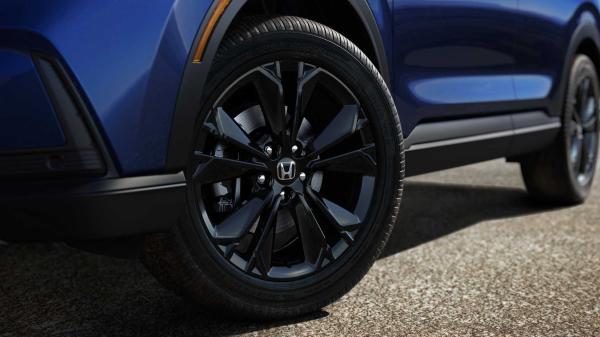
Other changes include a set of new 20-inch wheels, plus three new exterior colors: Solar Silver Metallic, Smoke Blue Pearl, and Ash Green Metallic, which is exclusive to the TrailSport. Overall, the 2026 Honda Pilot trades a bit of sportiness in favor of something more rugged—just like what most American families like these days.
Cutting-Edge Tech Now Standard

Screens define a vehicle’s modernity in 2026, and in the Pilot, that’s pretty much the case for all variants now. A 10.2-inch digital gauge cluster is now standard, and so is a 12.3-inch touchscreen with wireless Apple CarPlay and Android Auto. The touchscreen’s operating system features Google Built-In, which includes a free three-year data plan for connectivity functions. A wireless charger is also fitted on all but the base Sport.
Other standard tech features include a powered tailgate, power-adjustable front seats, heated front seats, and tri-zone automatic climate control. Higher variants come with a panoramic glass roof, a windshield-projected head-up display, a Bose sound system, and even ventilated front seats.
Sources: Honda, The EPA

Related posts


Latest Post


No Comments