
The Honda SUV Smart Buyers Are Quietly Choosing Over The Pilot
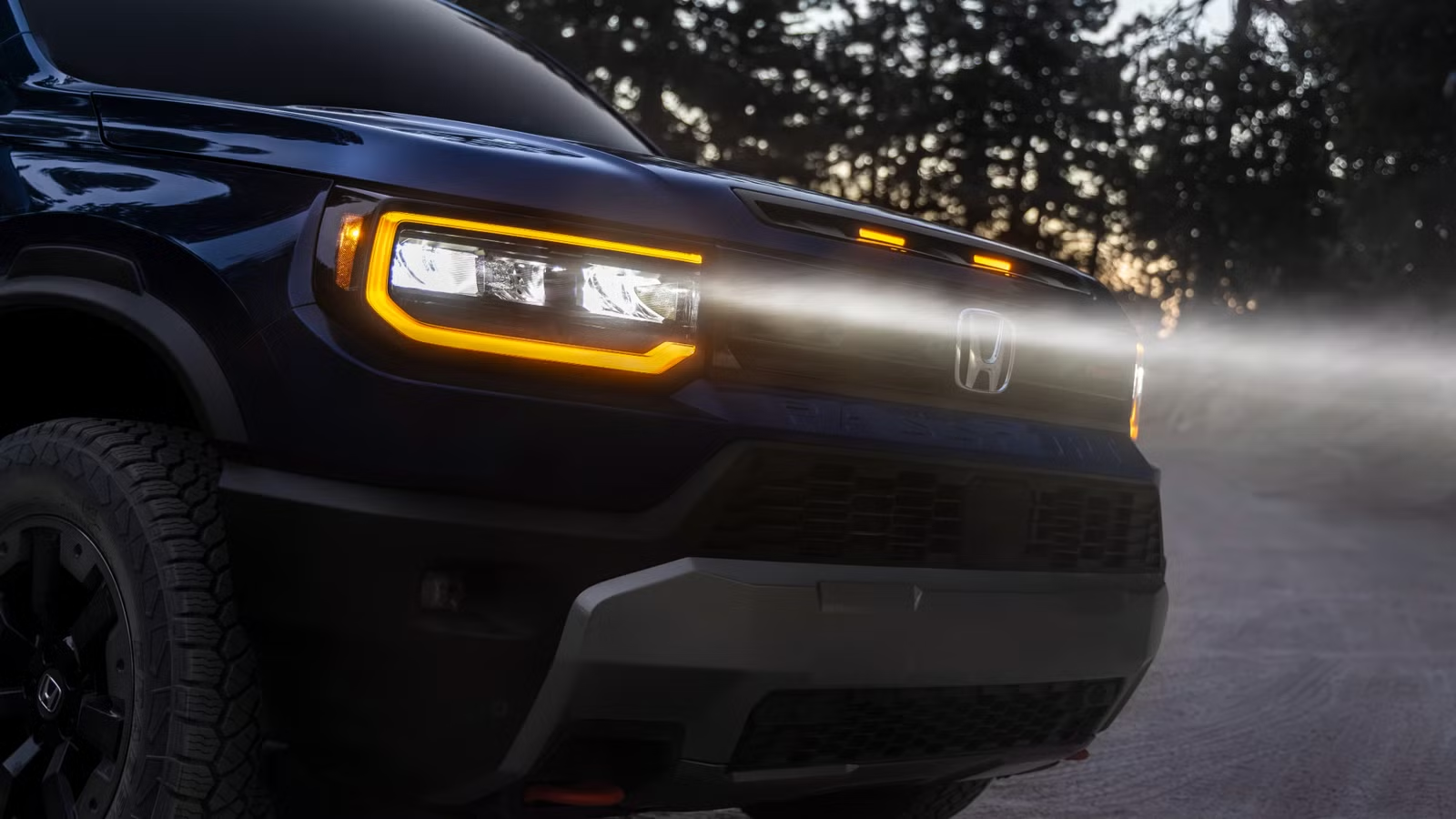
It’s a familiar scene at dealerships across the country. A family of four walks in shopping for a midsize SUV and leaves with a three-row model, convinced the extra seats make it the safe, future-proof choice. Then reality sets in.

The third row stays folded flat for most of the ownership period, carrying grocery bags and sports gear instead of people, while the owner keeps paying for the size and weight that come with it. One midsize SUV skips the extra row entirely and spends that money on things most drivers actually use every day.
Third-Row SUVs Sell Seats Many Families Never Use
A third row isn’t free. Buyers pay for it in sticker price, in a longer body that’s harder to park, and in cargo space that disappears the moment those seats go up. The Nissan Pathfinder is a good example. It has roughly 45 cubic feet of cargo space behind its second row, but only about 17 cubic feet behind the third. Whether it’s a Pathfinder, a Kia Telluride, or a Hyundai Palisade, that’s the trade every three-row owner makes, and for households that rarely carry more than five people, it delivers very little in return.

The other catch is the drivetrain. Plenty of three-row SUVs start with front-wheel drive and charge extra for all-wheel drive. Honda’s own Pilot shows how it works. The 2026 Pilot Sport starts at $42,395 with front-wheel drive, while the 2026 Pilot Sport AWD starts at $44,495, both before destination. The price in the ad and the SUV most families in snowy or rural states actually drive home are often two different things.
The 2027 Honda Passport Spends Its Money Where Most Drivers Will Feel It

The 2027 Honda Passport RTL starts at $45,195, the TrailSport at $49,995, and the TrailSport Elite at $53,695, all before a $1,595 destination fee. That RTL lands $700 above the 2026 Pilot Sport AWD, but every Passport comes with all-wheel drive as standard, and the money that would have gone into a third row goes into hardware instead.
A 285-Horsepower V6 And Torque-Vectoring AWD On Every Trim
Every Passport uses a naturally aspirated 3.5-liter V6 rated at 285 horsepower and 262 pound-feet of torque, paired with a 10-speed automatic. Power goes through Honda’s i-VTM4 torque-vectoring all-wheel drive, which actively distributes torque between the rear wheels for sharper turn-in on pavement and better traction on loose surfaces. Front-wheel drive is no longer offered, which partly explains why prices climbed when the fourth-generation Passport arrived for 2026. With the latest Toyota 4Runner now using a turbocharged 2.4-liter four-cylinder, a naturally aspirated V6 stands out in this corner of the market.
A Longer Wheelbase Puts The Space Where Five People Actually Sit


The fourth-generation Passport rides on a wheelbase nearly three inches longer than its predecessor, and that stretch goes largely into rear legroom. Behind the second row, there are 44 cubic feet of cargo space, nearly matching the Pathfinder’s figure without any third-row seats taking up the floor. Every trim also gets a 10.2-inch digital instrument cluster, a 12.3-inch touchscreen with wireless Apple CarPlay and Android Auto, and the Honda Sensing driver-assistance suite.
9.65 Inches Of Ground Clearance Changes What A Family SUV Can Do

Honda calls the TrailSport its most off-road-capable SUV, and the 2027 update backs that up. Ground clearance rises by 1.38 inches to 9.65 inches, approach and departure angles improve by two degrees each, and the breakover angle improves by three degrees. Instead of bolting on spacers, Honda says 28 suspension and chassis parts are new, redesigned, or reengineered, including the springs, dampers, control arms, stabilizer bars, and knuckles. The TrailWatch camera system, previously reserved for the TrailSport Elite, is now standard on every TrailSport. Honda says the result clears more ground than the Toyota 4Runner TRD Off-Road and the Subaru Outback Wilderness.
5,000 Pounds Of Towing Covers The Weekend Toys

Every Passport is rated to tow 5,000 pounds, with hitch hardware included on the RTL Towing and TrailSport trims. That covers a small camper, a pair of personal watercraft, or a utility trailer, which is what most two-row buyers actually pull. Owners are clearly using the Passport the way Honda intended, too. Honda says TrailSport models accounted for more than 80 percent of Passport sales as of June 2026, though the TrailSport badge also covers most of the trims in the lineup.
Why A Two-Row Passport Can Make More Sense Than A Bigger Three-Row SUV


At the trail-focused end of the range, the 2027 Passport TrailSport’s $49,995 MSRP sits $600 below the 2026 Pilot TrailSport’s $50,595. For that money, buyers get the freshly reworked suspension and 9.65 inches of ground clearance in a body that’s easier to live with every day. For couples, empty nesters, and families of four, that’s a better use of $50,000 than a third row that only comes out for holiday visits.

Two rows also mean a smaller SUV to live with. The Passport is shorter than the Pilot, which makes it easier to slot into tight parking spaces and city garages, yet its rear seat still offers adult-size legroom thanks to that stretched wheelbase. For buyers whose passenger count tops out at five, it delivers the same V6 and 10-speed automatic as its three-row sibling without the extra bulk.
The Passport Is For Drivers Who Have Stopped Paying For Seats They Don’t Need

The Passport isn’t flawless. The V6 is thirsty by modern standards, with EPA ratings of 21 mpg combined for the RTL and 20 mpg combined for TrailSport models, and Honda doesn’t offer a hybrid version. It also costs more than smaller two-row crossovers, so buyers who never leave pavement can spend less elsewhere. But for drivers who carry five people or fewer and want an SUV that handles a forest road as easily as the school run, the Passport makes a strong case. It skips the third row most families rarely use and puts that money into standard all-wheel drive, a proven V6, and genuine trail ability.
Sources: Honda

Related posts



Latest Post


No Comments