
Why This Sports Bike Nails The Perfect Balance Of Performance And Comfort
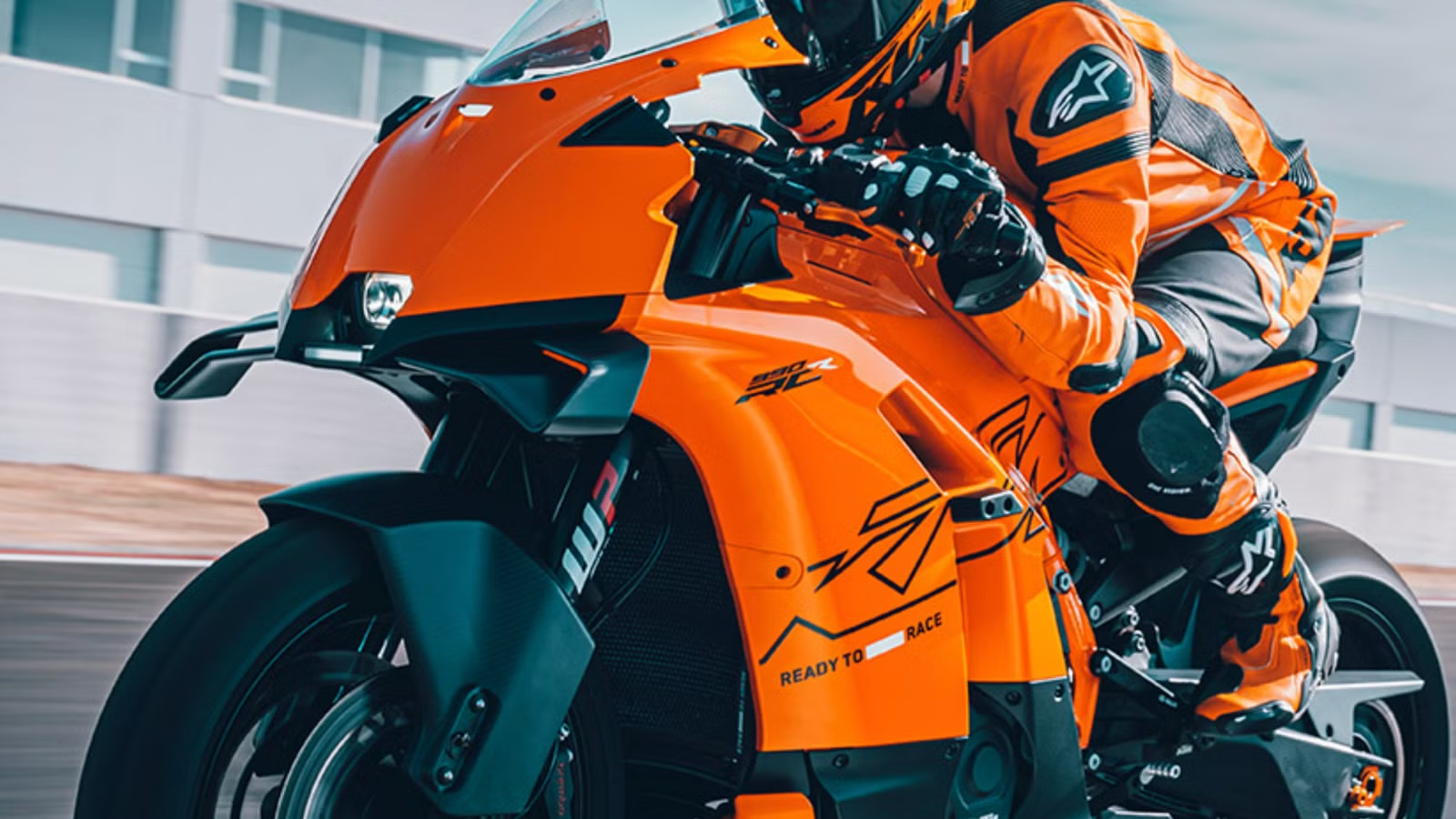
Anyone who has ever lived with a sports bike knows this drill really well. It’s early on a Sunday morning, you gear up for the ride and spend the next two hours having the best ride of your week. Then you get home, take off your gear and that’s when you notice your throbbing wrists and neck for the first time. Sadly, that’s what happens every time you ask your wrists to deal with the majority of your body weight and lock your neck in a position for a few hours.

That’s the deal sports bike riders make every Sunday morning: you get the thrills, but pay for it in Advil. If a manufacturer tries to build a sports bike that’s comfortable, then that added comfort comes out of the performance quota. So, is there a sports bike that can actually strike that perfect balance of performance and comfort? Of all the bike makers out there, KTM might have actually cracked this formula.
“Balance” Has A New Meaning In The Supersport Motorcycle Category
For decades now, the word “balance” has had a really narrow meaning in the world of supersport motorcycles. It usually describes how well the motorcycle handles its weight under hard acceleration, braking or while leaning into a corner. And supersport motorcycles have mostly been peaky in this regard. You got the best performance when you pushed a motorcycle really hard and tried to extract every last millisecond of lap time. Comfort, quite simply, was an afterthought once the engineers were done chasing horsepower and lean angles.

This mantra isn’t so strictly applied anymore. The supersports of today don’t always win praise for their high-strung performance. Instead, the ease with which they can be ridden on public roads now plays a huge role in garnering praise. Most riders today aren’t track junkies. For what it’s worth, they hit the track one or two times a year, and for the rest of their time, their sports bike is ridden on public streets — a place where comfort matters quite a bit. So, the question of “balance” is: can this thing be brutal when you want it to be, and calm the rest of the time?
The KTM 990 RC R Can Take It Easy Yet Rip On The Track

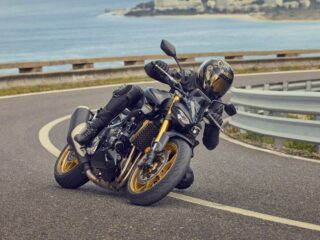
KTM has built the 990 RC R around this exact question. And the answer shows up in the details instead of the marketing literature. The 947cc LC8c parallel-twin engine of the 990 RC R is shared with the 990 Duke, but the supersport sibling gets its own throttle tune. The result is two throttle bodies that can fully open up, unlike the Duke. On paper, you get 128 horsepower and 76 pound-feet of torque. In the real world, it means you don’t have to fully wring open the throttle for the motorcycle to feel alive, and it keeps plenty in reserve for when you want to push it to its limits.
This duality is the whole point. Supersport motorcycles are often guilty of requiring riders to ride near the redline to access their performance. The KTM 990 RC R does not. You could be on part throttle through a set of sweeping corners and the power delivery stays composed instead of snatchy, allowing you to have fun at your own pace. However, push that tachometer toward its top end on a track day and the motorcycle wakes up feeling like an entirely different machine. But an engine tune alone doesn’t make a motorcycle versatile — that requires the entire package to cooperate. Here’s where the 990 RC R goes further than any spec sheet suggests.
Priced Right In The Heat Of The Battle

All the balance in the world wouldn’t matter if the bike costs more than a rider’s mortgage payment. At a base price of $13,949, the RC R is more expensive than the Yamaha R9 and less expensive than the Ducati Panigale V2 (referring to the base model of the Ducati). KTM isn’t asking a rider to pay a premium for comfort on top of performance; it’s built both into the base price.
How The 990 RC R Adapts To The Rider, Not The Other Way Around

The engine only tells half the story. The rest comes down to how well the chassis accommodates the rider instead of forcing the rider to adapt to it.
Suspension That Firms Up When The Road Does

The WP Apex suspension on the 990 RC R comes with preload, compression and rebound adjustment on both front and rear shocks. In fact, the rear shock comes with low- and high-speed compression adjustment. This allows the rider to dial in the ideal setting for the road or track. Furthermore, no tools are required to adjust compression and rebound damping. As for preload, it can be adjusted easily with basic tools in a matter of seconds.

The rider’s triangle can be altered too, with footpegs that move. It might not seem like a big thing at first, but spend three hours on the bike in a highly aggressive position, and you will learn to love the adjustability on offer. Also, footpegs that scrape when pushing the bike hard into corners can be a limiting factor. Ultimately, it takes about five to 10 minutes to change the peg position from Street to Sport, moving them 25 mm back and 17 mm higher, but the ability to do so on a stock bike in such a short time is a small feature that pays big dividends.
The Parallel-Twin Doesn’t Chase The Redline

Returning to the engine from an ergonomic standpoint, the parallel-twin motor makes good torque lower in the rev range, and that means the rider isn’t constantly working the gearbox to maintain momentum. It lowers the physical workload in a way that doesn’t show up on a spec sheet, especially during a relaxed ride.
An Umbrella Of Safety Aids Watches Your Back

Regardless of whether the rider is enjoying a pleasant ride on the road or pushing hard on the track, there is a suite of safety aids always working in the background. Ride modes, cornering ABS, and traction control are just the beginning. Worth noting, however, is the TFT display. It’s designed to give the rider all the info at a glance, keeping the rider’s attention on the road ahead. It’s the kind of reduction in mental fatigue that makes riding longer hours that much easier.
Where The KTM 990 RC R Lands Against Its Rivals

Put the RC R next to something like the Ducati Panigale V2 or the Yamaha YZF-R9, and the differences aren’t really about which bike is “better.” They’re about which side of the balance each one leans toward.
The Balance The Panigale V2 And R9 Can’t Quite Match

The Ducati Panigale V2 is great at many things, but in its latest iteration, Ducati has softened it up for street riding. In fact, it’s almost as easy to ride on the street as its Streetfighter sibling, and that is saying something. There is better low-end torque, but the top-end power doesn’t match the fizz you would want to experience on track. It is ultimately tuned for a supersport riding style, but optimized for the road.
The Yamaha YZF-R9 is on the other end of the spectrum. It’s low in price, but the ergonomics and the engine are geared for track attack. That means the rider ends up in a highly aggressive position and must wring open the throttle to extract the most from the motorcycle. While it can be ridden on the road, it’s a motorcycle best enjoyed on track.

Neither rival is doing anything wrong. One offers daily comfort, while the other comes with great track manners. The RC R is the one in the group that refuses to pick a side, and that refusal is exactly what gives the “perfect balance” claim real engineering substance, not just marketing speak. That’s ultimately the difference between a bike that’s thrilling for an hour and one that’s thrilling for a whole day. The RC R doesn’t make the rider choose between the two. For most riders, that’s worth more than another five horsepower ever would be.
Sources: KTM, Yamaha, Ducati

Related posts

Latest Post


No Comments