-
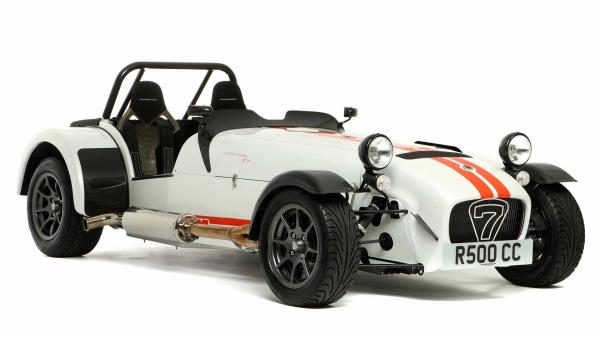
Studio shot of the 2009 Caterham Superlight R500 CATERHAM -
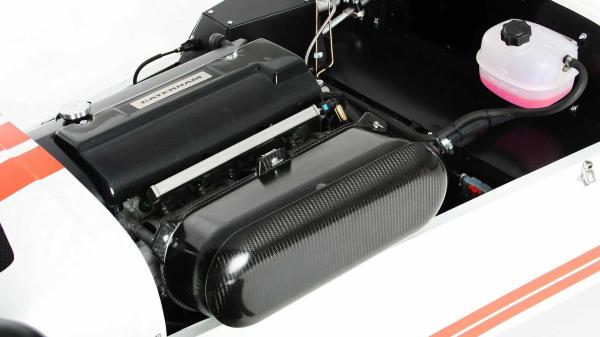
Underhood shot of the Caterham branded Ford Duratec engine in the Caterham Superlight R500 CATERHAM -
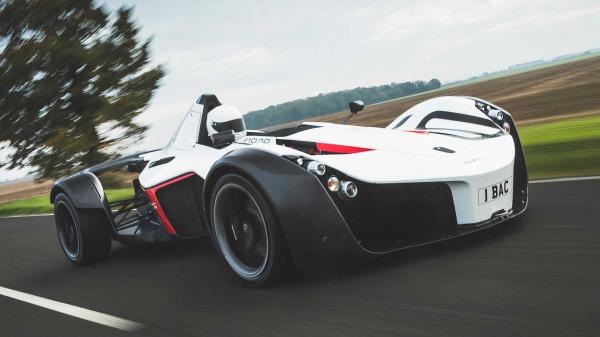
Driving shot of a 2018 BAC Mono R on a country lane in front 3/4 view BAC

The Highest Rated Horsepower In A Factory Naturally Aspirated Four Cylinder Engine Ever
7 minutes reading
Sunday, 23 Aug 2026 20:30 0 49 autotech
In an era when turbocharged engines and hybrid systems dominate performance car headlines, it’s easy to forget just how much raw capability engineers once extracted from a naturally aspirated four-cylinder. Before forced induction became the default answer to every power equation, the best engine builders in the business treated the “four” as a canvas — and some of what they created remains genuinely astonishing today.

105 autotech
Manufacturers like Honda and Porsche drew upon lessons learned in motorsports to extract ever-greater horsepower from naturally aspirated four-cylinder engines in their production models. Some of those engines are double the displacement of today’s more powerful turbocharged mills.
Honda, in particular, channeled its knowledge from the company’s glory years in Formula 1 to develop a high-revving four-cylinder engine that still stands out for its specific power output and the way it transformed a lightweight sports car into a must-have collectible.
Smaller niche manufacturers also took ordinary four-cylinder engines and massaged them into powerplants far beyond what their original makers ever envisioned. But when it comes to the highest horsepower from a factory naturally aspirated four-cylinder, one Honda engine stands head and shoulders above the rest.

43 autotech
The Honda S2000 Has The Most Powerful Naturally-Aspirated Four-Cylinder Engine
A late arrival to the modern roadster party, the Honda S2000 announced its presence with authority in the form of a naturally aspirated 2.0-liter four-cylinder engine making 247 horsepower. Its specific output of 123.5 hp/liter was the highest of any production vehicle throughout the car’s entire production run.
Developed from Honda’s Sport Study Model concept, the sports car drew inspiration from past Honda roadsters such as the S600 — notable for housing the highest-revving four-cylinder engine ever fitted to a production car — Honda’s RA270 Formula 1 car, and the Caterham Seven.
Honda S2000 F20C And F22C1 Engine Specs
|
2.0-Liter 4-Cylinder |
2.2-Liter 4-Cylinder |
|
|
Power |
237-247 HP @ 8,300-8,600 RPM |
237-239 HP @ 7,800 RPM |
|
Torque |
153-161 LB-FT @ 7,500 RPM |
162-163 LB-FT @ 6,800-7,500 RPM |
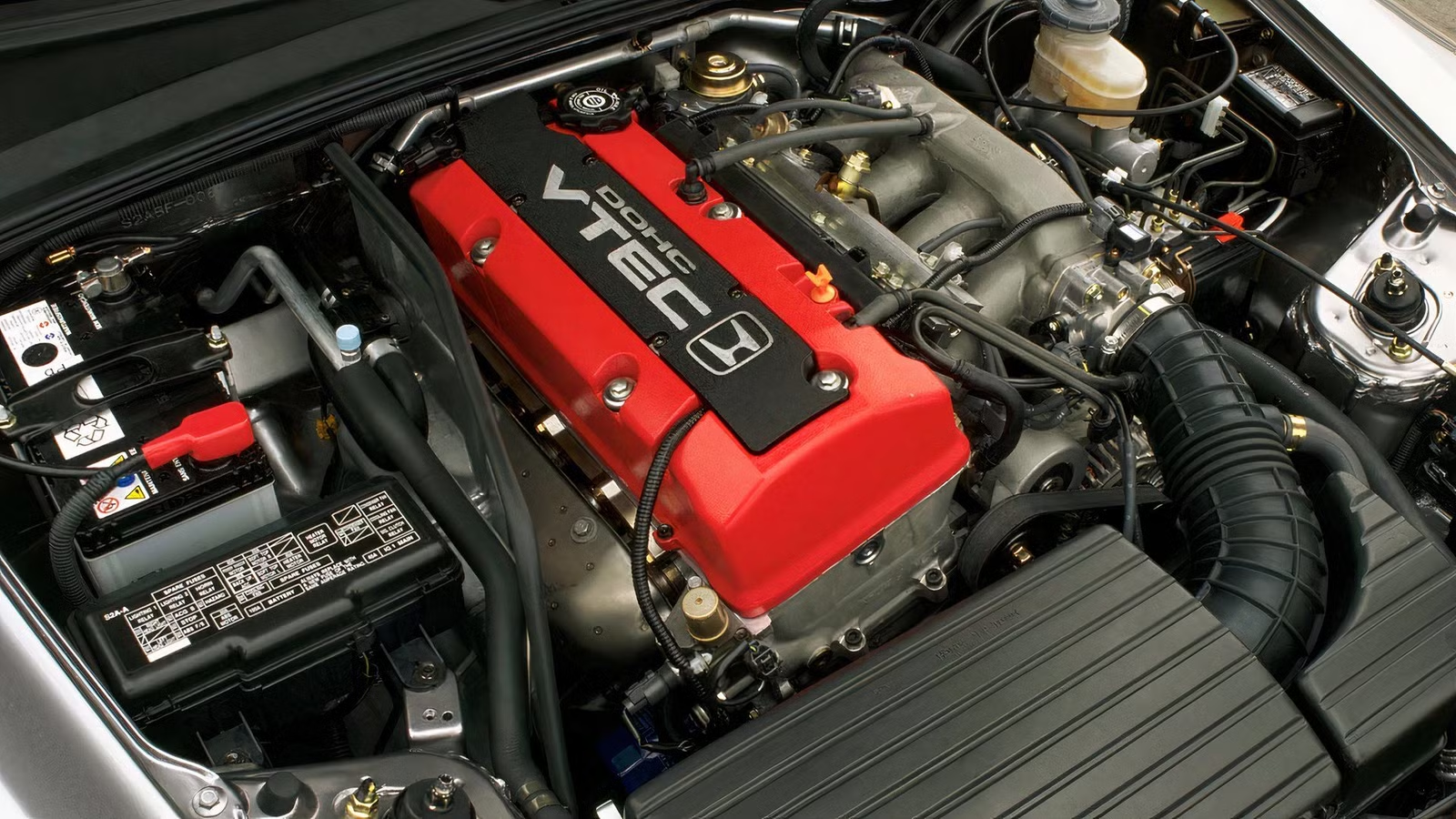
Because the Honda S2000 was rear-wheel drive, the car’s dual overhead cam F20C engine sits longitudinally in the engine compartment — one of the few Honda inline engines to be oriented this way. Honda’s VTEC system is applied to both the intake and exhaust camshafts, while roller followers reduce camshaft friction. Redlining at 9,000 rpm, the aluminum-block engine was purpose-built for high-speed operation to maximize power output.
The variable valve timing and lift control system (VTEC) actuated at 6,000 rpm. The JDM version used a higher compression ratio, boosting horsepower to 247 compared to the North American version’s 237. Both the F20C and its replacement, the 2.2-liter F22C1, were related to Honda’s F-Series engines that powered everything from Accords to Odysseys, though the relationship was distant.
Notably, the F20C held the record for the highest specific power output of any production-car naturally aspirated engine, at 123.5 horsepower per liter, until the Ferrari 458 Italia’s 4.5-liter V8 arrived with a specific output of 124.5 hp/liter.
Honda’s S2000 AP2 Engine Increased Displacement But Not Power
For the 2004 model year, the S2000 AP2 received subtle cosmetic changes and was revised extensively beneath the skin, with a retuned suspension and revised transmission among the updates. Originally created for the North American market, the engine displacement was increased to 2.2 liters by lengthening the stroke, and the longer piston travel required pulling the redline and fuel-cutoff back by 800 rpm.
Power for the North American model held steady at 237 hp, while the JDM version dipped to 239 from the F20C’s 247. The engine was exclusive to North America for the 2004 and 2005 model years before being introduced into the Japanese domestic market in 2006. The 2008 Club Racer edition shed weight by deleting items such as the folding top and spare tire, improving S2000 performance without touching the horsepower figure.
The Porsche 968 Also Had A Powerful Four-Cylinder Engine
There was a decade or two when Porsche joined the front-engine, rear-drive ranks with the wonderfully performing 924/944 cars and their successor, the 968 — all of them featuring powerful, large-displacement “fours.” By the time the 968 arrived, the four-cylinder’s displacement had grown to 3.0 liters, the size of many contemporary six-cylinder powerplants. Producing 237 horsepower, it was the last front-engined Porsche until the Cayenne SUV arrived in 2003.
Porsche 968 Engine Specs
|
3.0-Liter 4-Cylinder |
|
|
Power |
237 HP @ 6,200 RPM |
|
Torque |
225 LB-FT @ 4,100 RPM |
Porsche 3.0-Liter 4-Cylinder Fast Facts
- Fourth-largest four-cylinder production engine at the time
- First engine with VarioCam variable valve timing
The Porsche 968 was developed as the final variant of the aging 944, which had been introduced in 1982, revised as the 944 S in 1987, and again as the 944 S2 in 1989. All models used four-cylinder engines with 2.5 or 2.7 liters of displacement and an optional turbocharged setup. After an extensive overhaul of the exterior and interior, and a thorough reworking of the solid engine from the 944 S2, Porsche gave the updated model its own name: 968.
The 3.0-liter engine was upgraded to 237 horsepower from its predecessor’s 208, thanks to changes in compression ratio, a revised intake manifold and valves, and the addition of VarioCam variable valve timing. A Club Sport version of the 968 sharpened performance by stripping away convenience features such as air-conditioning and the rear seats.
Aftermarket Tuners With High-Powered Four-Cylinder Sports Cars
Aftermarket tuners and custom car builders have also played a significant role in developing high-powered four-cylinder engines, often with the help of racing specialists such as Cosworth and AMG. It’s not uncommon to see niche car builders sourcing engines from mass-market manufacturers like Ford and handing them to engine modifiers to extract maximum power. Caterham and BAC are prime examples.
Caterham Superlight R500 Performance
- 263 HP @ 8,500 rpm
- 177 LB-FT @ 7,200 rpm
- 0-60 MPH in 2.9 seconds
Caterham, whose cars evolved from the legendary Lotus Seven, took a 2.0-liter Ford Duratec four-cylinder engine and wrung 263 horsepower from it, encased it in a carbon fiber body, and sent the car sprinting to 60 mph in under three seconds.
Caterham would go on to produce more powerful engines through forced induction, but this naturally aspirated “four” was a perfect match for the lightweight Seven, which tipped the scales at roughly half a ton — good for a power-to-weight ratio of 495 hp per ton.
BAC Mono
BAC stands for Briggs Automotive Company, founded in 2009 when brothers Neill and Ian grew tired of designing and developing sports cars for companies such as Bentley, Ford, Mercedes, and Porsche. The brothers set out to build the lightweight single-seat, street-legal Mono. The original Mono used a 280 hp 2.3-liter Ford Duratec engine heavily modified by high-performance specialist Cosworth.
The car set numerous production-car lap records on circuits around the world, but there was always room to go further. Enter the Mono R, which used a 2.5-liter Duratec “four” to push output to 343 horsepower, courtesy of modifications from Mountune including a ram-air inlet, revised throttle body injection, and drive-by-wire throttle response.
The Legacy Of High-Performance Four-Cylinder Engines

The four-cylinder engine has acquired a perhaps undeserved reputation as the runt of the engine universe, only one step above the lowly three-cylinder. Yet there’s no denying that many milestones of automotive engineering were built around the “four.” The celebrated Bentley Blower used a massive 4.5-liter inline four-cylinder engine, and many of today’s most reliable commercial powerplants are large-displacement four-cylinder turbo-diesels.
These days, forced induction and electrification have taken four-cylinder power figures to unprecedented levels, but there was a time when engine builders took up the challenge of creating more from less — no turbochargers, no superchargers, just engineering ingenuity. The four-cylinder’s days may be numbered in performance circles, but cars like the Honda S2000, with its all-time record-holding naturally aspirated “four,” will never be forgotten.
Sources: Honda, Porsche, BAC, Caterham

Related posts
Latest Post


No Comments