
The Hellcat Gets All The Attention, But This Is The One You Actually Want To Own
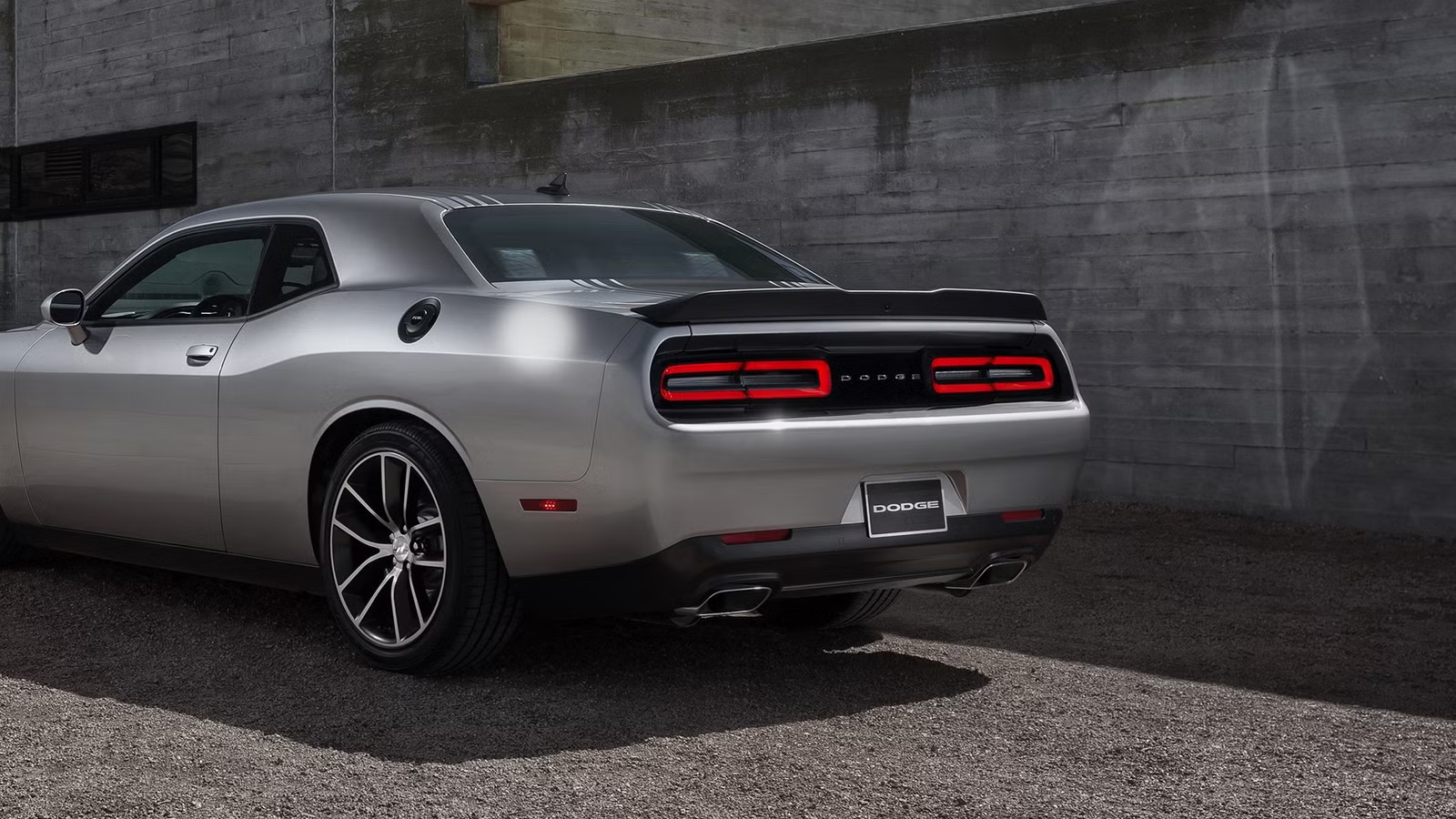
When Dodge introduced the Challenger SRT Hellcat in 2015, it rewrote the rules for American muscle cars. And at the same time, somewhere in an old, dusty automotive shop, a single finger curled shut on a cursed monkey’s paw.

It was everything anyone could ask for and delivered what seemed like the last word on relatively attainable American horsepower and torque. But in giving enthusiasts everything they thought they wanted, Dodge might have overshadowed the Challenger they actually needed.
The Hellcat Turned Horsepower Into An Arms Race
The 707 horsepower offered by the original Hellcat’s supercharged V8 was an astonishing muscle car figure for 2015, especially for a car that could be driven off a dealership lot with a factory warranty. It blew Dodge’s sporting coupe right into an echelon usually reserved for hypercars, drag strip builds, and electric novelties.

Dodge wasn’t finished, either. The Hellcat only grew more powerful, the Redeye raised the bar by pushing output to 797 horsepower, and the Demon 170 eventually arrived with a preposterous 1,025 horsepower on E85. The Durango and the Grand Cherokee got in on the action, too, proof that in addition to dialing up the power, it was possible to stuff it into increasingly unlikely packages.
But the relentless pursuit of bigger numbers had an unintended consequence. Some genuinely impressive cars were left looking like also-rans, despite offering more power than most enthusiasts would ever have imagined needing a decade earlier.
The Scat Pack Isn’t Just A Poor Man’s Hellcat

Lost somewhere in the parade of increasingly powerful Hellcats was a Challenger that would have stood out as an instant enthusiast favorite in a Hellcatless world. The Challenger R/T Scat Pack landed right at the same time as that first Hellcat and got about as much attention as you’d expect, rumbling in the shadows of a generational powerhouse that dominated the headlines.
In 2015, when “707” was the only number anyone cared about, the Scat Pack was putting out 485 horsepower and 475 lb-ft of torque through a 6.4-liter Hemi V8 with no forced induction required. It was (and is) a delightful amount of power that doesn’t need to justify itself on the forums to have a good time. In a sane world, it would have been the ultimate rear-wheel-drive V8 experience, to say nothing of the available six-speed manual that you could use for something other than destroying tires.
There’s Something To Be Said For Usable Horsepower

Now just to be clear, 485 horses is not a modest amount of power. It’s a compromise only by comparison, and it’s a serious handful for drivers who get carried away with the accelerator.
But compared to the 700-plus horsepower put down by the Hellcat and its increasingly antisocial variants, it’s a downright usable automobile. This is true when you’re running errands and not trying to prove anything, but it’s also true when you’re pushing it or driving in anger. Because for most drivers, the difference between 400-something and 700-something horsepower means being able to actually approach the limits of performance versus just hanging on for dear life.
It’s a lighter, naturally aspirated car that can still reward confidence without becoming an ongoing exercise in managing traction.
The Ownership Math Favors The Scat Pack

Even if you don’t think driving experience deserves the last word on making the case, the financial side of the equation does have a thing or two to say. Horsepower isn’t the only number that matters when it comes to living with a car. There’s also the small matter of paying for it, insuring it, maintaining it, and occasionally replacing all that rubber you painted onto the pavement so gleefully.
When Dodge initially announced pricing for the final 2023 Challenger lineup, the R/T Scat Pack had a starting MSRP of $45,845. The Hellcat Jailbreak started at $70,035, leaving more than a $24,000 difference between the two before you even thought about calling your insurance agent.
That extra money bought a tremendous amount of horsepower, but it didn’t buy another two seats, a more useful trunk, or an entirely different driving experience. Both were still Challengers, with the same basic appeal and many of the same everyday strengths. And while used prices have changed the equation somewhat, the original difference illustrates just how much Dodge charged for those additional horses.
None of this makes the Scat Pack cheap to own. It just means you can have an enormously entertaining muscle car without paying quite so dearly for horsepower you might rarely use.
Sometimes Less Really Is More

None of this makes a Hellcat a bad thing. It’s the kind of pure American excess that is nice to know exists.
But for a lot of us, knowing that Hellcats are out there and that someone is delighting in their absurd levels of horsepower is a thought that can be enjoyed without ever needing to own one. If you’re choosing a vehicle because you want to be the driver of an awesome muscle car and not be the mortal steward of an automotive archetype, the Scat Pack can be everything you need and more.
So as long as we’re doing some soul-searching: Is the Hellcat really the car you want, or just the car you want to tell the forums you have? Because depending on your answer, the Scat Pack might be the real legendary muscle car calling your name.
Sources: Dodge, Stellantis, MotorTrend, DrivingLine

Related posts




Latest Post


No Comments