
ShowTime Repco-Mod 933: Front-Engine V8 Porsche 911 Revealed
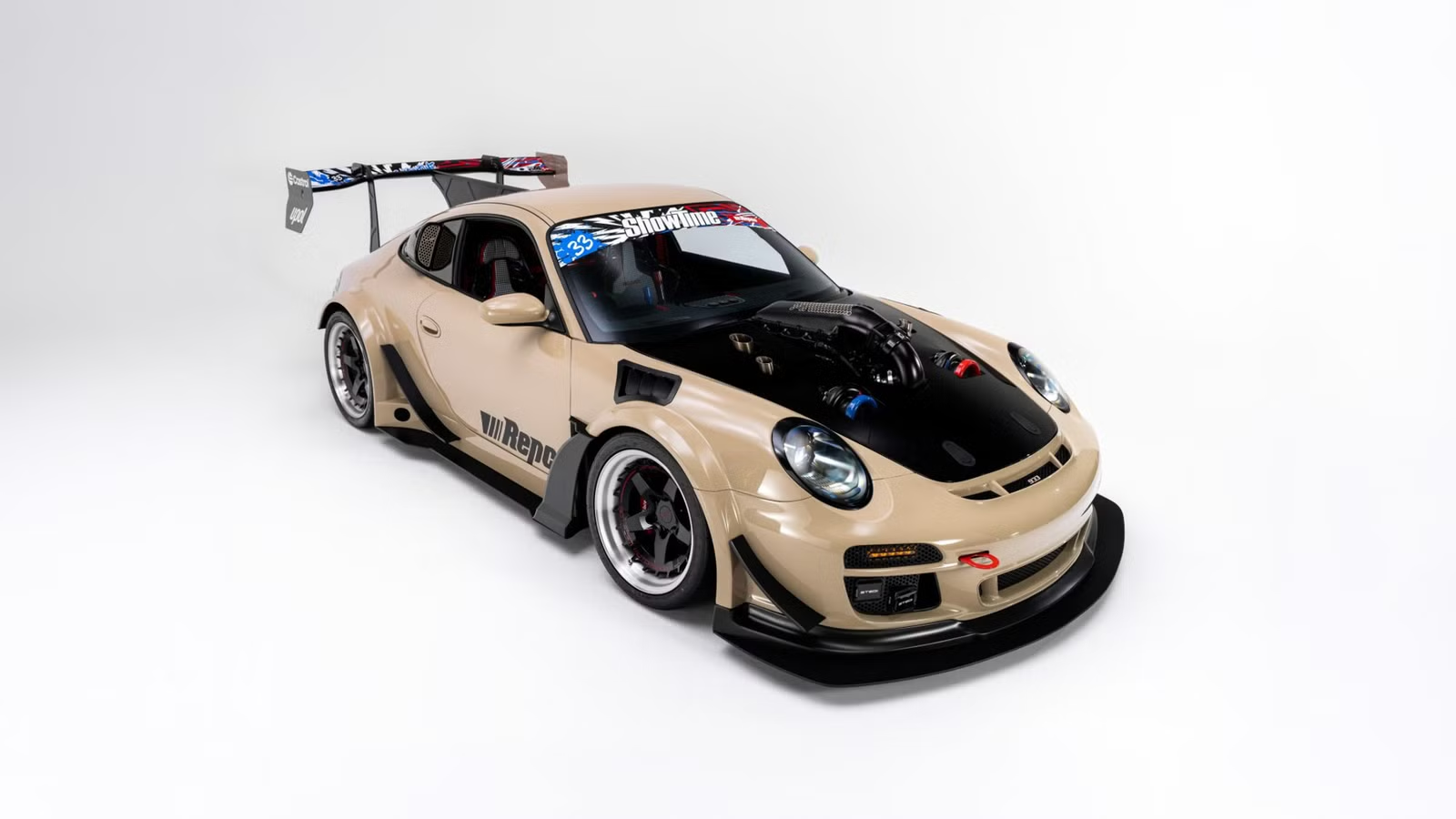
Porsche has built the 911 one way since 1963: flat-six engine, mounted behind the rear axle, full stop. That layout is the whole identity of the car, the thing every generation from the 901 to the 992 has protected even as turbos, all-wheel drive, and hybrid tech crept in around it. Australian tuners ShowTime and Repco just ignored all of it.

The ShowTime Repco-Mod 933, revealed ahead of the Bathurst 1000 at Mount Panorama, takes a 996-generation 911 and rips the rear-engine layout out entirely. In its place: a twin-turbocharged LSX V8 crammed up front, making over 1,200 horsepower. It’s the kind of build that should read as blasphemy on paper. On track, by every account from the reveal, it just works.
A 996 Shell Became The Canvas For A 2,000-Hour Rebuild
The team didn’t start with a clean 911. Builders described the donor as “a tired shell and boxes of parts,” not a pristine example some Porsche purist might mourn. What came out the other side barely resembles a stock 996. ShowTime fabricated a new firewall, floor, and transmission tunnel to make room for the front-mounted V8, then widened the fenders in aluminum and swapped the roof, hood, and doors for carbon fiber. An integrated roll cage ties the structure together. All told, the build took more than 2,000 hours.

The engineering gets stranger the deeper you look. With the flat-six’s old home empty, the cooling system now lives where the engine used to sit, at the back of the car. Power runs through an eight-speed gearbox pulled from a Bentley, operated sequentially through a pair of tall carbon-fiber levers in the cabin, one for the gearshift and one for the handbrake. The exhaust, with nowhere to route under a body never designed for a front engine, exits straight up through holes cut into the hood.
A Twin-Turbo LSX V8 Does The Job No Factory Flat-Six Ever Did
The heart of the 933 is a 7.0-liter LSX V8, built by Hi-Torque Performance and fitted with twin Turbosmart turbochargers, running E85 and managed through Haltech electronics. Output lands north of 1,200 horsepower, a figure that makes even the hottest factory 996 look sleepy by comparison. The 996-generation GT2, the most powerful 911 of that era, made 456 horsepower from its twin-turbo flat-six. This build nearly triples that number from an engine configuration and location Porsche never sanctioned.
Inside, the cabin keeps just enough 911 DNA to feel honest about its roots. Recaro racing seats wear Porsche’s Pepita checkered fabric, and the dash carries a motorsport-spec steering wheel ahead of a digital cluster. The paint is Sandy Taupe, borrowed from the Toyota Land Cruiser parts bin rather than any Porsche palette, finished with red, black, and blue accents on the turbo intakes, brakes, wheels, and roll cage.
Repco’s Racing Pedigree Backs Up The Provocation

ShowTime brand ambassador Gary Reid laid out the thinking behind the build plainly: “I’ve always been a Porsche fan, and I love big-horsepower V8s, so the plan was simple: put a twin-turbo LS 427 in the front of a 911 Porsche, build a one-off wide-body kit, take inspiration from builds all over the world, and the result is this: the 933 Twin Turbo.”
Repco isn’t just a parts-bin sponsor here. The company has real history in motorsport’s record books. In 1966, Jack Brabham won the Formula One Drivers’ World Championship driving the Repco-Brabham BT19, with Brabham’s own team taking the Constructors’ title in the same season, the only time a driver has won an F1 championship in a car of his own make, run by his own team. That pedigree gives the 933’s badge more weight than a typical tuner crossover.

The ’33’ in the name comes from ShowTime’s traditional competition number, and the car is a one-off, not a kit or a production tease. It’ll tour Australian car-culture events and appear at Mount Panorama, a rolling argument that Porsche’s rear-engine doctrine, as sacred as it’s treated, was never the only way to build a fast 911.

Related posts


Latest Post


No Comments