
The Front-Drive Lancia With A Ferrari-Derived V8 And A Backwards 911 Weight Balance
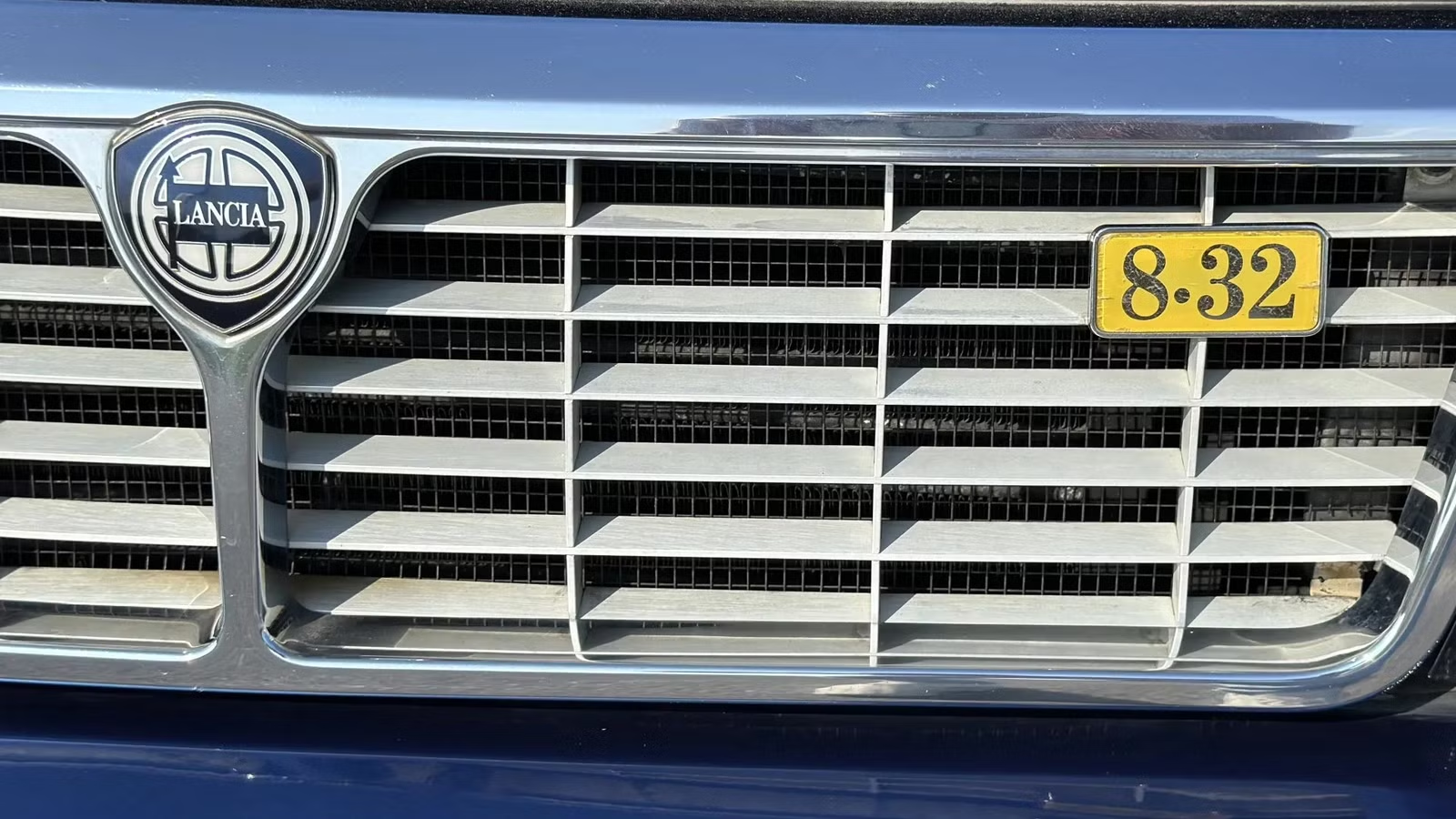
It was the ’80s and Ducati was building a car engine. It came from Ferrari and was going into something with weight distribution echoing the Porsche 911, the kind of thing that kids dream about while they make sketches in the margins of their math notes.

But this automotive dream team seemed to go out of its way to have everyone play the wrong positions. An engine assembled by Ducati, but make it a sedan. A Ferrari V8? Turn it sideways and tune it for luxury cruising. And as for that 911 weight balance, definitely keep it, just make it backwards.
An Italian Luxury Sedan With Some Unusual Relatives
This unlikely story begins with an unusual partnership between Fiat and Saab. The companies had joined forces in the 1970s to co-develop the underpinnings for their next generation of executive sedans. The resulting Tipo 4 platform would go on to be the foundation of four remarkably different vehicles: the Saab 9000, Fiat Croma, Alfa Romeo 164, and Lancia Thema.

They were all front-wheel-drive cars, but despite their shared engineering, they each managed to retain their own personalities. The Saab was the epitome of Scandinavian pragmatism, the Fiat was affordable family transportation, and the Alfa brought some sporting fizz to the table.
Lancia’s work took the platform in yet another direction: a handsome if boring-looking sedan. The Thema offered everyday comfort and respectable enough performance, with four- and six-cylinder engines available. It was a perfectly sensible luxury car that no one would mistake for anything more exotic than its platform-sharing relatives.
And so they tweaked the formula.
The Lancia Thema 8.32 Had A Ferrari V8 Built By Ducati

Introduced in 1986, the Lancia Thema 8.32 took the Tipo 4 platform and started to push the boundaries. The sensible Thema sedan picked up a 2.9-liter Ferrari V8 borrowed from the 308 Quattrovalvole, along with the 32 valves that would give the new creation its name.
But there was more happening here than simply dropping a Ferrari powerplant into an unsuspecting Lancia. Ferrari supplied the engine castings while Ducati, better known for building Italian motorcycles, took point on assembly. Lancia also went to work transforming the character of the V8, replacing its flat-plane crankshaft with a cross-plane design for smoother operation more appropriate for a luxury sedan.
The resulting engine initially produced roughly 212–215 hp and 209–210 lb-ft of torque, while later emissions-controlled versions generated a bit less. It was enough to give the Thema a claimed top speed of about 149 miles per hour. But was this an autobahn cruiser or a potential track weapon?
It Had The Weight Balance Of A Backwards Porsche 911

With a substantial V8 sitting transversely in a front-wheel-drive sedan on a platform that wasn’t designed with that in mind, handling was going to be an open question at best. The Porsche 911 famously carries a disproportionate amount of its weight over the rear wheels, thanks to its flat-six tucked behind the rear axle. Lancia seemed to have come up with the exact opposite of that.
The front wheels responsible for both steering and delivering power were also carrying the weight of that big stuffed-sideways V8 and, as you might expect, it wasn’t a recipe for sports-car handling. Lancia did what it could to mitigate the implications of the setup, but there’s only so much you can do when your Ducati-built Ferrari-engined luxury sports sedan understeers like a Pontiac Grand Prix GXP that doesn’t exist yet.
A revised suspension, big ventilated front brakes, and adjustable dampers were all intended to sharpen handling as much as possible, but the engineering could only fight the fundamental layout so much.
Ferrari Power Came With A Ferrari Price Tag

The thing about bringing together all of these elite Italian components and craftsmanship is that even if the sum of its parts is less than optimal, you still end up with an elite Italian price tag. In Britain, the Thema 8.32 cost £37,500 in 1988, which would have been substantially more than the contemporary M5, arguably the gold standard for luxury sports sedans. Even Lancia’s own Thema Turbo would have provided a good portion of the performance experience, but for less than half the money.
Still, you absolutely got more for your money than the Ferrari/Ducati pedigree. There was genuine wood trim and upholstery from Italian luxury specialist Poltrona Frau, the sort of interior that tacitly suggests you dress properly before climbing inside. There was also an electrically retractable rear spoiler, an odd bit of aerodynamic theater that would have elicited some amount of late-1980s excitement as it maneuvered itself in and out of the trunk at the press of a button.
Buyers weren’t getting the fastest luxury sedan on the marketfor their money, but it’s hard to deny that they got something special.
A Rare Italian Oddity That Still Has Its Admirers
The Thema 8.32 ended production in 1992 after delivering about 3,520 cars between its two generations. That’s a tiny number, especially compared to the high sales volume of the ordinary Thema.
Nonetheless, the car attracted a devoted following among those in the know, with notable admirers that included Rowan Atkinson and perhaps even Enzo Ferrari himself, who reportedly used his as a daily driver despite accounts that he’d refused to allow Ferrari badging on the car’s exterior.
Today, an 8.32 can typically be found advertised for between €20,000 and €30,000, although exceptional cars can command more. That’s hardly cheap, but still not bad for a wonderfully unique Italian luxury sedan worthy of Enzo Ferrari that’ll get you a knowing nod from Mr. Bean.
Sources: Lancia, Stellantis Heritage, Road & Track, Hagerty, Retro Motor, Motor1, Autoblog, Classic Trader, ANSA

Related posts

Latest Post


No Comments