
The Forgotten Suzuki That Rehearsed The GSX-R Formula Before The GSX-R Took The Credit
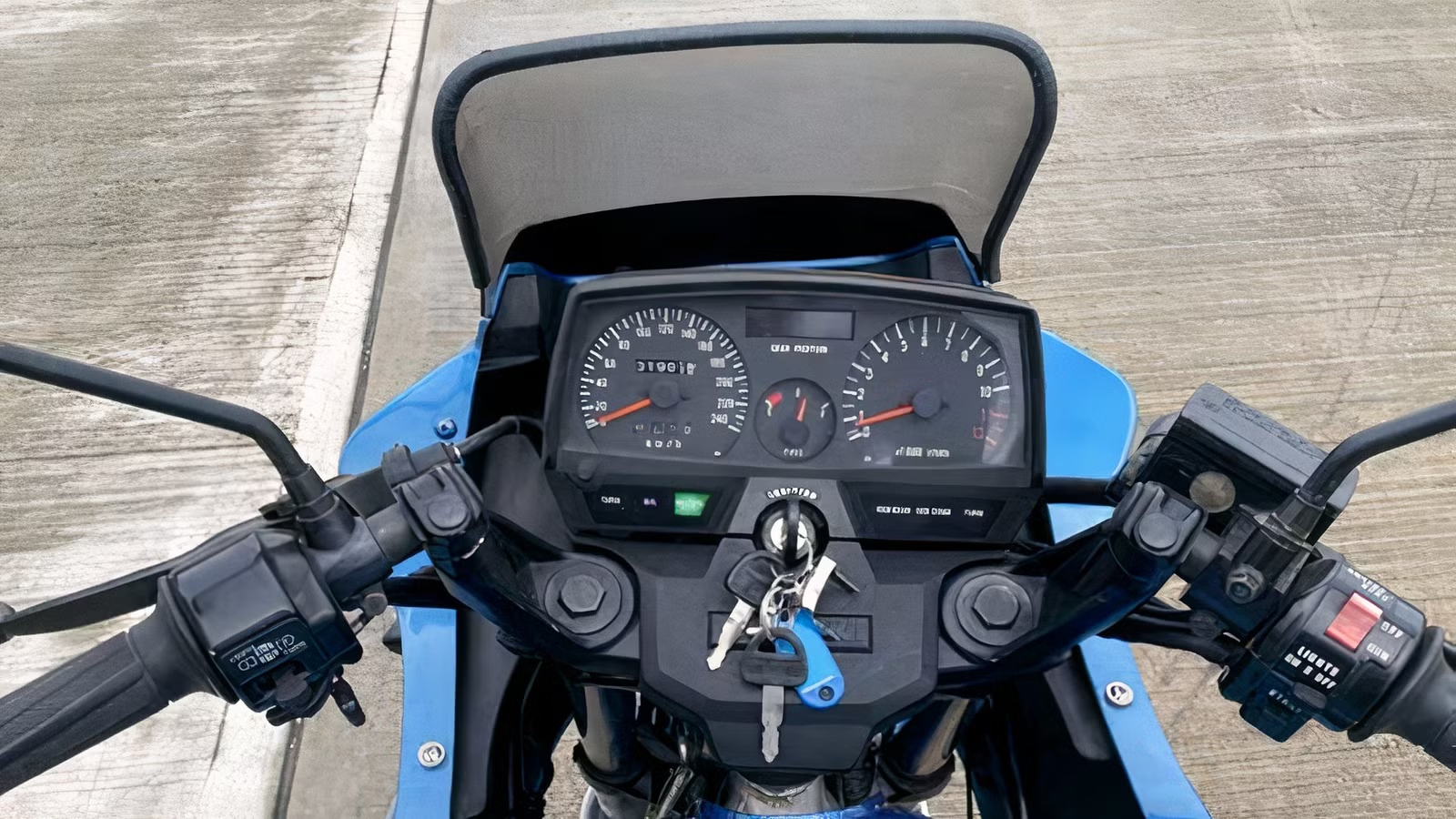
If you take the bodywork off a certain Suzuki 550 from the early 1980s, you’ll catch them red-handed. That’s because from five feet away, the frame looks like pure race-spec aluminum. However, if you get down on your knees and look where the dealer prep guy didn’t polish, it’s just basic round steel tubing. That square-section frame was actually steel tubing painted silver to give it a umm… race-bike look.

They knew sportbikes were the future. But Suzuki opted to fake it until they made it. Or, in other words, it was a dress rehearsal for what was to come further down the road.
Suzuki Was Already Experimenting With A Lighter, Sportier Formula
See, Suzuki had the classic middleweight blueprint with the GS550. They had a four-cylinder workhorse that routinely wiped the floor with Honda’s CB550. But the street evolved. Kawasaki pushed the envelope with the Z500, expanded it into the Z550, and spawned the sharper GPz550. It was then when the middleweights were suddenly turning into real sportbikes, and Suzuki needed a fix fast.

The OEM threw a hard counterpunch: lighter four-cylinder engines with four-valve heads, sharper styling, and actual suspension upgrades. And they had to react, simple as that. The new GSX generation arrived in 1983. It featured four-valve engines, lighter construction, updated suspension, and sportier styling.
The GSX550EF Had The Right Ideas, But Some Rough Edges

Next year, the Suzuki GSX550EF debuted. This was the fully faired twin to the half-dressed ES. Hanging in the faux aluminum frame was an entirely new 572cc inline-four.
The engineering folks at Suzuki threw out the old GS’s heavy roller-bearing crank for a lighter plain-bearing unit, then topped it with a 16-valve TSCC (Twin Swirl Combustion Chamber) head. Even the fuel system had a strange twist. It was feeding four cylinders using just two twin-choke Mikuni carbs instead of the standard four-rack setup.
The real magic, but, was on the scales. Suzuki trimmed 7 kg off the motor, 1.5 kg off the exhaust, and 1.5 kg off the intake. At 198 kg wet, it was noticeably lighter than the 215 kg GS550. Claimed power figures reached around 64 hp, although period testing put output at 57 bhp at the rear wheel.
It Looked Ready For The Racetrack, But Performance Had Its Limits

The visual trickery worked. Beyond that, the motorcycle had a 16-inch front wheel, and the blue, white, and red war paint gave it a dead-on impression of a Grand Prix machine. The small front wheel, too, was very much in keeping with the era of mimicking GP-going siblings.
However, the saddle tells a totally different story. The engine was refined and served up a meatier spread of torque than the peaky GPz550, but it lacked real top-end spark. Once you passed 9,000 rpm, the motor completely ran out of steam. On paper, if you see, the gap seems tiny: 57 rear-wheel horses playing catch-up to the Kawasaki’s 60-plus. But specs don’t capture the seat-of-the-pants reality. The GSX is said to have signed off early, while the GPz was singing all the way to ten grand.
That 16-inch front wheel didn’t help either. The high handlebars and relatively little weight over the front wheel made the Suzuki feel light and nervous. The GPz550’s 18-inch front wheel was more composed by comparison.
Then the electrical demons crawled out. The wiring harness was an absolute mess. The alternator could overheat and fail, while a faulty regulator/rectifier could send significantly more volts into the battery instead of the usual 13-odd volts, boiling it dry. In serious cases, the alternator, regulator and battery could all fail together. The electronic ignition and rev counter also had a poor reputation.
The GSX-R750 Took The Formula Further

Then March 1985 hit, and the GSX-R750 smashed into showrooms, delivering the actual race-bred revolution the 550 could only fake. It featured a 16-valve engine and an aluminium cradle frame. It wrapped a 16-valve motor in an ultra-light aluminum cradle frame, using oil cooling (SACS) to handle thermal load without adding liquid-cooling mass. The numbers were staggering for the era: a bone-dry weight of 179 kg paired with 106 claimed horsepower in the Japanese market. The middleweight transition era was officially over.
The GSX550 wasn’t a direct predecessor to the GSX-R750. The latter was a separate project led by Etsuo Yokouchi, who followed a simple ‘light and fast’ philosophy. After making the GSX-R400 about 18 percent lighter than its rivals, he believed the same approach could work for the 750. Its engine also benefited from the GSX750E’s racing experience. The GSX550 was part of the same shift towards lighter, sportier motorcycles, but it didn’t directly lead to the GSX-R.
The Forgotten Link In Suzuki’s Sportbike History

Put the 550 next to the GSX-R, and you can spot a few similarities. The lighter engine, 16-valve head, rising-rate rear suspension and race-inspired styling were all ideas that would become common on sportbikes. The 550 had them early on, but wasn’t quite there yet. It was around 17 kg lighter than its predecessor, but still had a steel frame dressed up to look like a racer, an engine that struggled past 9,000 rpm, and an electrical system that had a habit of overheating.
It was never a hidden superbike. There’s no point pretending otherwise. Think of it as a dress rehearsal. Suzuki had many of the right ideas, but the execution still needed work. The GSX-R750 was the bike that finally brought the aluminum, the SACS cooling, and the high-rpm punch to deliver on the promise. That was the machine everyone remembered, and that was the one that got the applause.

Related posts
Latest Post


No Comments