
1970 Chrysler 300 Hurst: Luxury Muscle Car Explained
By 1970, the classic muscle car had been clearly defined. Coupes with fancy pinstripes, flashy paint schemes, a stripped-out cabin, and big rumbling V8s that would rattle you to the bone; basic comfort was traded for raw speed. With that said, one manufacturer out of the big three was quietly about to unleash a completely different type of beast on the streets. An unconventional car that measured over 18.5 feet long and weighed over two-and-a-half tons, with a premium interior and a monster hidden beneath its hood. A machine that defied the logic of what it meant to be Detroit performance.
When Muscle Cars Traded Comfort For Raw Noise

As the horsepower wars reached their absolute peak by the late 1960s, the big-block V8, the mainstay of that era, was being shoehorned into intermediate and compact platforms, giving rise to the stripped street brawlers. However, these cars were built for just one purpose: to achieve the fastest straight-line acceleration. With that, daily drivability was at the bottom of the list for these cars.
For the mature or older enthusiast, it was even more difficult: if you wanted a comfortable ride, you had to give up power and choose a traditional full-size coupe, which came with body roll and muted highway performance without that classic big-block punch. You had to choose between stiff suspension, loud exhaust, or the luxury of air conditioning, power windows, and plush leather seats. There was no single choice that could meet both the demands of relentless highway performance and the need for luxury and comfort. This exact problem was going to be addressed by Chrysler in 1970.
Chrysler’s Full-Size Fuselage Took An Unlikely Detour

Chrysler had a brand-new “fuselage” design language for the 1969 model year, which had the perfect underpinnings for a high-speed luxury machine. It featured curved side glass and sweeping aircraft-inspired body panels. The C body was aerodynamically perfect for high-speed interstate cruising. Rather than restricting the massive C-body to being a country-club commuter, Chrysler executives decided to experiment for the 1970 model year.
They partnered with Hurst Performance, the legendary outfit that built the Hurst shifters, wild drag-race cars, and wild Hurst builds. The goal was to take Chrysler’s formal, top-of-the-line executive coupe and transform it into a limited-production muscle car special. Hurst took on the challenge and converted the C-body into a full-race-inspired makeover.
The 1970 Chrysler 300 Hurst

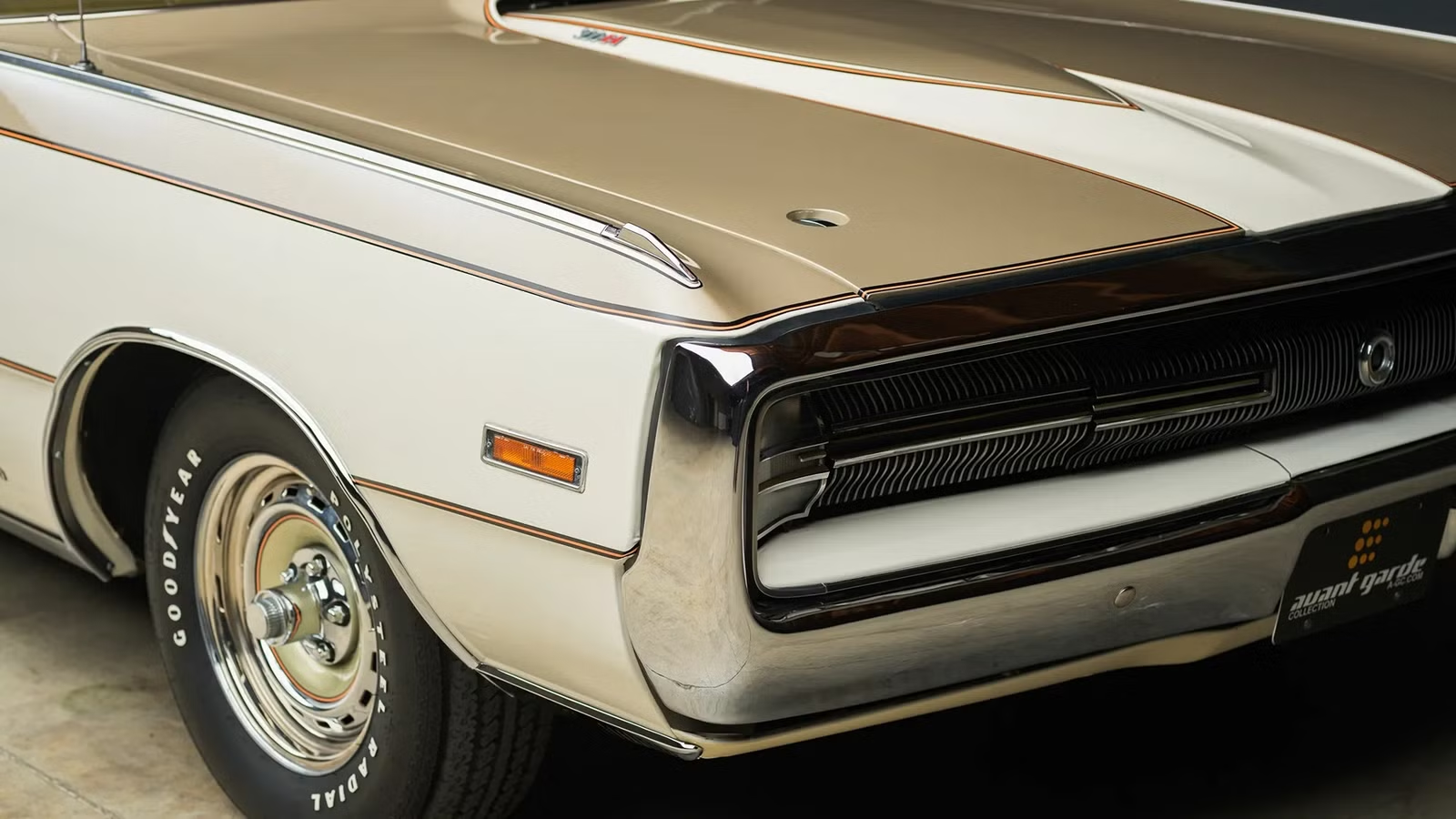
When the 1970 Chrysler 300 Hurst made its debut, it stood out as one of the most visually imposing luxury cars of the time, measuring 224.7 inches in length and riding on a 124-inch wheelbase; it had an undeniable road presence. Hurst had wrapped the car in a bespoke visual package, blending the formal C-body looks with muscle-car aesthetics. The exterior was finished in a striking two-tone color scheme with a Spinnaker White base coat accented with Satin Tan striping and accents along the hood, roof, and decklid.
To reduce the weight of the massive front and rear overhangs, Hurst replaced the factory steel panels with custom fiberglass panels. The front had a lightweight air scoop that was secured by heavy-duty twist-lock hood pins, while the rear had a custom fiberglass decklid with an integrated spoiler lip.

Underneath the fiberglass hood was a Mopar masterpiece: Chrysler’s 440-cubic-inch TNT V8, with a heavy-duty four-barrel carburetor and a dual-exhaust setup. The engine put out a mighty 375 horsepower and 480 lb-ft of torque. The 300 Hurst was only available with an automatic transmission: a heavy-duty TorqueFlite 727 three-speed automatic, either column-mounted or console-shifter, depending on the trim.
Yet the greatest irony of the 300 Hurst was revealed the moment you opened the heavy full-size doors. Instead of a stripped-out cockpit, the driver was greeted by bucket seats wrapped in soft, button-tufted saddle-tan Imperial leather pulled straight from Chrysler’s flagship Imperial LeBaron, along with power steering, front disc brakes, power windows, thick carpeting, and faux wood-grain trim across the dashboard. It was a living contradiction: a fiberglass race car on the outside and a luxury limousine on the inside.
Decoding The Production Numbers And Price Tag Discrepancies

Because the Chrysler 300 Hurst was a low-volume, mid-year special manufactured as a joint venture between Chrysler and Hurst Performance, the historical record has sparked significant debate among Moparhistorians. While the fuselage architecture was introduced in 1969, factory documentation confirms that the Hurst 300 was strictly a 1970 model year exclusive. Production figures also differ depending on the historical record referenced.
Chrysler’s internal documents cite a production run of 485 standard hardtop units that were built for Hurst conversion, whereas Mopar historians frequently cite 501 total units. There is a similar split regarding the car’s original window sticker and the purchase price. The frequently cited baseline $4,234 figure represents the starting MSRP of a standard, base Chrysler 300 two-door hardtop. However, with the Hurst package and upgraded factory equipment, the window sticker was routinely between $5,849 and $5,939.
How 480 Pound-Feet Of Torque Moved Two-And-A-Half Tons

On paper, expecting a full-size executive luxury cruiser weighing between 4,440 and 4,830 pounds to perform like a muscle car seemed completely absurd. However, when period automotive journalists got their hands on test units, the massive 300 Hurst silenced critics immediately. In the road test conducted by Car Life magazine in 1970, the 300 Hurst recorded stunning performance figures for a car of its size, sprinting from 0 to 60 mph in just 7.1 seconds and completing the quarter mile in 15.30 seconds at 94.4 mph while reaching a top speed in excess of 125 mph.
That 0 to 60 run could easily outpace any standard V8 coupe of its era and blow away a luxury cruiser in its class. The secret to its straight-line speed was no surprise: the relentless low-end grunt of the 440 TNT V8, which delivered its massive 480 lb-ft of peak torque at just 3,200 rpm. The big-block engine could effortlessly overcome the car’s heavy weight and gave it spirited performance.
The Ultimate ‘If You Know, You Know’ Mopar Legend

The Chrysler 300 Hurst remains a unique straight-line performance monster from its era, destined to be a rare footnote in Mopar history. The car’s high price, reaching nearly $6,000, and its arrival in the latter half of the model year with minimal advertising meant there weren’t many buyers.
Eventually, insurance rates skyrocketed, and emissions regulations came into play in 1971, which completely choked the performance of V8s. The 300 Hurst was not produced in 1971, resulting in a very limited run of roughly 485 to 501 units sold in the only year it was on sale. Today the 300 Hurst is the ultimate “if you know, you know” car on the market. A representation of a fascinating era of Detroit muscle: putting a big-block into an executive land yacht, which led to the creation of one of the rarest muscle cars Chrysler ever built.
Source: Motor City Garage, Classic.com, Hemmings, Bring a Trailer, Mecum Auctions.

Related posts
Latest Post


No Comments