
The Forgotten Oldsmobile Collectors Are Finally Hunting in 2026
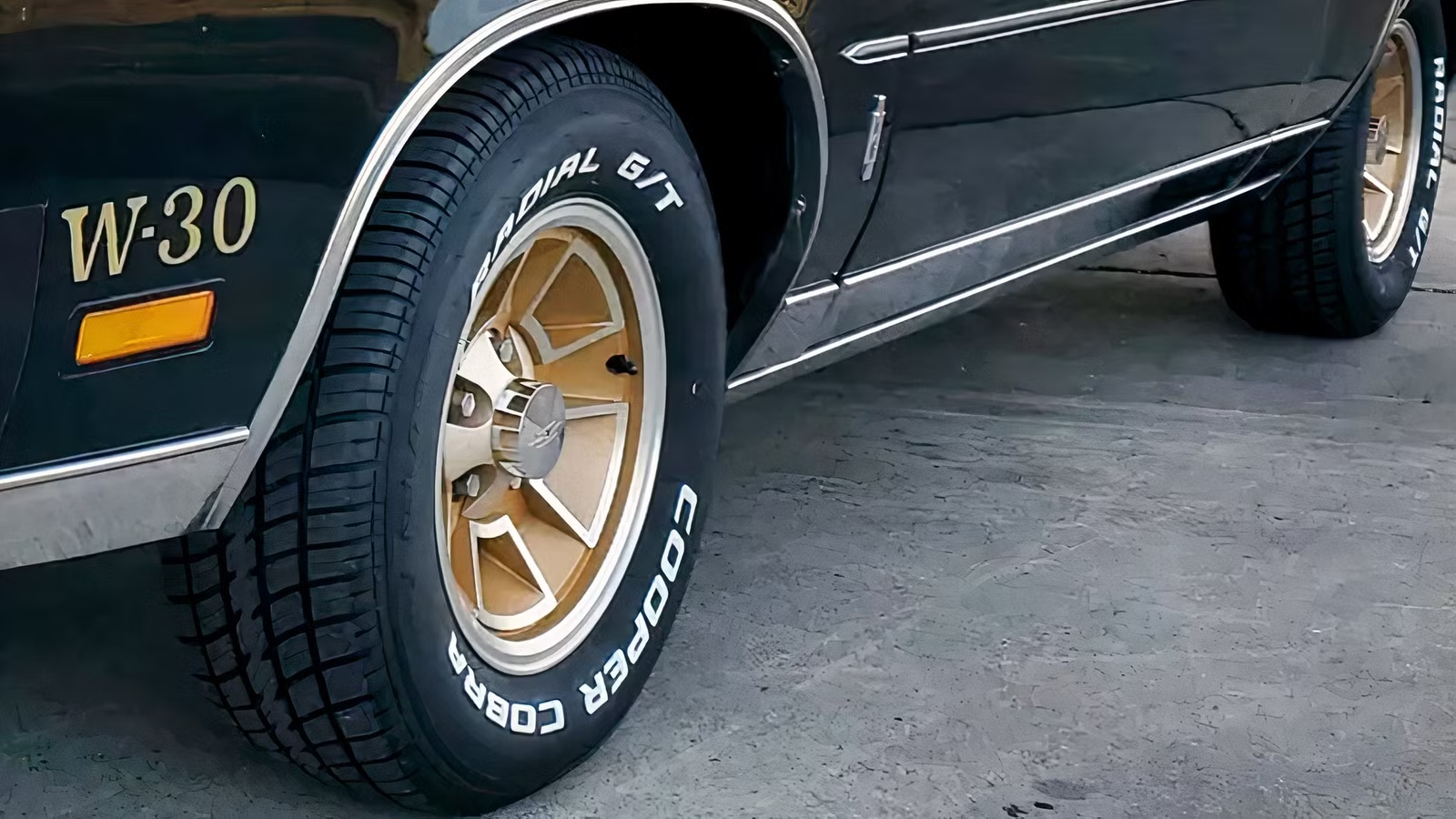
Oldsmobile built 2,499 of these coupes. Not 2,500. And that missing car is the most important part of the story. Back when muscle cars were losing their bite and 1970s luxury specials were collecting gold trim, Oldsmobile found a way to give a smaller coupe a bigger V8 without picking another expensive fight over certification. The result made just 170 hp, hardly a figure worth shouting about. So why stop one car short of a round number? Because the real trick was never horsepower. It was the paperwork.
Why The Production Run Stopped Just Before 2,500 Cars

Hurst/Olds emblem on black sail panel
One extra car could have sent Oldsmobile back to the certification desk. The specific certification strategy described by The Cofer Collection reportedly allowed a powertrain already certified in one model to be used in another body if fewer than 2,500 were built. Oldsmobile’s 350-cubic-inch V8 and Turbo Hydra-Matic 350 automatic had already been certified together in the full-size 88. The smaller body changed the paperwork.

Picture that full-size car’s 5.7-liter V8 beneath a smaller coupe’s hood. It wasn’t a return to the muscle-car horsepower wars, but keeping that much engine in a downsized car was unusual for the time.

Oldsmobile’s 1979 engine supplement lists the L34 350 in the Delta 88. This wasn’t GM’s earlier 400-cubic-inch rule, an internal restriction on engines in intermediate cars. The 1979 issue was federal certification cost, not permission from GM. Nor did a run of 2,499 cars excuse Oldsmobile from emissions standards. The reported savings came from reusing a certified pairing without another certification for that body.
Those 2,499 Cars Became The 1979 Hurst/Olds W-30

That one-car-short gamble produced the 1979 Hurst/Olds W-30. Underneath all that swagger was the downsized Cutlass Calais coupe, with an upright rear roofline and separate trunk. The year’s 4-4-2 rode on the fastback Cutlass Salon instead. You weren’t buying the same car with flashier badges.
And flashy it was. Hurst Gold covered the hood, much of the roof, and the rear of the trunk, with gold accents on the grille and alloy wheels, a nod to Hurst’s luxury Pontiacs. Oldsmobile built 1,334 in Ebony Black and 1,165 in Cameo White. All 2,499 left its Lansing assembly line complete; Hurst provided the shifters, decals, and emblems.
Inside, reclining bucket seats could wear Camel Tan velour; a sport wheel, Rallye Pac gauges, and a digital clock made the cabin feel special. Power steering and brakes took effort out of everyday driving, while tuned suspension gave drivers a handling-focused setup. The bigger V8 was the reason this coupe existed, but the console held its showpiece: Hurst’s “His and Hers” Dual-Gate. Use it like a normal automatic or pick your upshifts through a separate gate. No clutch pedal required, just a bit of driver’s theater.
What That 350 V8 Delivered In An Age Of Smaller Engines

Under that gold hood sat something other 1979 Cutlass buyers couldn’t get: an Oldsmobile-built 350-cubic-inch (5.7-liter) V8 from the full-size Delta 88, an unusual choice for a downsized Cutlass when engines were getting smaller.
The blue-painted L34 wasn’t a Chevrolet 350 with different badges. It was Oldsmobile’s own design, fed by a Rochester Quadrajet four-barrel carburetor. It made 170 hp, but the number to remember is 275 lb-ft of torque, developed at around 2,000 rpm. That’s turning force available low in the rev range, useful for getting a coupe moving with passengers aboard without chasing high engine speeds. It doesn’t make the car a drag-strip star; it makes the big engine’s appeal easier to understand.
The three-speed Turbo Hydra-Matic 350 automatic completed the V8 package. It put the engine’s low-rpm torque to work through the rear wheels, while the Hurst shifter gave the driver a little more involvement.
Beyond Horsepower, Rarity Gives Collectors A Real Reason

Forget the horsepower contest. Only 2,499 Hurst/Olds W-30 coupes were built; this was the last Hurst/Olds with Oldsmobile’s 350 V8. The engine carried on in the 1980 4-4-2, but the Hurst/Olds returned in 1983 with a 307. As with 350-powered pace-car replicas, it’s the factory combination—not sheer power—that collectors value.
Collectors have put money down. Hagerty Marketplace recorded a $23,540 sale of a Cameo White example on October 24, 2025. The listing warned of long storage and possible mechanical work; one sale isn’t a market price. The W-30 package cost $2,054.20 new. Oldsmobile never built No. 2,500. That’s a missing car worth bragging about.
Check The Car Behind The Gold Paint

Don’t let gold stripes do the paperwork’s job. Start with a VIN beginning 3K47R9M: Oldsmobile, Calais coupe, 350 V8, 1979, Lansing. Its fifth character, R, identifies the Oldsmobile 350. Check the body tag for 55M gold paint trim, then match the engine and transmission stampings to the VIN. The Dual-Gate shifter, console, wheels and Rallye Pac gauges should match original records too.
A Bring a Trailer window sticker showed $9,605 as equipped, not a universal base price. Get service history and an inspection. If the numbers or hardware don’t add up, walk away.
Sources: The Cofer Collection, Oldsmobile, Hagerty Marketplace, Bring a Trailer

Related posts

Latest Post


No Comments