
The Forgotten Japanese Motorcycle That Redefined Adventure Riding
Adventure riding has never been more popular, yet the bikes that started it all are increasingly easy to overlook. Scroll through any ADV forum today and you will find riders debating the merits of the latest radar-equipped, semi-active-suspension tourers — machines that weigh as much as a small car and cost as much as a used one. Meanwhile, a quiet counter-movement is gaining momentum. Riders who have actually tried to pick a 500-pound adventure bike up off a muddy hillside are rediscovering what the segment was always supposed to be about: lightweight, rugged, go-anywhere simplicity. That has sent a new wave of enthusiasts straight back to the dual-sport segment, and to one largely forgotten machine in particular.
Old, But Still Gold

Without a shadow of a doubt, the best tool for the job is a rugged dual-sport. Although we have seen a couple of exceptional new dual-sport bikes enter the fray, it was the 650 class that got the whole adventure riding concept going in the first place, and there are still a few of these golden oldies hanging around.
The Kawasaki KLR650 is arguably the least capable of the three 650s still around, but almost certainly the most popular. It is a bike with a huge fanbase, and as a result, it comes with a built-in community that will help you out of a jam if you ever find yourself in one. The Honda XR650L is both lighter and more powerful, but carries a very tall seat height. With no confirmed future model on the horizon, it appears to be winding down production. It is fair to say that nobody ever forgot about either of these bikes, though.
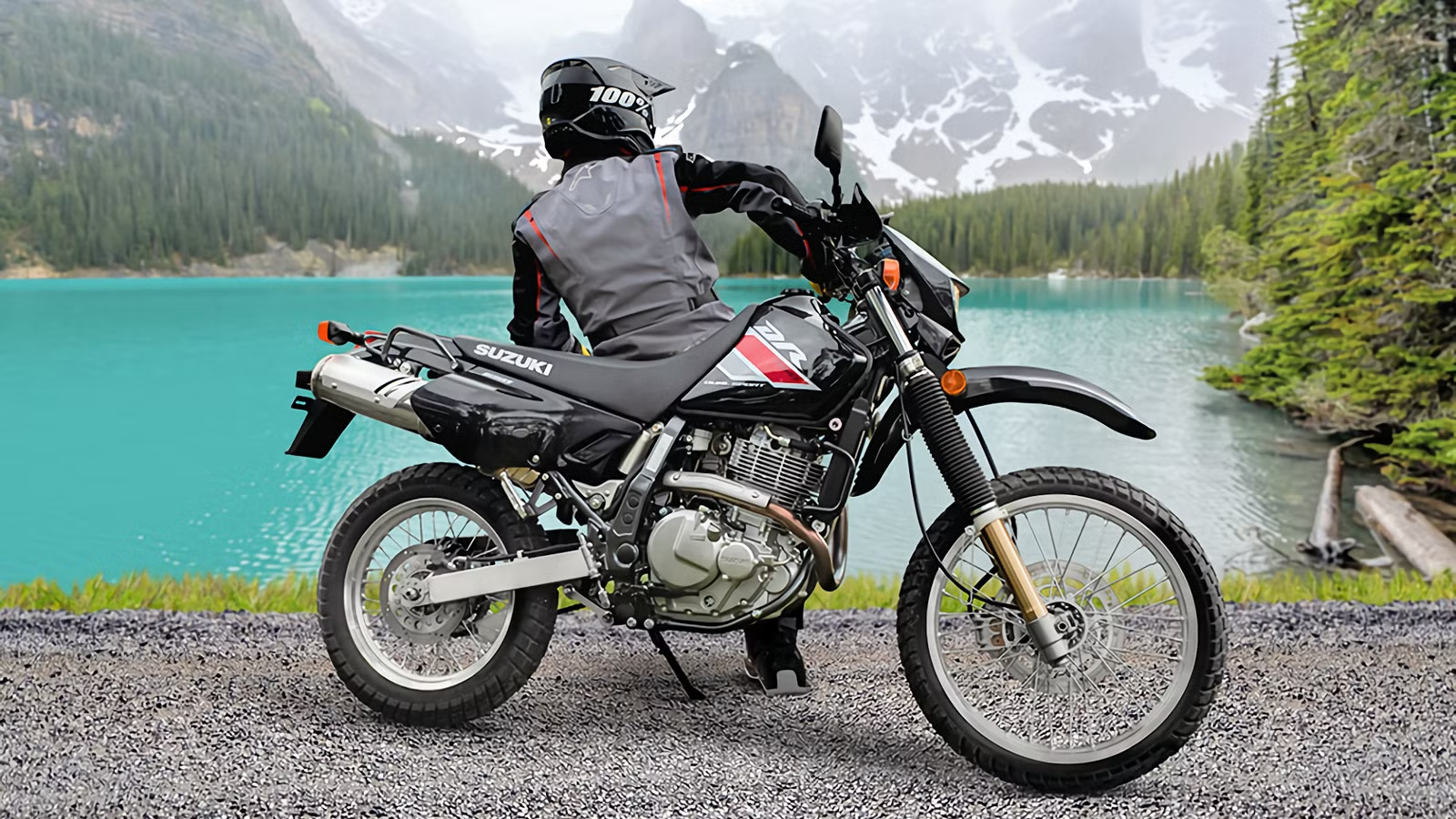
The Suzuki DR650S Redefined Adventure Riding
MSRP: $7,299


The strange thing about the DR650S is that it never seems to get the same credit the other two bikes get. Even though it has played a significant role in defining what adventure riding really is, it has been consistently overshadowed — by those two bikes, by the broader ADV segment, and by its smaller sibling, the DR-Z400S, which has subsequently been updated. Therein lies the key difference. The DR650S has not been meaningfully updated in over 30 years. While it has enjoyed a famously long production run, it is more or less the same motorcycle that rolled off the line in the 1990s, aside from a few minor tweaks and refreshed plastics.
The DR650S Has A Robust Air-Cooled Single
Power: 35 Horsepower (at the wheel)

In the world of off-road riding in faraway places, rugged simplicity is a genuinely desirable characteristic. This suits Suzuki right down to the ground, because this is a brand with a special affinity for squeezing the most out of a platform. Updates have been kept to a minimum across its long and illustrious production run, parts are largely interchangeable with much older models, and as far as engines go, it doesn’t get much simpler than a carb-fed air-cooled single.
For Better Or Worse, It Still Has A Carb

While carburetors survive in a handful of other applications, they have been all but eradicated from the mainstream motorcycle industry. The DR650S is one of the last bikes sold new with one, and it remains a deeply divisive topic. Carbs are undeniably older technology, but the Mikuni BST40 fitted here is a relatively modern unit that handles elevation changes better than its reputation might suggest. With around 35 horsepower at the wheel, it is a punchy thumper that delivers more than enough grunt on the trail. On the highway, however, the limitations become more apparent.
The DR650S Is A Rugged, Uncompromising Motorcycle

A big part of modern adventure riding is the travel aspect, and this is unquestionably where big thumpers struggle. Cruising at around 60 to 70 mph is well within the DR650S’s scope, but push beyond that and you will be asking too much of the machine. Even at a comfortable pace, vibrations make themselves known from your teeth to your toes. Wind buffeting adds to the fatigue, though the seat is surprisingly comfortable — right up until it isn’t, typically after about an hour of sustained buzzing that leaves everything numb.
This kind of riding experience is not unique to the DR650S; it is simply the reality of any big single. Once off-road, all of that is quickly forgotten. Its suspension is dated, but there is more than enough ground clearance and travel for the average weekend warrior. Even though it is a tall bike with a seat height of just under 35 inches, at 366 pounds it is relatively light compared to any modern ADV, or the KLR650 for that matter. When it comes to dual-sport bikes like this, comfort is most certainly a relative term.
Consider Buying Used
Price Range: $1,000 – $3,000

The rugged, simple nature of the DR650S is what makes it so appealing. That same simplicity also makes these bikes extraordinarily durable, which is why a used example is well worth considering. The new bike is reasonably priced at just over $7,000, but a glance at the broader market reveals that more modern alternatives exist at similar or lower price points. A mid-2000s DR650S, by contrast, can be had for around $2,000 — which is remarkable value for a machine this capable.
While due diligence is always required with a used purchase, it was these 1990s and early 2000s bikes that really redefined adventure riding. With more and more technology being layered onto modern adventure bikes, an old dual-sport remains the purist’s answer for anyone who heads into the wilderness specifically to leave all that tech behind.
Sources: Suzuki Motorcycles

Related posts




Latest Post



No Comments