
High-Mileage Drivers Can Burn Through A RAV4 Hybrid’s Warranty Long Before It Expires
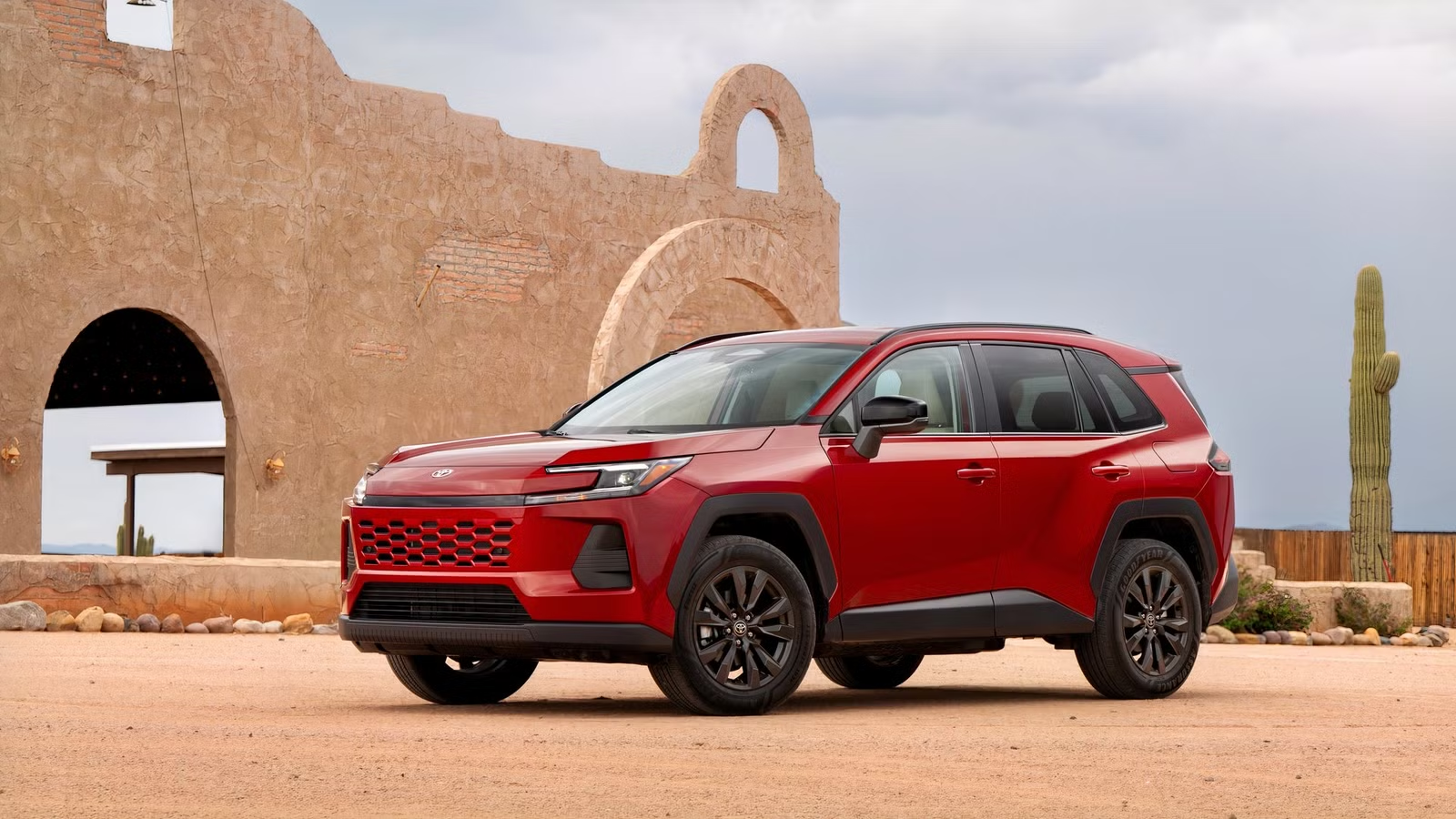
The 2026 Toyota RAV4 has declined in demand compared to the previous-generation model, but it remains one of the brand’s most popular SUV options. Despite being a hybrid-only model, consumers still expect a high durability level, without having to compromise on capability and versatility.

The RAV4 range is so dependable that owners in the U.S. can log up to 50,000 miles every year. The RAV4’s class-leading ten-year warranty forms an essential part of this dependability, but its 150,000-mile hybrid battery warranty puts high-mileage drivers at more risk well before the annual coverage ends.
Why Toyota’s Hybrid Warranty Is Crucial For RAV4 Ownership
The core of the 2026 Toyota RAV4’s vulnerability lies in an issue commonly known as Cablegate. All-wheel-drive Toyota hybrid models feature a rear motor generator that receives high-voltage power through a dedicated wiring harness. Because this connection point sits underneath the vehicle, it endures direct exposure to surface water, slush, and corrosive road salts during winter months. Over time, moisture and chemical deicers penetrate the housing, accelerating galvanic corrosion across the metal terminals.

When this high-voltage connector degrades, the vehicle exhibits severe electrical faults, disabling the rear electric motor and turning off the hybrid system. Dealerships must replace the entire high-voltage cable assembly to resolve the breakdown. This repair requires extensive labor to drop subframe components and access the routing channels beneath the cabin, pushing the total cost into the $5,000 to $7,000 range.

Buyers focus heavily on the flagship 10-year or 150,000-mile hybrid battery coverage. The high-voltage cable harness often falls under standard vehicle component classifications. Coverage for this only lasts 36,000 to 60,000 miles depending on the specific model year and original sales contract terms. The high-voltage cable is an external conduit rather than an internal battery module, leaving a massive gap between owner expectations and factory coverage.
Toyota’s Warranty Is Unbalanced For Long Haulers

For an average commuter driving 12,000 miles annually, a 150,000-mile metric represents over a decade of operation. High-mileage drivers operating in severe climates experience a completely different reality. A professional logging 50,000 miles per year burns through the 150,000-mile benchmark in just 36 months.
This rapid mileage accumulation creates a dangerous convergence of mechanical wear and environmental exposure. By month 36, the SUV would have endured three full winter seasons of road salt saturation while simultaneously exhausting every factory warranty limit. The standard 36,000-mile comprehensive coverage expires during the first year of operation. When the cable connector fails to environmental degradation in year three, the owner faces a $6,000 out-of-warranty repair bill while still paying off the original vehicle loan.
Toyota Has Acknowledged This Fault In Older Models

Toyota recognized the underlying moisture retention issues that affected 2019 to 2024 RAV4 Hybrid models and introduced several engineering adjustments. In late 2022, designers implemented an open connector housing intended to allow trapped water and condensation to drain away freely rather than pooling around the metal terminals.
Subsequent revisions for 2024 and newer builds incorporated updated wire routing and altered housing seals to shield the electrical contacts. Reports from automotive analysts and field technicians suggest these modifications may not completely eliminate the risk in heavy snow regions. Road slush packed with concentrated sodium chloride can still infiltrate the open housing, drying into a corrosive crust that attacks the metal contacts over time. Rather than fully resolving the failure mechanism, the open design may simply delay galvanic corrosion until after standard component warranties expire.
Because documented Cablegate failure patterns specifically affect 2019 to 2024 production runs, long-term failure rates for newer platform iterations remain unproven. The 2026 model represents a refined chassis generation, yet the fundamental physical layout of an exposed underbody connection point on all-wheel-drive hybrids demands ongoing vigilance from owners.
How To Monitor For Moisture In The HEV System

Owners do not need to wait for a total system failure on the highway to manage this risk. Implementing a strict chassis maintenance audit around the 30,000-mile mark allows drivers to identify early chemical buildup before total terminal degradation occurs. During routine service, technicians can inspect the rear motor generator connection for signs of white chalky residue, rust, or orange high-voltage insulation cracking.
Applying dielectric grease or approved rust-inhibiting coatings around the external shield housing can slow down moisture. High-mileage drivers operating in winter climates must also prioritize undercarriage pressure washes to flush out salt deposits from beneath the rear differential area. Taking proactive preventative steps preserves long-term vehicle equity and ensures that high-mileage hybrid ownership remains financially viable over hundreds of thousands of miles.
How Much Toyota Charges For A Battery Replacement

Out-of-warranty replacements require evaluating various possible service paths. Purchasing a brand-new factory replacement battery directly from a Toyota dealership costs between $3,000 and $8,000, including local labor rates. Regional labor rates alter total dealership repair estimates significantly. Fourth-generation RAV4 Hybrids built between 2016 and 2018 utilize nickel-metal hydride chemistry. This costs around $3,000 to $4,500 for total replacement. Fifth-generation models from 2019 onward predominantly feature lithium-ion packs, pushing total dealership hardware and installation fees toward the $5,000 to $8,000 ceiling due to raw component costs.
Independent hybrid repair specialists present lower-cost alternatives to dealership services. Reconditioned and remanufactured hybrid battery packs cost between $1,500 and $4,500 fully installed. Reconditioned units replace damaged internal cell modules while balancing healthy remaining cells to restore pack voltage. These units feature shorter warranties, typically spanning one to three years. Independent shops charge lower hourly labor fees than franchise dealerships, reducing total installation expenses regardless of whether the vehicle uses nickel-metal hydride or lithium-ion chemistry. Choosing an independent specialist allows owners to extend the operational life of an older crossover without incurring extreme costs.
Other Costs Associated With RAV4 Ownership

According to CarEdge, the Toyota RAV4 will cost you $6,005 for maintenance and repairs during its first 10 years of service, which is to be expected considering its strong brand reputation, high consumer demand, and proven long-term reliability. According to Edmunds, you can expect to spend $45,506 over the course of five years and 60,000 miles on the base Toyota RAV4 LE. $5,672 accounts for maintenance, $887 for repairs, $11,709 for depreciation, and $9,464 for fuel.
J.D. Power’s latest valuation of the RAV4 consists of a reasonably positive overview, resulting in a 79/100 overall score. Joining this is a 78/100 score for the driving experience and 82/100 for resale, with a 77/100 grade for the dealership experience. iSeeCars backs this with an 8.7/10 reliability score, citing that an average RAV4 will benefit from a 13.8-year lifespan and cover 169,545 miles without any reliability issues. Expect a 29.1 percent probability of reaching 200,000 miles as well.
The RAV4’s Efficient Hybrid System

According to the EPA, the front-wheel-drive model is the most efficient, achieving 49/42/45 MPG on the city/highway/combined cycle. Installing the optional all-wheel-drive system worsens this result to 46/39/42 MPG, which is not too much of a sacrifice. The Woodland’s larger tires and all-wheel-drive-only configuration achieve a 41/35/38 MPG result. The XSE’s sporty wheel configuration changes the RAV4’s consumption to 43/37/41 MPG.
The EPA estimates the base front-wheel drive model will cost $4,000 less to refuel over five years when compared to the average new vehicle sold in the U.S. Overall costs include $1,500 in fuel costs every year, $2.31 to drive 25 miles, and $63 to fill the 14.5-gallon tank. The Woodland’s savings are also impressive, despite it being the least-efficient model. The EPA estimates that you’ll save $3,000 over five years, spend $1,700 on fuel every year, and $2.84 to drive 25 miles.
Sources: Toyota, Edmunds, CarEdge, iSeeCars, and the EPA.

Related posts





Latest Post


No Comments