
The Forgotten Harley Superbike Sold Only In Poland To Dodge The EPA
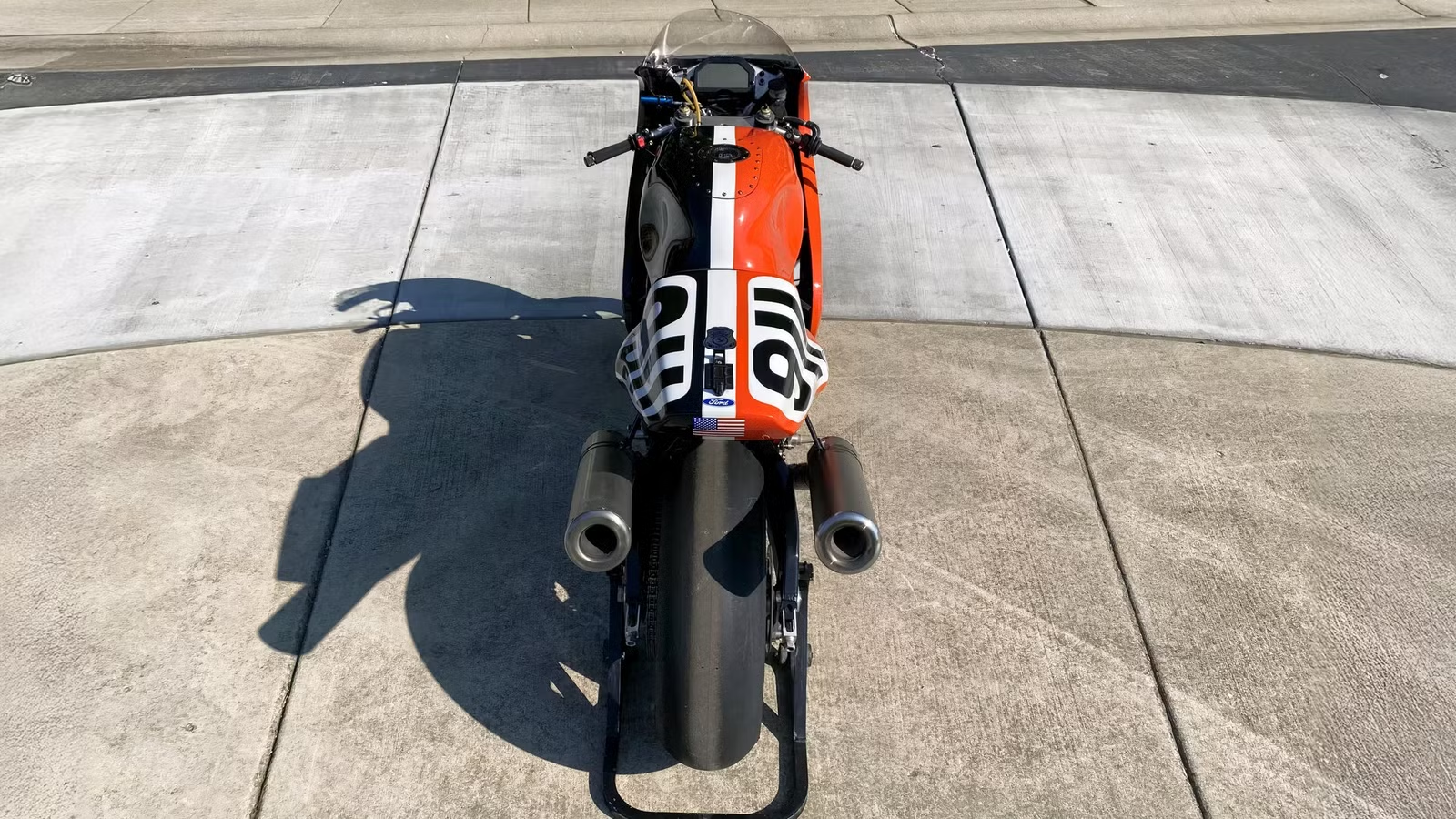
In the early 1990s, the only way to legally buy a brand-new Harley-Davidson superbike with a race-bred engine was to find a dealer in Poland. The bike didn’t pass American emissions rules, didn’t share a single part with anything else in Harley’s lineup, and barely sounded like a Harley at all. Only fifty people ever got the chance to buy one. Years later, the failed racing engine built for that bike would end up in Porsche’s hands, reworked into the heart of one of Harley’s most distinctive production engines, a debt almost nobody who rides one today knows they owe.
When Milwaukee Decided To Fight The AMA Superbike Wars

The AMA Superbike Championship, run by the American Motorcyclist Association, kicked off in 1976 and quickly became the proving ground for manufacturers chasing bragging rights on track. Kawasaki and Suzuki ran the early years. By the time Ducati showed up with a winning dual overhead cam, liquid-cooled formula, the bar for a competitive superbike had moved a long way from anything Harley-Davidson had ever built. By the mid-1990s, the whole series was televised nationally, raising the stakes for every manufacturer involved.
Problem Number One: The Brand Identity

Harley-Davidson decided to take its first real shot at Superbike racing in the early 1990s, right as Ducati was proving a non-Japanese brand could win it all. That put Harley in a strange spot. The company had built its identity on air-cooled pushrod V-twins for decades, and Harley hadn’t taken racing seriously since Gary Scott’s XR750 at Laguna Seca in 1973, almost two decades earlier. The engineers had two options: bolt a new identity onto the brand or somehow build something competitive that still felt like a Harley.

The Most Underrated Harley-Davidson Ever Produced
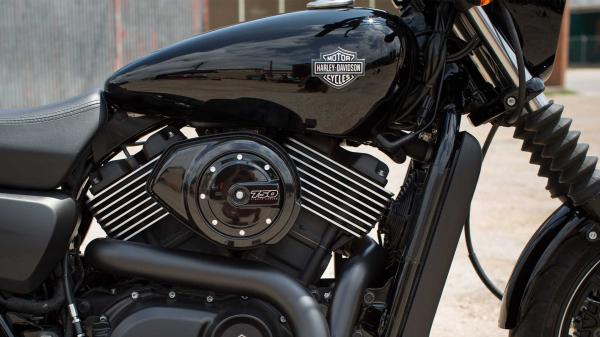
Not all Harleys are appreciated, but some deserve credit where it’s due.
The Nightmare Of Working Around The Regulations

Getting onto the AMA Superbike grid wasn’t optional homework. Homologation rules forced every manufacturer to build and sell a minimum run of street-legal motorcycles before the race bike could even line up, an investment with zero guarantee of a result on track. Layer period emissions and noise regulations on top of that, and getting a race-bred Superbike street-legal in America turned into its own engineering problem, separate from anything happening on the circuit.
Homologation Rules That Could Kill A Program

The real villain wasn’t the production number itself, though for V-twins entering AMA Superbike, that minimum sat at exactly 50 street-legal motorcycles. It was the emissions and noise regulations layered on top, which made it nearly impossible to certify a pure race engine for street use without gutting the performance that made it worth homologating in the first place. Manufacturers found a clever workaround.
The rules never specified which market the homologation motorcycles had to be sold into, so a brand could sell its minimum-run specials somewhere with looser emissions standards, then import the race versions strictly for competition. Nobody had really pulled this off before. Once it worked, it became the playbook, and Harley was about to write its own strange chapter of it.
Harley-Davidson VR1000, The Superbike That Needed A Polish Passport

The result was the Harley-Davidson VR1000, and it looked nothing like any Harley on the road. Gone was the air-cooled V-twin with the meaty exhaust note. This thing existed to race, full stop. That single-purpose design is exactly what made it impossible to sell in America, so Harley built only 50 street-legal examples to satisfy the bare minimum AMA homologation requirement and took every one of them to Poland instead, where the paperwork actually worked.
The Harley-Davidson That Wasn’t

Under the skin, the VR1000 ran a 996cc, 60-degree V-twin with DOHC and four valves per cylinder, liquid-cooled, screaming to 10,000 rpm for roughly 135 hp paired with a five-speed gearbox for the street and six-speed for the track. Those are car-engine numbers on a motorcycle that weighed in at around 390 lbs dry. Getting there took outside help Harley had never needed before. Erik Buell sketched the initial concept and Harley’s own Mark Miller built the bottom end in-house, while Roush Industries finished the cylinder head and fuel injection system once the in-house effort stalled out.
Mike Eatough designed the aluminum twin-spar chassis that actually carried the engine, a clean break from Buell’s original fuel-in-frame concept. Even inside Harley, the VR1000 lived in its own bubble. It ran as a Race Department project, kept apart from the regular engineering staff who built every other Harley on the line. For a brand that had built every engine itself, in-house, for decades, that kind of isolation was already a quiet giveaway of how far outside its comfort zone this project had gone.
How “Polished” Was It In Poland?

All 50 street-legal examples were sold and registered through Poland, the workaround for the EPA emissions and noise rules that wouldn’t let a race-derived engine like this one exist as a legal street bike in America. Before any of those 50 bikes reached a customer, Harley still needed the AMA to accept the paperwork, and that part of the story is its own kind of clever. In 1993, a single VR1000 fitted with the bare minimum of street parts—lights, indicators, a starter—was quietly pushed through Germany’s TÜV certification board, and that one certificate of homologation was enough to satisfy the AMA.
Each of the 50 commercial units that followed still cost a fortune. The sticker read $49,490, with one documented sales invoice showing $49,626 for an actual unit. The real jaw-dropper was never just the price. It was the country you had to fly to in order to spend it. A handful of those fifty even ended up on track themselves, bought by privateers who raced alongside Harley’s own factory team.
Engineers Kept The Program Going Despite Being A Failure

Harley went for it anyway, and the program turned into real engineering hell. No race wins, no real breakthroughs, just relentless work with nothing to show for it on a results sheet. The main reason it failed came down to timing. By the time the VR1000 actually reached the track, the rest of the field had moved on, and Harley was racing a bike with an aging engine concept against rivals who’d had years to refine theirs.
Why The Riders Couldn’t Take It To The Top

Miguel Duhamel made history just by signing on, landing what was reportedly the largest rider contract in AMA Superbike history at the time. Pascal Picotte, Doug Chandler, and Scott Russell rounded out the roster across the program’s life. Things went south fast anyway. At the 1994 Daytona 200 debut, Duhamel climbed from 68th to 20th before a counterbalancer failure ended the run at lap 22. Mid-Ohio went better, with Duhamel running among the leaders for 13 laps before a shift-linkage bolt backed out and dropped him out of contention.
|
Engine |
996cc, 60-degree, liquid-cooled DOHC V-twin, 4 valves/cylinder |
|
Power |
~135 hp @ 10,000 rpm |
|
Weight |
~390 lbs (dry) |
|
Production |
50 street-legal units (1994) |
|
Original Price |
~$49,490 |
At Brainerd that same year, Duhamel led the race outright before running wide with three corners to go, slipping to 4th by the checkered flag. Across the program’s full eight-year run, one pole position and that single asterisked runner-up were as close as the VR1000 ever got. It never crossed a finish line first.
The Porsche Takeover Story

By 2001, Harley shut the racing program down for good. The engine didn’t die with it. Harley sent the architecture to Porsche and asked the German firm to rework it into something street-legal. What came back was the Revolution, an entirely different engine that kept the VR1000’s basic 60-degree V-twin layout but shared none of its actual parts. The Revolution went on to power the V-Rod, Harley’s first-ever production liquid-cooled engine. A bike everyone had already written off as a failure had just quietly become the reason Harley finally went liquid-cooled.
Harley-Davidson Once Made A Superbike
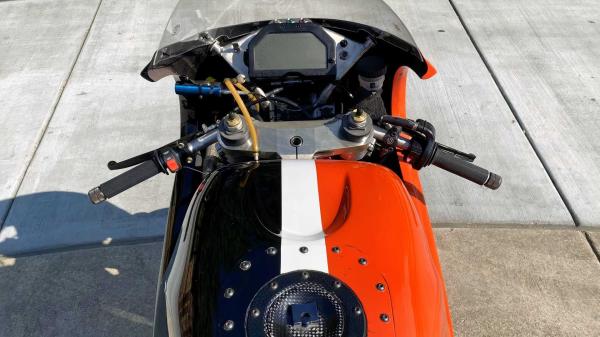
What made this Harley different? A liquid-cooled DOHC 60-degree V-twin engineered for one purpose. Racing!
How The VR1000 Performs In The Collector’s Market

On paper, the VR1000 was a commercial failure. The collector market disagrees completely. Recent auction results have run from $71,500 to $126,500, with one example crossing the block as recently as January 2026 for $93,500, nearly double the original sticker price. That January sale happened during Mecum’s record-breaking Las Vegas auction, a week that moved more than $20 million in motorcycles. One surviving example even comes with an official Harley factory authentication letter, and the American Motorcyclist Association itself still calls the VR1000 one of the most memorable Superbikes in series history, despite it never winning a single race.
That’s the real story here. Harley built a motorcycle that lost every race it entered, smuggled DOHC, liquid cooling, and Porsche-grade engineering into a company that swore by air-cooled pushrod V-twins, and then handed that engineering straight to the V-Rod. The VR1000 never won anything on a racetrack, and it’s one of the most consequential motorcycles Harley-Davidson has ever built.
Sources: Mecum, Classic.com, MotoAmerica, AMA

Related posts

Latest Post


No Comments