
The Forgotten Boss 429 Built To Beat The Dodge Charger Daytona
During the ‘Win on Sunday, Sell on Monday’ era, automakers felt like dominating NASCAR was the best way to prove their cars were the best. Ford and Dodge poured resources into building the fastest rides, with immense V8 power and advanced aerodynamic designs. Incredible homologation specials were built in an attempt to rule racetracks across the country. But when the Dodge Charger Daytona arrived, Ford faced the nearly impossible task of catching up with the help of V8 power.
The Dodge Charger Daytona Was The Car To Beat

During the mid to late 1960s and early 1970s, automakers competed in the NASCAR aero wars. Ford and Dodge were building radically designed muscle cars to break wind resistance and reduce drag to dominate racetracks. These cars were called the Aero Warriors and featured the first dedicated aerodynamic profiles.
When the 1969 Dodge Charger Daytona debuted, it couldn’t be caught, thanks to its 18-inch pointed nose to cut through the air at high speeds and a gigantic five-foot-tall rear wing for crucial high-speed downforce and rear stability. Also, an under-nose spoiler/air dam handled underbody airflow.
However, this car also packed a potent punch with its 426 cubic-inch 7.0-liter HEMI V8 engine, which delivers a factory-rated 425 hp and 490 lb-ft of torque. Dyno testing puts its output closer to 500 hp. It accelerates from 0 to 60 mph in about 5.2 seconds with a 13.5-second quarter-mile time at about 104 mph.

Also, it was the first NASCAR racer to break the 200 mph barrier. The Dodge Charger Daytona immediately won its debut race at the Talladega 500, with Richard Brickhouse behind the wheel. It had a massive speed advantage that Ford needed to compete against with its stout V8 engine lineup.
The 1969 Mercury Cyclone Spoiler II Was Built To Outrace Dodge

Unfortunately, the 1969 Ford Torino Talladega was falling short of the Daytona. The 428 cubic-inch (7.0-liter) V8 engine delivers a factory-rated 335 hp and 440 lb-ft of torque, but most likely has an output closer to 450 hp. It accelerates from 0 to 60 mph in roughly 5.5 seconds with a 14.4-second quarter-mile time and top speed of about 130 mph.
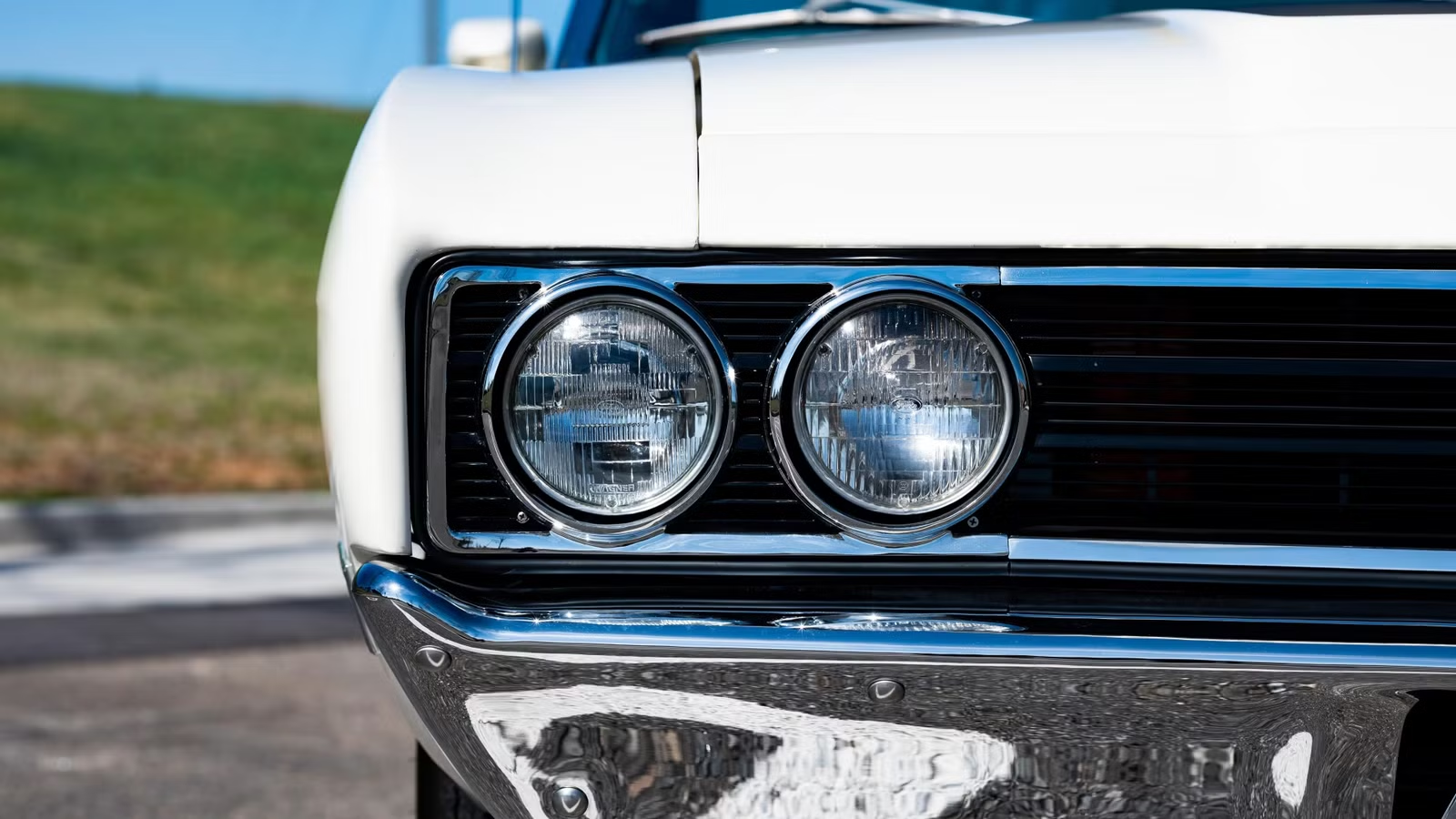
So Ford built its twin, the 1969 Mercury Cyclone Spoiler II, to gain an aerodynamic edge. It has a large sloping nose with a recessed grille and headlights to pierce through the air and to mitigate turbulence. The V-shaped bumper functions as an air dam, the fastback roofline manages airflow separation, and the functional rear deck spoilers provide high-speed downforce for optimal stability.

With the Boss 429 cubic-inch (7.0-liter) V8 engine, the Cyclone Spoiler II produces a factory-rated 375 hp and 450 lb-ft of torque. Dyno testing suggests that its output is closer to 400 to 500 hp. It can accelerate from 0 to 60 mph in about 6.2 seconds with a quarter-mile time of roughly 15.6 seconds. This car has a top speed of about 160 mph, giving it a top-speed advantage over its Torino cousin.
The Mercury Cyclone Spoiler II claimed eight Grand National victories during the 1969 and 1970 NASCAR seasons while the Dodge Charger Daytona claimed six. Also, the Ford Torino Talladega proved to be a successful model by winning events like the Manufacturer’s Cup and season championship.
The Mercury Cyclone Spoiler II Didn’t Last Long

NASCAR had enough of the aero wars and banned specialized, limited-production aero cars by restricting their engine displacement to 305 cubic inches. This was a massive decrease compared to the engines with 426 to 429 cubic inches. The cars were seen as too fast and dangerous.
Plus, they portrayed extreme dominance and hurt overall competition and fan interest by winning too many races. The Mercury Cyclone Spoiler II was a homologation special, meaning 500 street production models had to be built to meet racing requirements. After it was banned, Ford had no reason to continue building the car as it was expensive and faced low sales.
Also, in 1969, Ford announced massive budget cuts and ended factory involvement with financial support for racing programs. This was due to a corporate shift away from factory racing support toward improving fuel economy and enhancing safety features. The Mercury Cyclone Spoiler II was discontinued in 1969 despite having a 1970 prototype program developed.
Now The Mercury Cyclone Spoiler II Is A Steal

Only about 503 Mercury Cyclone Spoiler II models were built, making it a pretty rare car. About 285 Cale Yarborough Special variants with a Candyapple Red roof and stripes over Wimbledon White were made. Another 219 Dan Gurney Special units with a Presidential Blue roof and stripes over Wimbledon White were built.
Historians estimate that 64 to 78 documented survivors still exist. But production models came with the 351 cubic-inch (5.8-liter) Windsor V8 instead of the Boss 429. Value for surviving examples ranges from $55,000 to over $100,000, depending on condition, quality, and power.
Meanwhile, values for the Dodge Charger Daytona are in a class of their own. Surviving examples typically sell for between about $291,000 and over $325,000. Rare models with the 426 HEMI engine average $1.5 million. In 2024, a Dodge Charger Daytona sold at auction for an incredible $3.3 million.
Source: Hemmings, How Stuff Works, Modern Car Collector

Related posts



Latest Post




No Comments