
The Factory Option That Quietly Turned This Familiar Sedan Into A Monster
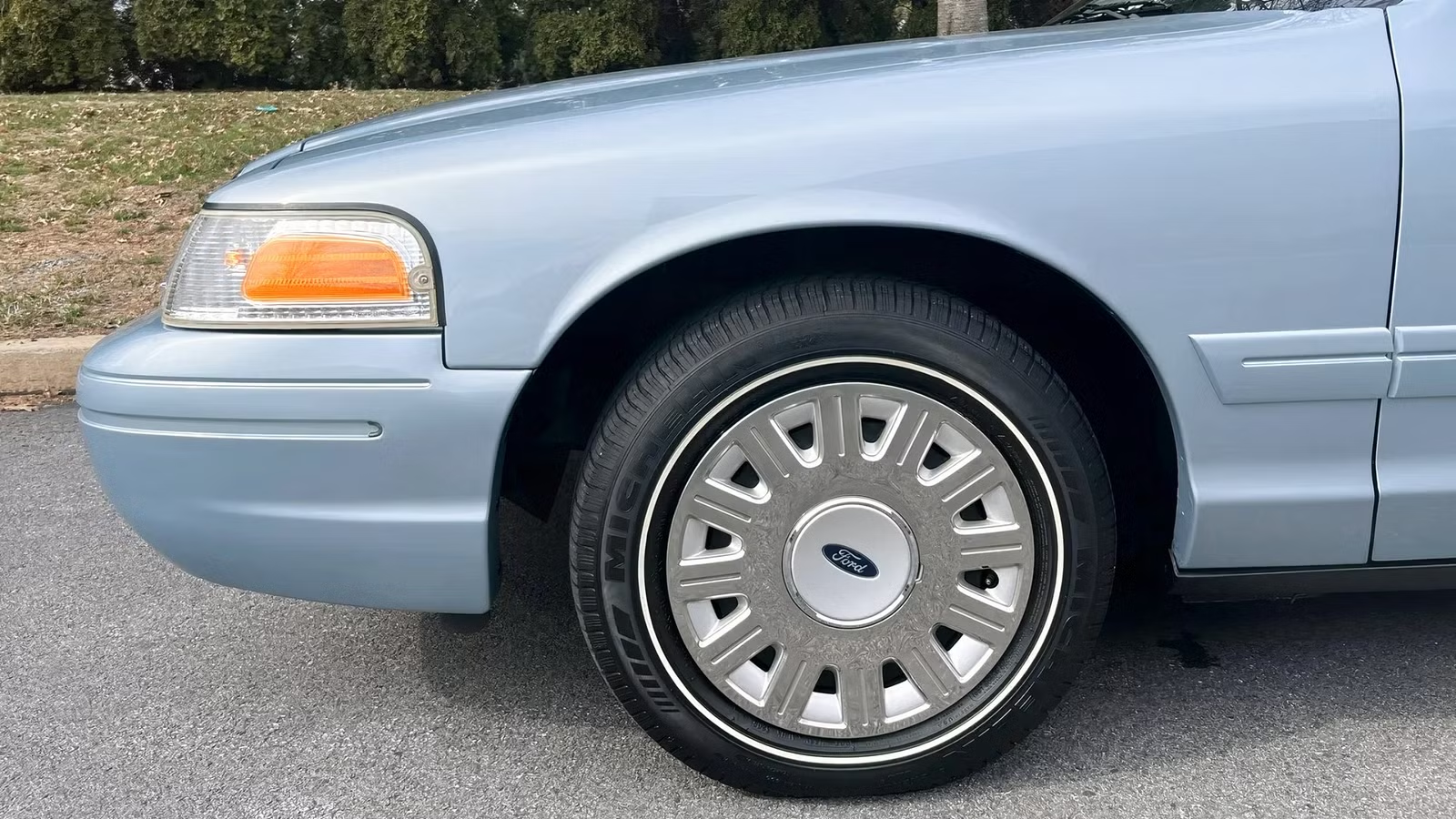
Performance packages are normally made to turn heads. They announce themselves with stripes, spoilers and exhaust tips big enough to qualify as plumbing. Then there’s the other bunch, the ones that keep everything low-key. They look like everyday family cars while hiding something sharper underneath, straight from the factory. Early-2000s America had one of the best examples hiding in plain sight: a Sleeper Cars recipe packed into a civilian car that nobody expected to go any faster than the speed limit.
Why Full-Size American Sedans Weren’t Built for Aggressive Driving

Traditionally, full-size American sedans weren’t built for speed. They were meant to carry people comfortably, swallow luggage and cruise for hours without complaint. They packed V8 power without demanding much skill from the driver. By the 21st century, the full-size rear-wheel-drive sedan was an increasingly old-school breed. Many family cars had migrated to front-wheel-drive platforms, and the sportier rivals balanced comfort with sharper handling. The traditional body-on-frame setup felt clumsy when pushed through corners or over rough pavement.
That meant suspension had a job to do. Softer springs and dampers helped everyday comfort but allowed more body lean than an enthusiastic driver wanted, and light steering felt vague when the road tightened up. A factory package addressing those traits could make a difference without a bigger engine or wild bodywork.
The Suspension And Gearing Tricks That Wake Up A Big Ford Sedan

Suspension tuning is the part buyers tend to overlook, because revised spring rates feel like math homework while horsepower grabs attention in the brochure. On real roads, it’s the other way around. Body control matters more than a small power bump. The same goes for gearing. A numerically higher axle ratio gives the engine more leverage at the wheels but raises engine speed at a given road speed. A different torque converter can change how an automatic behaves pulling away, and dual exhaust may help an engine breathe more freely, though the gain depends on the complete setup. And one Ford bundled the lot into a single factory option.
Meet The Ford Crown Victoria HPP And Everything It Changed Under The Skin

It’s one of Ford’s most familiar sedans, and you’ve seen it everywhere. It’s the taxicab, the cop car and somebody’s personal cruiser. It’s the Ford Crown Victoria. For 2004, Ford offered the Handling and Performance Package (HPP) as an option on the Crown Victoria LX and made it standard on the LX Sport. The hardware meant business. Revised springs, monotube shocks, a heavy-duty rear stabilizer bar, rear load-leveling air suspension, dual exhaust, a performance torque converter and a 3.27:1 axle ratio all came in the box.
Under the hood sat the same 281-cubic-inch (4.6-liter) Modular V8 found in other civilian Crown Vics. With the HPP’s dual exhaust, it made 239 hp and 287 lb-ft, while single-exhaust Standard and LX models were rated at 224 hp and 275 lb-ft. The extra grunt came from the dual exhaust setup, not a different engine.
The standard 2004 Crown Victoria used a 2.73:1 ratio, so the HPP’s 3.27:1 gearing made the car feel more eager off the line, at the cost of higher engine speed at a cruise. Package content and availability did shift across model years. Don’t confuse the HPP with the Police Interceptor. The police model had its own drivetrain specifications and police-specific equipment, including a different transmission setup. The civilian HPP shared some hardware, but Ford’s 2004 package list doesn’t specify a limited-slip differential or the Police Interceptor’s full range of police-duty equipment.
How The HPP Made The Crown Vic Drive Better (And Where It Didn’t)

The parts worked together, giving the car a more balanced, grounded feel. The revised springs and monotube shocks helped control body movement, while the heavy-duty rear stabilizer bar was intended to reduce roll through corners. Independent testers credited the package with improved handling and ride control.
That didn’t suddenly turn the big sedan into a sports car. The steering was still light and short on feedback, and the solid rear axle lacked the independent movement of newer suspension designs. Testers still found the handling clumsy overall, but the HPP made the car more composed within its limits. The shorter gearing and torque converter livened up the car’s response off the line, too. Together, these parts gave buyers a more purposeful sedan without a personality overhaul.
The Crown Vic HPP Is The V8 Sleeper Sedan Nobody Looks Twice At

The Crown Vic can still do two jobs today. It can be a sensible, comfortable commuter, or a roomy V8 sedan that doesn’t feel as floaty as the standard car. The LX Sport does have visual cues of its own, including 17-inch wheels and monochrome trim, but the real package was under the clothes. The HPP wasn’t a secret race car conversion. It came off the production line and sharpened a big sedan’s responses with sensible changes where they mattered. That’s exactly what makes it such an appealing sleeper story.
For anyone on the lookout for one, condition and maintenance still matter far more than the badge or the option code. A worn-out example with a sketchy history won’t handle its best, HPP or not. With the Crown Vic, you never need to pretend the car is something it isn’t. You just enjoy it.
Sources: Bring A Trailer, Classic.com, Mecum, Ford

Related posts


Latest Post


No Comments