
14th-Gen Nissan Skyline Gets December 2026 Launch Date
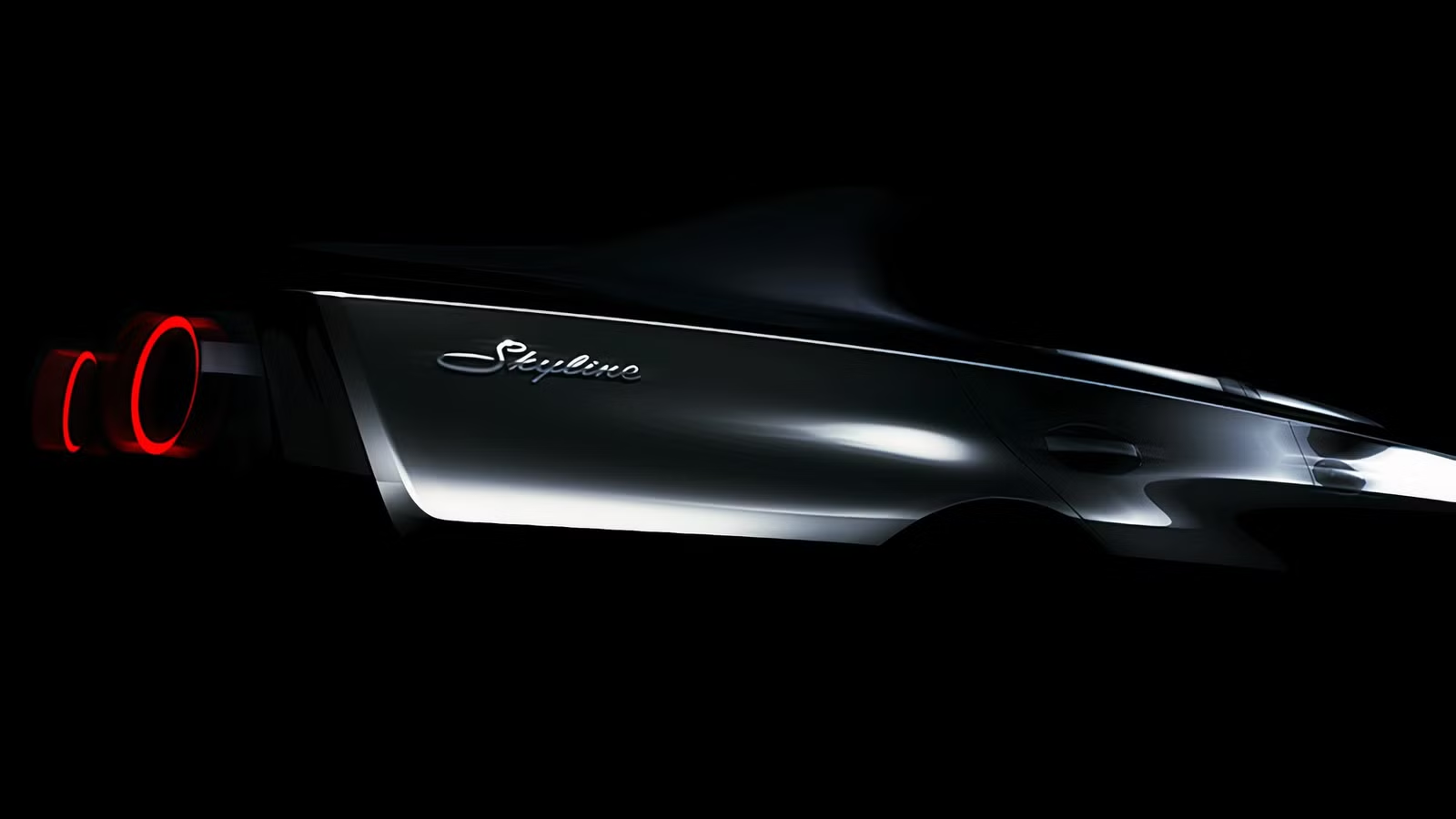
After 13 years of the V37 sitting largely untouched, the Nissan Skyline is finally getting a successor — and it’s arriving sooner than anyone had a right to expect. Nissan President and CEO Ivan Espinosa confirmed this week that the 14th-generation Skyline will debut in December 2026, following an interview with Japanese outlet Asahi Shimbun. That’s the official launch date, and it carries weight: the V37 has been on sale in Japan since November 2013, making this one of the longest waits any nameplate in the performance sedan space has ever asked of its faithful.

What makes the announcement genuinely remarkable isn’t just the date — it’s how Nissan got there. The new Skyline was developed in approximately 26 months, roughly half the 55-month cycle its predecessor required. That compression wasn’t accidental. It was engineered, deliberately, using generative AI and digital simulation tools across design, engineering, testing, and manufacturing phases. For a brand that’s spent several years fighting for relevance, the Skyline’s development story is the clearest signal yet that Nissan’s engineering operation is moving differently.
Espinosa Frames the Skyline as Nissan’s Comeback Symbol
Espinosa didn’t undersell the moment. In the Asahi Shimbun interview, he called the Skyline “one of the icons of the renaissance of Nissan and of a comeback that we have been working on,” and described it specifically as “an icon of speed” — not just as a car, but as the first Nissan to go through an accelerated development process at this scale. He also placed it squarely in Nissan’s “Heartbeat” model category, a designation the brand reserves for vehicles with genuine emotional and cultural weight. Earlier this year, when the 14th generation was first announced in April 2026, Espinosa described it as “a symbol of Japanese engineering and driving performance infused with raw emotion.”

The framing matters because it signals intent. This isn’t a compliance car or a halo trim built to satisfy a niche. Nissan is positioning the new Skyline as proof of organizational capability — a statement vehicle that happens to also be a performance sedan.
How Generative AI Cut the Development Timeline in Half
The 26-month figure deserves context. A typical Nissan development cycle runs around 55 months — just over four and a half years from program start to production. Cutting that nearly in half while delivering a clean-sheet design is not a marginal improvement; it’s a structural shift in how the company builds cars.
According to an earlier report by Nikkei, Nissan deployed generative AI and digital simulation across every major phase of the Skyline’s development. Virtual testing environments replaced or compressed many physical validation loops, and AI-assisted design tools accelerated iteration on body structure, aerodynamics, and interior packaging. Espinosa acknowledged directly that Chinese automakers have been setting the pace on development speed and cost competitiveness, and that Nissan’s joint venture with Dongfeng provided lessons the company applied here. The Skyline, in other words, is partly Nissan’s answer to a competitive reality: if you can’t match Chinese development timelines, you find a way to close the gap.
Tochigi, Hakosuka Nods, and What We Know About the Car Itself

Nissan has confirmed the new Skyline will be built at its Tochigi facility in Japan — the same plant that produces the Fairlady Z. That confirmation puts to rest earlier speculation about production moving to China or the United States. Tochigi is being positioned as a dedicated sports car production hub, which is a meaningful signal about where Nissan sees the Skyline sitting in its lineup.
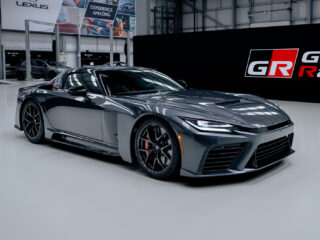
On the design side, teasers released earlier this year point to a Hakosuka-inspired aesthetic — the C10-generation Skyline from the late 1960s that became the foundation of the GT-R legend. Expect an aggressive front face, sculpted fenders, and round quad taillights that directly reference the C10’s rear signature. It’s a heritage callback that should land well with R32, R33, and R34 fans who’ve been waiting for Nissan to reconnect the modern Skyline to its lineage.
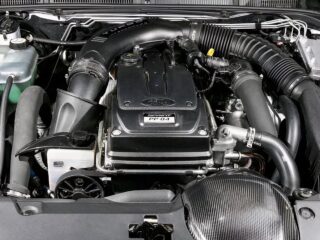
Powertrain specifics remain unconfirmed by Nissan, but the possibilities in play are credible. A hybrid setup is one route; a twin-turbo V6 producing north of 400 horsepower is another — and that engine architecture already exists in the current Skyline 400R and the Nissan Z. A six-speed manual transmission has been floated specifically for Nismo trim, which would be the right call. Rear-wheel drive is widely anticipated as the base architecture.
What the New Skyline Means for Infiniti and North America

The Skyline has always had a transatlantic dimension, even when it wasn’t sold here by name. The V37 Skyline and the Infiniti Q50 were essentially the same car — same platform, same powertrains, same bones — with the Q50 serving as the North American retail version. That relationship is expected to continue. The 14th-generation Skyline is widely anticipated to underpin a future Infiniti model for North America, which means the platform Nissan is building in Tochigi has implications well beyond the Japanese domestic market.
For Infiniti, which has struggled to define a performance identity in a segment dominated by BMW and Mercedes-Benz, a Skyline-derived successor to the Q50 built around a 400-plus-horsepower hybrid or twin-turbo V6 would be a genuine opportunity. Nothing has been confirmed on that front, but the precedent is clear and the logic holds. December 2026 is the date to watch — and after 13 years, gearheads on both sides of the Pacific have earned the right to be impatient.

Related posts

Latest Post


No Comments