
The Ducati That Feels More Comfortable Than It Looks
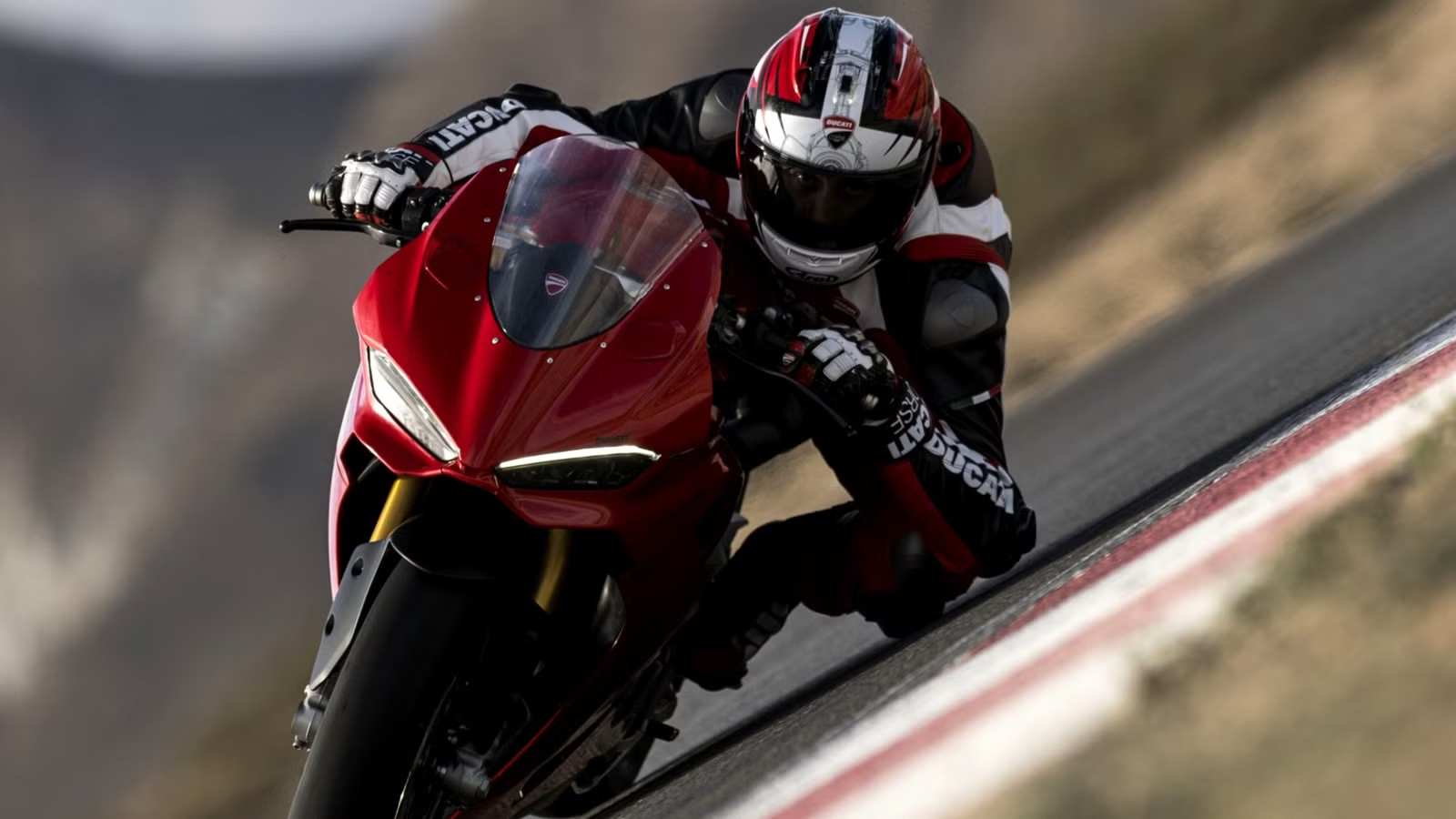
Associating Ducati with comfort a few decades ago would have been cause for puzzlement or maybe a laugh or two. Ducati didn’t care much for comfort; its goal was speed and having the most advanced product in its class. If you had a couple of reliability issues or occasional heart-stopping service bills due to the technology in it, that was just an accepted side effect of Ducati ownership. It is what made the brand so exclusive.

Times change, though, so do people, and evidently motorcycle brands as well. Ducati has now branched out into segments that prioritize comfort, like adventure motorcycles and cruisers. This was already a big shift for the Ducatisti, but imagine the surprise when comfort started taking priority in the most unexpected genre of Ducatis.
Ducati Sports Bikes Usually Justify The Pain
Ducati sports bikes have been known to be very aggressive, uncomfortable machines that nevertheless offer amazingly low lap times at a racetrack. You needed to be worthy of one to post great lap times with the physical flexibility and fortitude that professional racers have. However, there has been a recent shift in Ducati’s attitude towards production motorcycles.


The Panigale series of motorcycles is the culmination of Ducati’s extensive experience with sports bikes and racing up to the highest levels of motorsport, and yet the latest Panigale offers far more comfort than you’d expect. After all, if your halo series of products cannot be ridden by the general public, the sales figures are never going to go up. The latest middleweight Ducati sports bike proves exactly that. Here’s how this Ducati treads a fine line between the old and new, and satisfies loyalists as well as newcomers to the brand.
The Ducati Panigale V2 Is The Ducati That Feels More Comfortable Than It Looks

The Panigale V2 is one of the new wave of Ducatis that trades a little bit of performance for a lot of comfort. It still looks exotic, but is usable and less intimidating than you’d expect. It will turn heads wherever it goes, but at the same time, it is much kinder to your back and wrists. It’s the same with the performance: it still has the kind of performance you’d expect from a Ducati sports bike, but it does it in a slightly different way. It has traded in brute force for agility with great results.
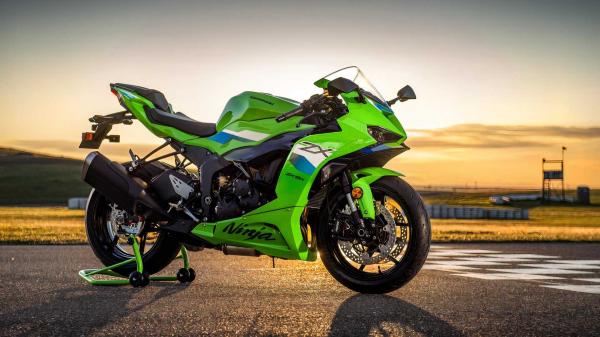
10 Sports Bikes That Are Surprisingly Easy To Live With
These modern sports bikes deliver serious speed and handling without sacrificing comfort, usability, or everyday rideability.
You Get A Surprisingly Reasonable Base Price

The Panigale V2 has a base price of $16,995, which proves that luxury can be practical as well. However, if you consider the sport bike segment as a whole and not just premium products, it treads on the toes of the liter-class supersport segment. The Panigale V2 S with its electronic suspension is even dearer at five dollars short of $20,000. Plus, if you are a fan of MotoGP, you can get special-edition variants that have either the Marc Marquez or Francesco Bagnaia livery that cost nearly $25,000 because of their exclusivity and options.
New Engine, Less Power, But More Usability

Ducati sport bikes have been known to be high-revving demons for whom the valve clearance check is a horror story financially. However, Ducati has been moving away from the Desmodromic valvetrain for most of its range, and that surprisingly has included the Panigale V2 as well. This is a 90° V-twin, yes, but it now employs conventional valve springs with variable valve timing on the intake valves.

It displaces 890 cc, retains the short-stroke format, and has a compression ratio of 13.1:1. Power and torque figures stand at 120 horsepower at 10,750 RPM and 69 pound-feet at 8,250 RPM. One marked difference in this engine’s characteristics is the fact that 70 percent of the torque is already available from 3,000 RPM onward, making it a balance between speed, precision, and everyday comfort.
Monocoque Chassis Complements The Engine Perfectly

Ducati has worked a lot on reducing the overall weight of the Panigale V2, and nowhere is this more evident than with the chassis. This is a monocoque frame in which the engine is a stressed member, but more so than other designs that have this claim. The front monocoque is bolted onto the front cylinder head, whereas the rear subframe is bolted onto the rear cylinder head. The swingarm is bolted onto the crankcase of the engine, and it’s made out of aluminum. You can very well expect some weekend track talent here.

The suspension consists of 43 mm Marzocchi fully adjustable inverted forks and a fully adjustable Kayaba single shock at the rear, with 4.7 inches of travel available at the front and 5.9 inches at the rear. You get identical travel in the Panigale V2 S, but the Öhlins suspension is definitely a step up from the base model if you are focused on getting better lap times and more comfort on the road.
Both versions get twin 320 mm semi-floating brake discs at the front paired with Brembo M50 monobloc radial calipers with a four-piston fixed design, and at the rear there is a 245 mm brake disc and a rare two-piston fixed caliper. The 17-inch wide-spoke alloy wheels have tubeless radial Pirelli Diablo Rosso tires on them.
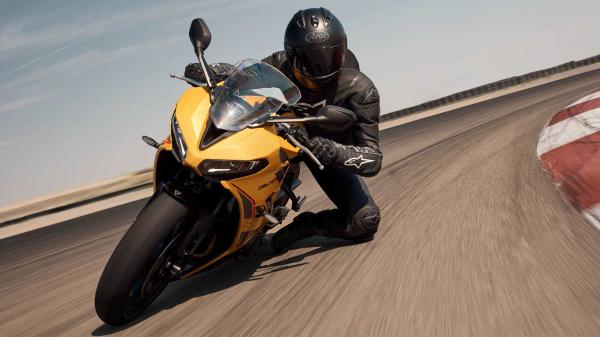
10 Sports Bikes That Are Surprisingly Comfortable
Discover how these 10 sports bikes redefine comfort with their ergonomic design and smooth engines, making them perfect for regular riding.
The Panigale V2 Is Compact But Comfortable
Panigale sport bikes have been known for their arse-over-elbows seating position that made them exceedingly quick around a racetrack but a pain in the back everywhere else. However, the current Panigale V2 consciously chooses a less aggressive riding position to give it more usability, more of the time. The seat height remains at a fairly tall 33 inches, but the handlebar and footpeg position allow for a more open rider triangle.

The current Panigale V2 weighs 395 pounds wet without fuel. This is a fair bit less than its previous namesake, thanks to the engine alone being 20 pounds lighter than the older Superquadro V-twin engine. That has led to a lot of depreciation: a good reason to pick one of the older ones up today! Coming back to the current model, the frame weighs 8.8 pounds as well, for a total of 33 pounds of weight shed.
All The Bases Are Covered When It Comes To Features

While the Panigale is the ultimate supersport for real riding, Ducati hasn’t gone overboard with the feature set. It has the five-inch TFT display, but Bluetooth and navigation are optional extras that you have to pay $372 and $688 for, respectively; tire pressure monitoring is another paid-for option. As for electronics, you get the complete package that includes a by-wire throttle and a six-axis IMU. There are ride modes, cornering traction control, wheelie control, and engine brake control. Cornering ABS with three levels of adjustability and a two-way quickshifter are included in the package. Cruise control is a $366 optional extra.
There are also two signature models available, the Marc Marquez model and the Francesco Bagnaia model. They cost nearly $25,000, but they are track-ready variants with the extra money going into whatever accessories are required to make it a much better track machine than stock. Of course, they have graphics that echo the official Ducati MotoGP team’s colors, and they have the riders’ race numbers on them as well.
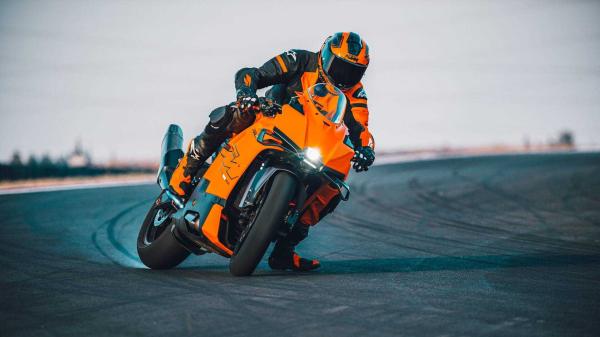
10 Sports Bikes That Deliver Thrills Without Punishing Riders
The most powerful motorcycle here has 126 horsepower and 76 pound-feet while costing under $15,000
Only One True Option For The Panigale V2 – But It Isn’t From Ducati

In the market, there are a number of different rivals to this because of how unique the baby Panigale’s specs and pricing are. We could go with another premium Italian middleweight supersport — the MV Agusta F3 800 is in the ballpark, at $15,998, but it is an uncompromising track weapon. You could opt for one of the liter supersport options: the Honda CBR1000RR Fireblade costs $17,099 and is the most comfortable of the liter sports bikes while still remaining lightweight, lively, and surprisingly powerful.

However, there is only one true competitor to the Panigale V2, and that is the $12,499 Yamaha YZF-R9 that packs a punch despite its price. It has the same attitude towards performance and comfort as the Panigale, keeping an eye on real-world comfort while still delivering thrills on the racetrack. It delivers a little less power but is definitely easier to maintain over the long run. It also has a few features that are better, like the larger TFT display and the ability for track telemetry as standard.
Source: Ducati USA

Related posts

Latest Post


No Comments