
The Cruiser That Quietly Gets Better With Every Mile
Most cruiser motorcycles make their best case in the first few minutes. They look right under dealership lights, sound expensive at idle, and feel dramatic the moment you roll away from the curb. Then real life starts. The ride gets longer, the roads get rougher, and the parts of the bike that felt charming for 20 minutes can turn into the same parts that wear on you after a few weeks. That is the trap with a lot of cruisers: they peak early.

Then there is the other kind of motorcycle. It rides fine on day one, sure, but it does not show you everything it has right away. It builds on the initial impression, improving every mile, and making you fall in love with it slowly over the years. If that’s the kind of bike you like, one iconic Harley deserves a look.
The Showroom Test Ride Doesn’t Tell the Whole Story
A short dealer test ride can only tell you so much. You notice seat height, throttle response, steering effort, and whether the bike makes you smile at low speed. What you do not really learn is how the machine behaves once the novelty fades: how the suspension feels after the first few hundred miles, whether the ergonomics become natural, and whether the engine has a relaxed, unforced rhythm when you are not trying to impress anybody.

The best cruisers are not always the most startling on day one. They are the ones that keep making sense after the first wash, the first long weekend, and the first few thousand miles. A 20-minute ride around a few blocks cannot tell you how a seat breaks in after 3,000 miles, or whether throttle response sharpens once the rings have properly seated.

Or how suspension settings that felt generic on day one start to feel personal by month six. That is precisely the gap where a bike’s real worth gets decided, long after the test ride is forgotten. A cruiser that quietly gets better with ownership is doing something the spec sheet can’t capture.
The Harley-Davidson Fat Boy Quietly Gets Better With Every Mile
Base Price: $22,599

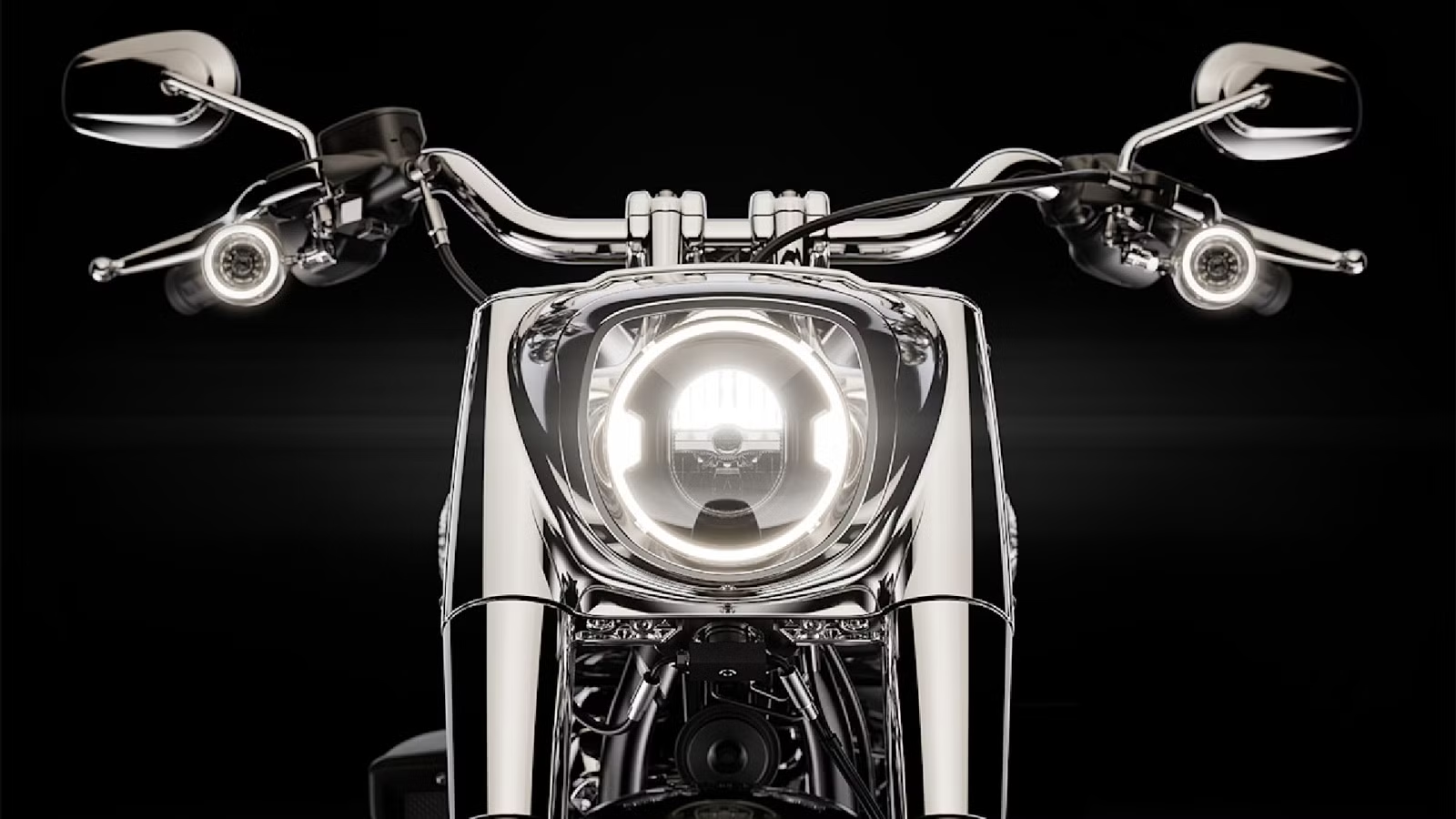
Harley-Davidson offers the current Fat Boy at $22,599 MSRP, which puts it squarely in premium cruiser territory, but the price only tells part of the story. The Fat Boy is built around the kind of design that still feels special after the initial shock of the wide stance and bright chrome has worn off. Harley pairs the bike’s visual theater with a Milwaukee-Eight 117 Custom V-Twin, a 49 mm telescopic fork, a hidden mono-shock rear setup, Lakester cast-aluminum wheels, selectable ride modes, and a full suite of Rider Safety Enhancements. In other words, it is not just a style piece but a heavyweight cruiser with modern hardware.
That is what makes the Fat Boy unusual. A lot of cruisers are all attitude and not much evolution. The Fat Boy, by contrast, feels like a bike that opens up as you get familiar with it. The stance remains bold and never fades away. However, the more miles you stack up, the more the bike’s rhythm, traction, and ergonomics begin to feel like a package rather than a collection of styling cues. Harley’s own description leans into that idea, calling it a “heavyweight knockout” that is “better than ever” with the new 117 Custom V-Twin.
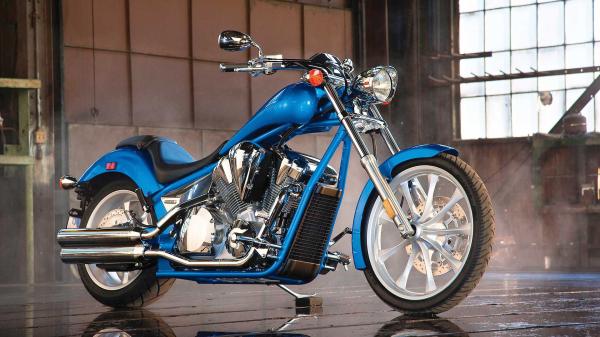
The Cruiser With Japanese Reliability And Harley-Level Presence
This Japanese chopper looks right at home parked next to custom American cruisers, all while promising bulletproof reliability.
The Milwaukee-Eight 117 Engine Matures Into Its Torque

The Fat Boy’s current engine is the Milwaukee-Eight 117 Custom, with a displacement of 117 cu in, or 1,923 cc. Harley rates it at 104 hp at 4,800 rpm and 126 lb-ft of torque at 3,000 rpm, with the power arriving through a 2-into-2 staggered exhaust. The engine is built to deliver an easy, immediate shove in the part of the rev range you actually use on a cruiser. Harley also says the bike is tuned for effortless highway cruising and in-town performance.
Sound And Character Deepen With Break-In

The Fat Boy’s exhaust note is part of the appeal, but it is not just about volume. Harley says the updated two-into-two system is meant to deliver a rich V-twin sound while supporting performance, and that combination tends to be more satisfying after the bike has some miles on it. Owners on long-term ownership forums describe it as the bike “loosening its tie,” and mechanically, that’s not far off. Combined with an engine that has fully seated its internals, the result is a motorcycle that simply feels more lived-in than it did at delivery.
A Proven Chassis That Settles Into the Rider

The Fat Boy’s chassis is one of the reasons it grows on people. The bike uses a 49 mm dual-bending valve telescopic fork up front and a hidden free-piston coil-over mono-shock in the rear, with hydraulic preload adjustment. The wheels are Harley’s machined Lakester cast aluminum pieces, and the stock tires are a 160/60R18 front and 240/40R18 rear. On paper, that is a big, substantial package. On the road, it becomes a bike that benefits from familiarity. Over time, the Fat Boy should start to feel less like a heavyweight and more like a bike that is deliberately planted.
Why Familiarity Sharpens Low-Speed Handling

This is where the Fat Boy’s personality really shows. It is not trying to be quick-steering in a sport-bike sense, and it does not need to be. The payoff is stability. Harley lists a 65-inch wheelbase, a 30-degree rake, and 4.1 inches of trail, all of which support that long, settled cruiser attitude. In everyday use, repeated exposure makes the low-speed handling feel less intimidating.
Ergonomics And Comfort That Reward Seat Time

Harley lists a 25.9-inch laden seat height, which makes the Fat Boy manageable at stops, and the foot placement, bar sweep, and wide saddle all lean into a relaxed cruiser posture. Once aboard, you’ll appreciate the well-shaped five-gallon tank, USB-C charging, and the adjustable brake lever. The bike feels designed to support long days instead of just looking good in the parking lot.
The Mile-500 Versus Mile-5,000 Comfort Gap

By mile 500, a rider usually knows the basics: where the seat supports them, how the bars fall to hand, and how the wide tires change the bike’s turn-in. By mile 5,000, the conversation changes. The posture feels more natural. The brake no longer registers as a detail. The throttle hand learns how to exploit the torque without fighting vibration or awkward inputs. Harley’s updated rear suspension is also part of that long-game comfort story, since the company says it is more comfortable while still staying firm and composed when the pace rises.
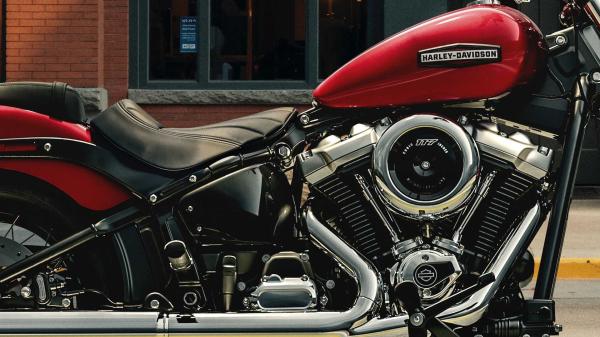
The Cheapest Harley-Davidson That Still Feels Like A Harley
This chromed-out cruiser is the most affordable Harley-Davidson with the Milwaukee-Eight 117 engine at $14,999.
Rider Aids That Work Quietly in the Background

The Fat Boy’s modern electronics are not there to make headlines. Harley includes ABS, traction control, drag-torque slip control, TPMS, and cornering versions of its rider aids on the current model. The bike also gets selectable ride modes — Road, Rain, and Sport — along with a five-inch analog display. That is enough tech to help in the messy parts of real riding, but not so much that the bike loses its classic feel.
Ride Modes And How They Adapt to Real-World Use

Harley says the Fat Boy’s modes adjust the bike’s feel in a way that lets riders fine-tune the experience, and that makes sense for a cruiser of this size. In Rain, the bike can calm down just enough to inspire confidence. In Sport, the throttle feels sharper. In Road, everything settles into the middle. Over time, riders tend to develop habits around those settings.
That is really the heart of the Fat Boy’s appeal. It is not a cruiser that wins you over with one dramatic test ride and then asks you to ignore its flaws. It is the opposite. It is a big, unmistakable Harley that becomes easier to appreciate the more you live with it. The styling still turns heads, the 117 still delivers the kind of torque cruiser riders want, and the chassis still gives the bike a planted, substantial feel. However, the deeper appeal is the sense that the Fat Boy keeps revealing a useful character long after the showroom shine has faded.
Source: Harley-Davidson

Related posts
Latest Post


No Comments