
The Cruiser That Quietly Became One Of The Best Bikes For Riders Over 40
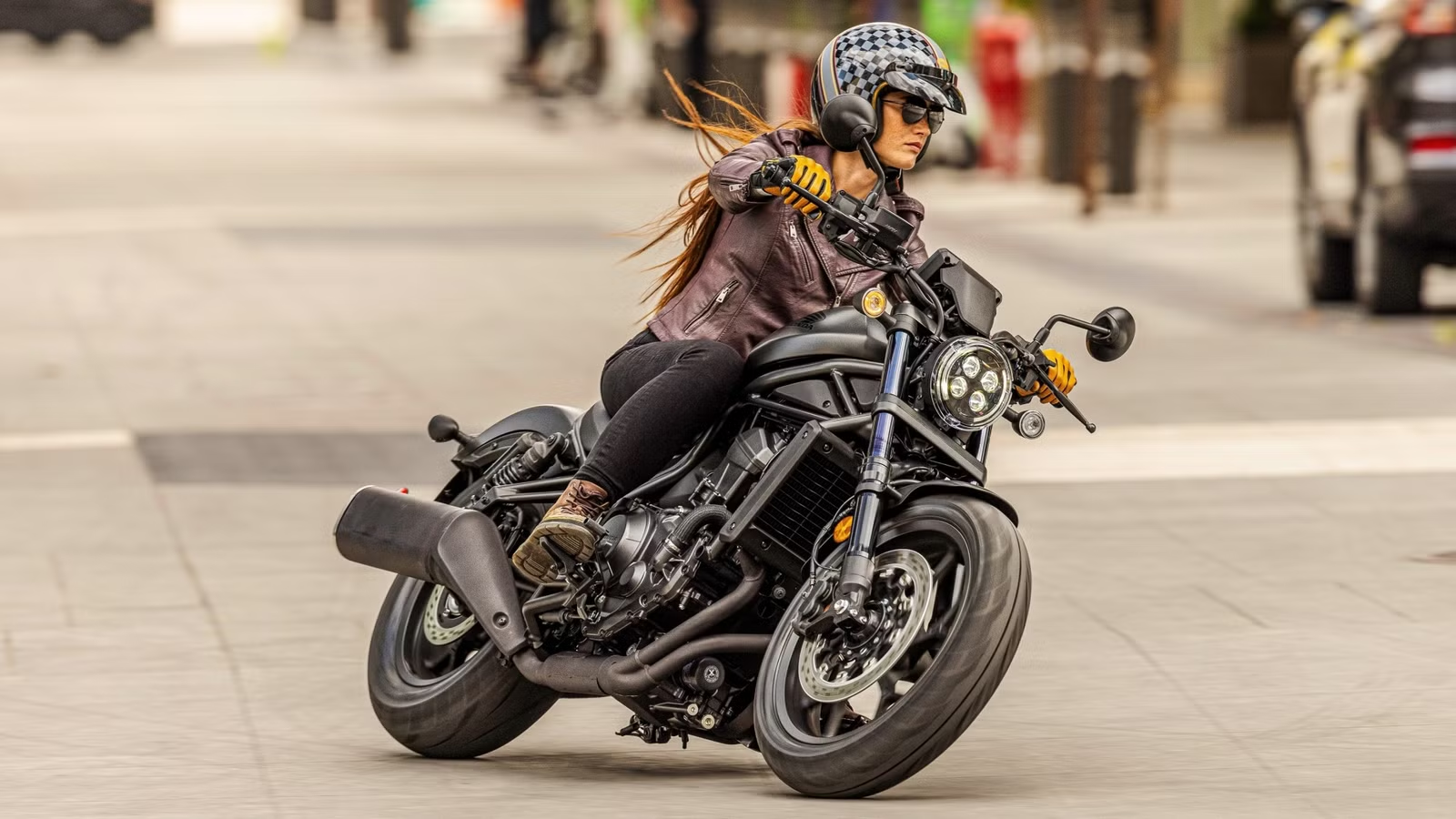
Crossing the forty-year-old mark often changes what riders look for in a motorcycle. ADVs and tourers feel quite heavy and big to manage and the aggressive riding posture of sport bikes and nakeds may hamper the riding experience of someone over forty. However, a low-slung cruiser with a relaxed riding position seems like a great fit. Riders with decades of experience behind them prefer something that is effortless over flashy. While the cruiser segment is wide, there are a few options that deliver everything a rider over forty would want: comfort, reliability, convenience, and ease of riding. Here is one Japanese cruiser that fits the bill.
The Honda Rebel 1100 DCT Is An Easygoing Cruiser

Riders over 40 look to step away from tall, hefty ADVs and cramped sport bikes. And this is where the Honda Rebel 1100 DCT looks like a good deal. While traditional cruisers offer a low seat and a relaxed riding posture, their weight and sheer size still hamper practicality.
However, the Honda Rebel 1100 DCT meets the typical cruiser criteria with lighter and more compact dimensions. With a 518-pound curb weight, relaxed handlebars, and mid-mounted foot controls, the bike is manageable and easy to ride around town. To enhance comfort further, it has a trick up its sleeve.
The DCT Is Its Party Trick For Making Riders Over 40 Relax

Along with comfortable and approachable ergonomics, the Rebel 1100 gets Honda’s six-speed DCT—a defining feature that makes this cruiser easy to live with. By removing the clutch lever and gear shifter, the rider no longer has to worry about shifting gears and managing a clutch in stop-and-go traffic.

It is all taken care of by two independent wet clutches. One of them manages odd gears and the other manages even gears. Instead of worrying about being in the right gear when making passes, the DCT handles gear changes without interrupting power delivery. And for riders who prefer to change gears themselves, you get handlebar-mounted paddle shifters to change up or down.
A Proven Parallel-Twin Engine That Delivers Smooth, Usable Performance

Powering the Rebel 1100 is Honda’s reliable 1,084cc liquid-cooled parallel-twin engine, which is shared with the Africa Twin. Honda has tuned the engine to match the relaxed cruiser appeal and paired it with a heavier flywheel and revised valve timing. The engine produces 87 horsepower at 7,000 RPM and 72 pound-feet of torque at 4,750 RPM.
With peak torque arriving below 5,000 RPM, the engine delivers a strong low-end pull without needing high revs. The engine uses a 270-degree crankshaft, giving it an uneven firing order similar to a V-twin, while maintaining the reliability of Honda’s modern liquid-cooled platform.
Conventional Hardware Keeps The Simplicity Going

All the mechanical components also follow a more conventional route. The Rebel 1100 DCT is built around a tubular steel diamond frame paired with 43mm telescopic front forks that offer 5.5 inches of travel and preload adjustability. At the rear, you get dual Showa piggyback shocks with 3.7 inches of travel and adjustable preload.
Braking is handled by a single 330mm front disc with a radial-mount four-piston caliper and a 256mm rear disc. The cruiser rolls on an 18-inch front and a 16-inch rear cast aluminum wheel setup. Together, these chassis components are designed to prioritize straight-line stability at higher speeds.
Modern Rider Aids Work Quietly In The Background

This is where the Honda Rebel 1100 fulfills modern cruiser expectations. Underneath its mechanically simple frame, Honda packs a wide range of features and technology designed to improve rider convenience and safety. Throttle-by-wire enables four selectable riding modes that adjust power delivery, engine braking, and DCT shift behavior.
The cruiser also gets Honda Selectable Torque Control, three-level wheelie control, and dual-channel ABS for added safety. It also comes with cruise control as standard, full LED lighting, a five-inch TFT display with Honda RoadSync smartphone connectivity, a built-in USB-C port, and a lockable three-liter under-seat storage compartment.
There’s Also A Bagger Version If You’re Into Touring

For riders who want more touring capability, Honda offers a Rebel 1100T DCT with a starting price of $11,599. This factory bagger gets a wide, fork-mounted fairing with a short windscreen designed to reduce windblast. The touring version also includes color-matched lockable hard saddlebags, offering a combined 35 liters of storage. Despite the additions, the Rebel 1100T DCT weighs 549 pounds, which is still lighter than traditional full-dress touring motorcycles. The comfortable ergonomics, powertrain, and electronics remain the same for the Rebel 1100T.
How The Honda Rebel 1100 Compares To Its Rivals

The Rebel 1100 DCT stands out on paper for its standard tech and value. The Harley-Davidson Nightster starts at $9,999 with 91 horsepower, and the Indian Scout Sixty Bobber also starts at $9,999 with 85 horsepower. While both are cheaper than the Honda, they lack standard cruise control and the DCT.
Stepping up to the Indian Scout Bobber or the Triumph Bonneville Speedmaster, with starting prices of $12,999 and $14,795 respectively, raises the price bracket significantly while still lacking DCT. At $10,399, none of Honda’s rivals match its combination of liter-class displacement, standard cruise control, and clutchless DCT convenience.
Source: Honda Powersports

Related posts



Latest Post


No Comments