
The Cruiser Owners Keep Riding Long After Everyone Else Trades In
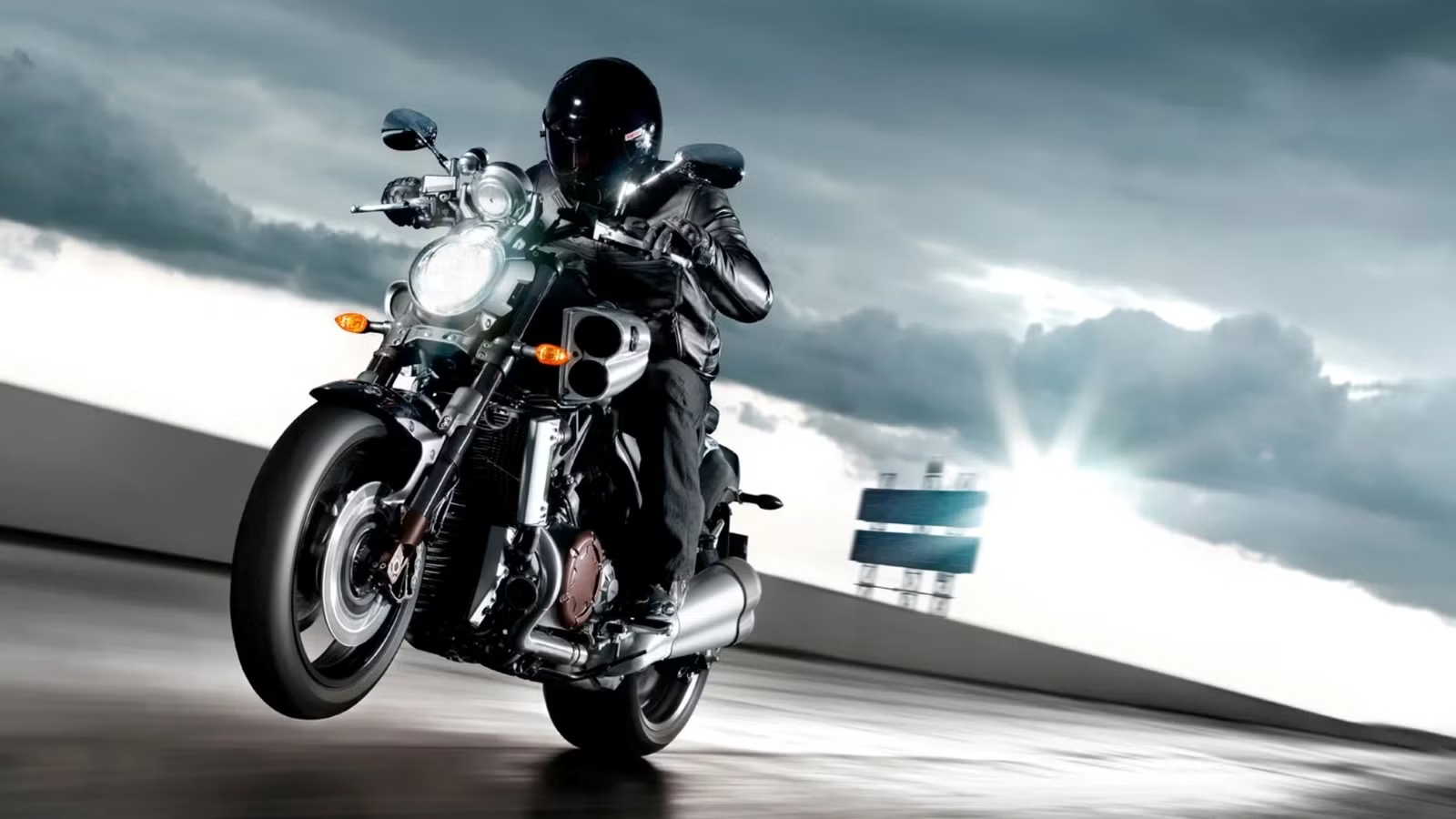
Over the years, the cruiser market has become more diverse than ever. While American brands continue to dominate this space, and lean heavily on tradition for sales, they have been joined by manufacturers from all over the world, all offering something different. European brands generally offer more luxury in this space, and more recently China and India have also joined the fray with some really affordable options. But when it comes to getting more bang for your buck, it is pretty hard to look past the Japanese brands.
Power Cruisers Are An Unusual Contradiction
Back in the ’80s, Japanese manufacturers saw a small yet significant gap in the cruiser market. At the time, Harley-Davidson was still in recovery mode after the bleak AMF years, and in an effort to win back consumer confidence, reliability was prioritized over performance or innovation. This opened the door for the Japanese brands to offer some impressive high-performance models.
Generally speaking, power cruisers are a pretty serious contradiction. A cruiser is not supposed to have any sporting pretensions; it is supposed to be a more laid-back motorcycle. But we all love a bike that is capable of doing things it really shouldn’t. This was proven by the success of motorcycles like the Honda Magna series (pictured), and the original Yamaha V-Max. While the Magna eventually fell by the wayside, the VMax made it into a second generation by the late ’00s, and was an instant classic.
Owners Don’t Want To Let Go Of The 2020 Yamaha VMax
Price Range: $14,000 – $19,000


The way the second generation VMax (in particular its final model year) holds its value only serves to underscore the fact that owners know exactly what they have. While the first generation was potent, the newer bikes are on a different level. It is still the most powerful production cruiser, and most likely always will be. It is also comfortable enough to ride all day and is as reliable as you might expect any Japanese motorcycle to be.
If you are willing to get an older model (this platform remained unchanged from its introduction), you can certainly save some money, but if you are set on getting a 2020 model, then you need to be prepared to pay. The trade value for the bike is sitting at $14,975, and they retail for just over $19,000. To put this into perspective, these bikes sold for around $18,000 when they were new, so they haven’t actually depreciated at all in six years.
The VMax Has More Power Than Some Modern Superbikes
Power: 197 Horsepower

With nearly 200 horsepower on tap,the VMax is actually slightly more powerful than the current R1 superbike. In fact, there are several modern superbikes that have less power than this V4 monster. Naturally, it isn’t going to keep up with any of those bikes on a canyon road, but it will give them a good fright in a straight line. The original V-Max was built as an ode to drag bike culture, and the second generation certainly didn’t veer too far from that particular track, or drag strip, if you will.
An Exhibition Of Excess

With 123 pound feet of torque distributed evenly through the rev range, it will still be as quick as any modern cruiser off the mark. The only difference is that it will just keep going, and going, all the way up to its 9,000 RPM redline. Obviously, nobody really needs this much power, but it does make the VMax an incredibly fun bike to ride. It is the very definition of excess.
The VMax Is A Modern Classic

When compared to the more modern bikes you can buy for around the same price, the VMax is relatively sparsely equipped. You do get ABS and a slipper clutch, which are probably the bare minimum for a motorcycle this powerful. As previously mentioned, it is comfortable. It has a wide, well-padded seat, and all-day rides are well within its capabilities. Unfortunately, it isn’t exactly a competent canyon carver. With a wet weight of 686 pounds, it will be something of a handful to ride on twisty back roads.
This is a bike that will be far happier cruising down the highway. It is also a bike that will only really appeal to those looking for a more straightforward approach to riding. All it has to offer is a great big engine and two wheels, and that is exactly what makes it so special. This is a motorcycle from another time. Riding it will force you to engage with it, and step away from the connected world we live in for a time.
The Ruthless Cruiser Cull

At one point in time, Yamaha looked all set to take the fight to Harley, with an extensive cruiser and touring lineup set up under the Star Motorcycles banner. Unfortunately, it didn’t pan out the way the Japanese brand had hoped. A combination of the 2008 recession and shifting consumer trends meant sales never reached the heights the brand expected. It is also fair to say that Harley fans were a little more loyal than Yamaha expected!
Gradually, Yamaha’s presence in this space shrank to almost nothing. By 2016, the Star Motorcycles brand was shuttered, and by 2020, the VMax was also discontinued. This left behind only the Bolt R-Spec and V Star 250. Although it might seem as though Yamaha gave up on the VMax a little too soon, the reality of the matter was that it was always a niche model.

A low-volume, relatively low-profit model like this was always more of a statement piece than anything else. That is also what makes it well and truly worth the price of admission. Those that were able to get their hands on the last new bikes knew exactly what they had. It is a historical model, arguably the greatest power cruiser we are ever likely to see. While there are a couple of alternatives still on the market, they offer a very different kind of riding experience.
Source: Yamaha Global

Related posts




Latest Post


No Comments