
The Used Motorcycle That Offers Incredible Performance For The Money
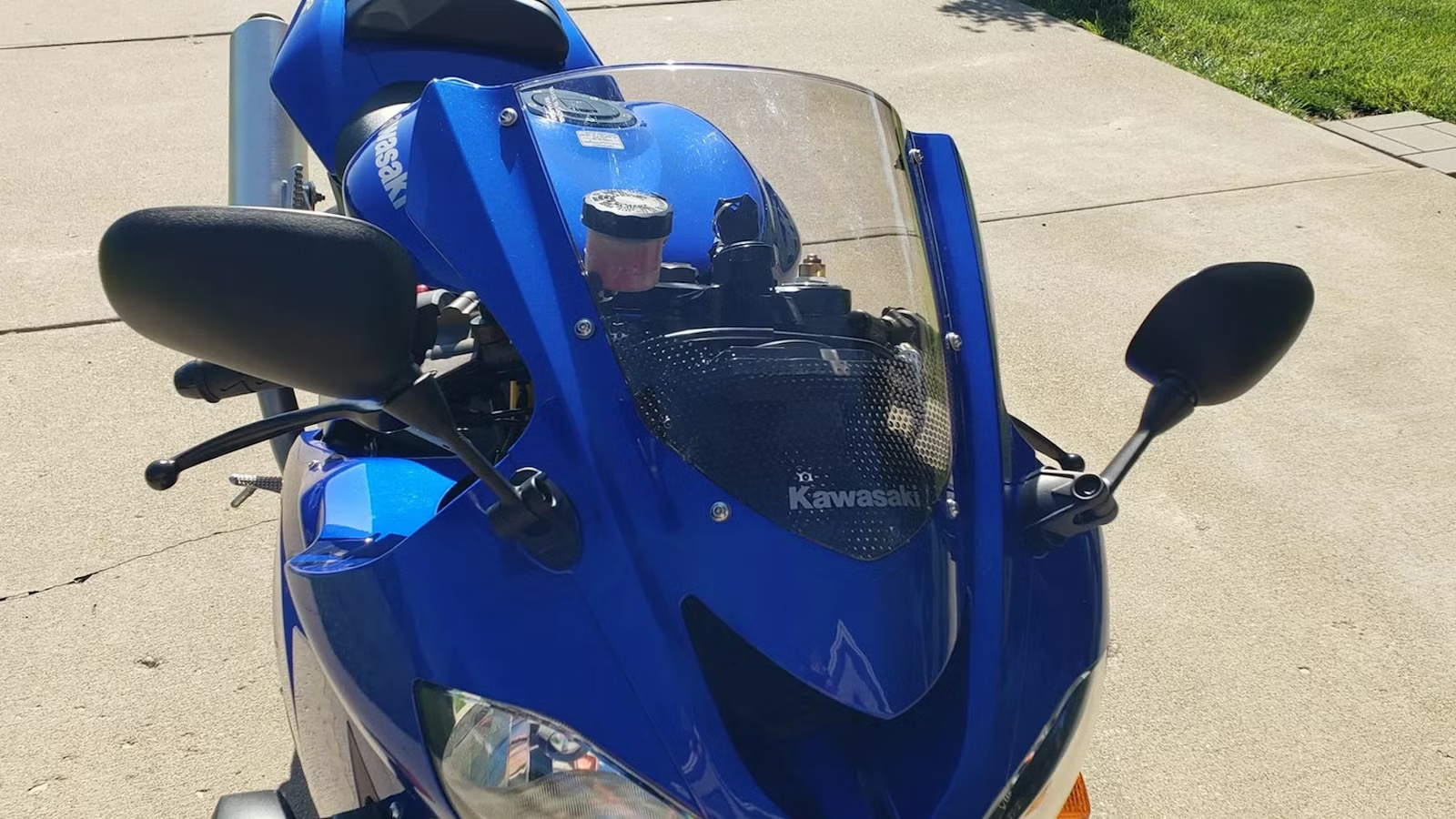
Over the past few years, we have seen prices for everything, not just motorcycles, go up in a big way. This is not a normal kind of inflation-related price increase that people from previous generations complain about; there is more to it than that. High-performance motorcycles (such as sports bikes) were once the very definition of speed on a budget, but if you want that kind of speed today, you need to be willing to pay substantially more. Want a similar experience for less? Then, the used bike market is where you need to look.

Buying a used motorcycle always has an element of risk attached, so please do your research and proceed with caution.
The Used Market Provides Some Solutions
By the early 00s, the liter sport bike class had been firmly established. All the Japanese manufacturers had some form of superbike on offer, and they were in an arms race to build the fastest, lightest machine possible within a prescribed budget. Today, the used market is littered with these incredible bikes, but no matter how good they once were, neglect can be genuinely dangerous.

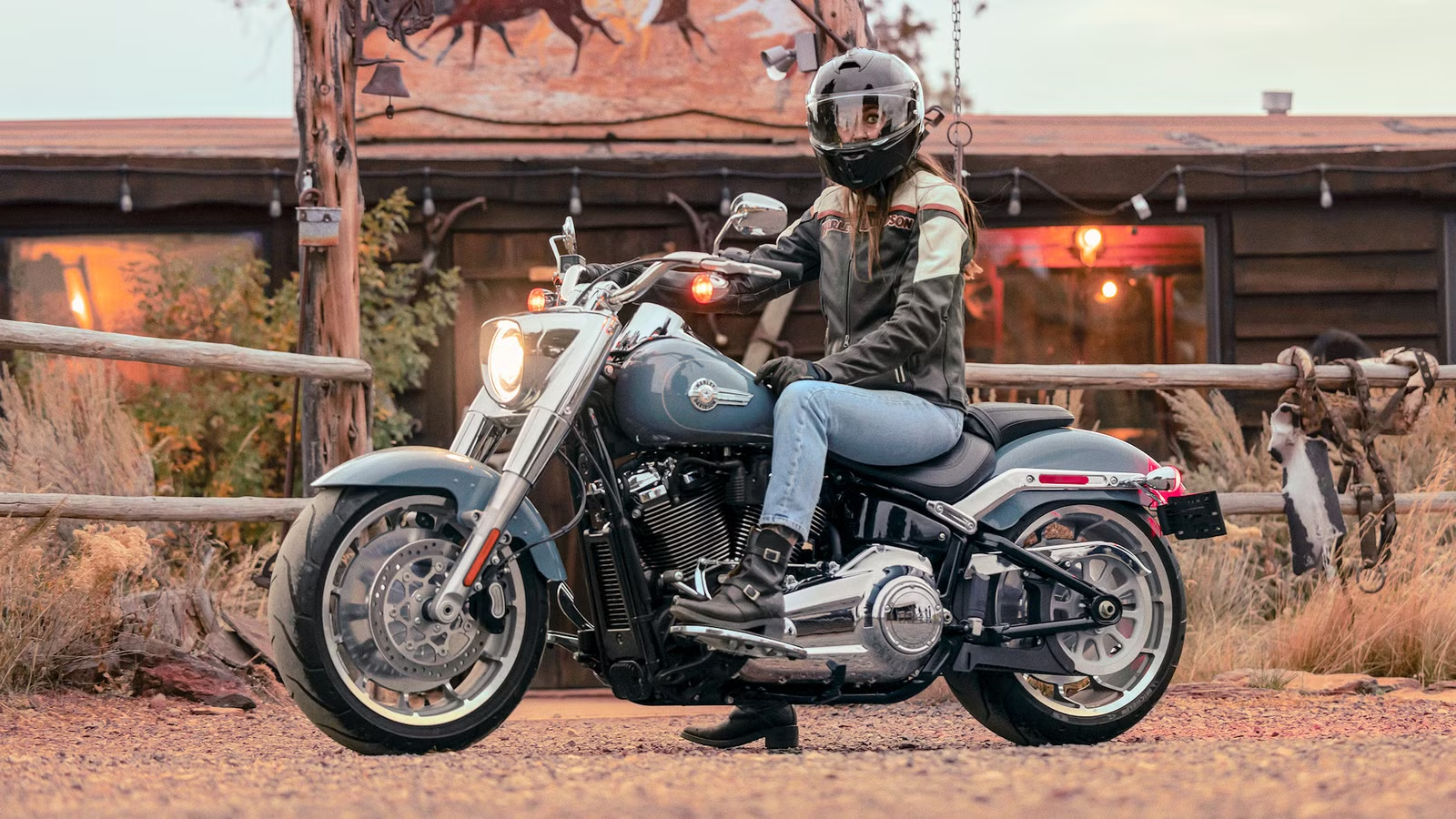
While some bikes can be neglected and still be relatively safe to ride, a neglected superbike represents a massive gamble. These bikes that are selling for under trade value should only ever be seen as project bikes, and, along with being fairly dangerous to ride on public roads, all have the potential to become a money pit. There are others that are still in legitimately good shape, yet still affordable, with the bike in question being one of the very best of the analog era.
The 2005 Kawasaki Ninja ZX-10R Is Cheaper Than Most Entry-Level Sport Bikes
Price Range: $3,000 – $6,000

By 2004, Kawasaki had finally entered the true liter-class superbike race with the Ninja ZX-10R. By this time, each of the other Japanese manufacturers already had a contender in the ring, but, by all accounts, this was the bike to have in 2004. With all these models getting updated so frequently back then, another bike from a competitor arrived in 2005, and this model was relegated to old news.
It may have been old news back then, but today it still represents unbeatable performance for the money. Trade value is currently pegged at $3,645, and retail value is sitting at $5,300. This is already up from last year, and we suspect the value will still go up for a while as supply dwindles. While these were always mass-produced motorcycles and are not necessarily collectible, most of them were used, abused, and discarded. So bikes in reasonable condition are getting harder to find.
The 2005 Ninja ZX-10R Is Dangerous In The Wrong Hands
Power: 179 Horsepower (with ram air)

The original Ninja ZX-10R was infamous for being scary fast. While 179 horsepower may not seem as impressive these days, with several bikes now making in excess of 200 horsepower, you need to remember that this is an analog machine. So there is no ABS and no traction control to bail you out in a pinch. An error at the wrong moment would result in you becoming part of the scenery. Suffice to say, this is not a bike that should ever make its way into the hands of a novice rider.
It Might Be The Good Kind Of Scary

Along with it being a purely analog machine, it was also anything but refined. This was more or less designed to be used on track, and pretty much everything about it was centered around getting as much performance out of the machine as possible. It was also only in its second year of production, and was raw. The throttle worked more or less like an on/off switch, and had the propensity to catch out riders that were not absolutely focused on what they were doing.
While it is possible that something like this has been softened over the years, the bike is still going to be full of sharp edges, and that is exactly what makes it so rewarding. Getting it right, or simply not crashing the thing, is a feat worthy of celebration. While ever so slightly terrifying, it is the kind of “scary” that makes you want to keep riding, and somehow find a way to tame the beast.
The 2005 ZX-10R Is Still More At Home On Track

When it was launched in 2004, it had an all-new chassis. It was short, sharp, and incredibly light. With a wet weight of just 433 pounds, it was actually lighter than contemporary supersports. In fact, it is still lighter than some modern supersports, motorcycles that have less than half as much power. Suffice to say, this is still a handy track bike for those inclined.
All it really needs for it to keep up with more modern machinery is a steering stabilizer and revamped suspension. If there is room in the budget, an aftermarket rear shock would be useful, but with it being serviceable, not expressly necessary. With no electronic rider aids in sight, it will also require a rider with an open mind, and no ego to speak of, because it will humble you.
A Genuine Working Class Hero

Back when it was brand new, it was a genuine blue-collar performance bike. Today, on the used market, this fact remains true, and for that reason alone it is hard not to love. But, just like any vehicle that offers performance on a budget, it is prone to abuse. Some of these bikes have been crashed and rebuilt so many times that nobody even knows what the original color really was.
Twin-spar aluminum chassis are fantastic and can certainly handle some abuse. But once they have been deformed, they are difficult to repair, and it is pretty hard to tell with the naked eye. These bikes are over two decades old now, and will need more attention than a more modern motorcycle. They are also uncompromising machines that are hopelessly uncomfortable at road-legal speeds. For those in the market for a track toy, this offers amazing value, but it certainly shouldn’t be your only form of transportation.
Source: KBB

Related posts




Latest Post


No Comments