
The Civic Type R Is Outgunned By 400-HP Rivals, And That’s The Point
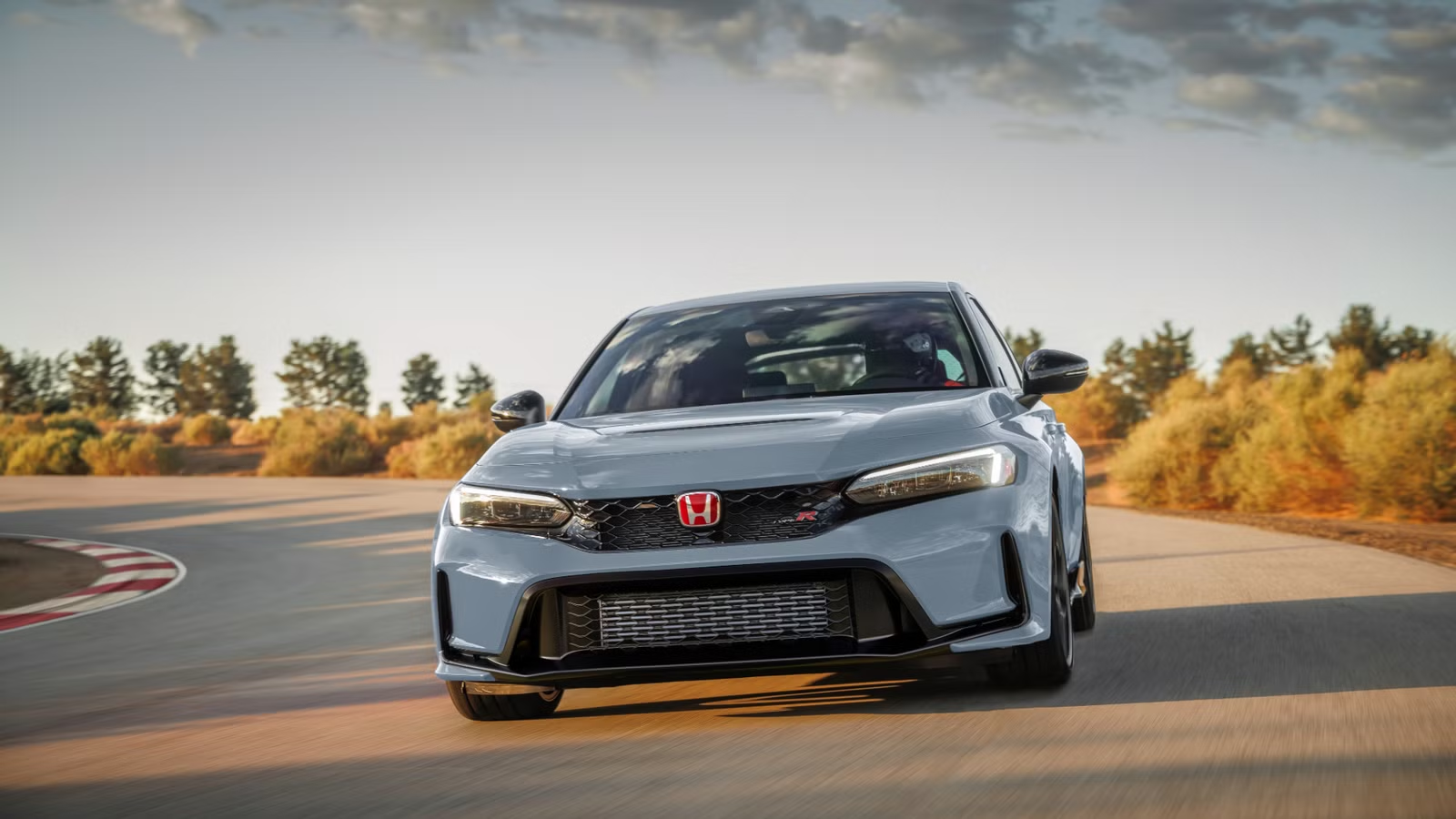
Horsepower wins arguments on spec sheets and loses them in garages. One hot hatch just reminded the segment of that, arriving with the same 315 horsepower it had before while its rivals sprint toward 400 horsepower and beyond. The internet has already filed its verdict saying it’s stale, timid, outgunned. But read what was actually changed, and a different picture emerges—one built around heat management, hardware fine-tuning, and the owner who plans to keep the car long after the lease-and-flip crowd has moved on. Sometimes the boldest move in a performance war is declining to enlist.
Honda Leaves The Type R With 315 HP As AMG And Golf R Chase 400 Horses

The 2027 Honda Civic Type R was unveiled on October 1, 2026, and the headline number is the one that did not change. Its 2.0-liter K20C1 turbo-four still makes 315 horsepower and 310 pound-feet of torque, exactly what the FL5 launched with. Meanwhile, AMG keeps stretching its compact performance cars into ever more extravagant territory, and the rumored Golf R refresh is said to be chasing 400-plus horsepower of its own. Against a 400-horsepower rival, the Honda is conceding roughly 85 horsepower before anyone has turned a wheel.
That gap will fuel a predictable round of takes. Every outlet covering the reveal agrees there is no power increase, and plenty will call that a missed opportunity. The more interesting question is whether Honda missed it or declined it.

Look at what the car already does. Zero to 60 mph takes 4.9 seconds, and top speed is 169 mph. Those are not the numbers of a car begging for more output. They are the numbers of a car whose limiting factor was never the engine’s peak figure. Power is also the cheapest variable in this segment. A rival can find 30 horsepower with a software update. Thermal capacity, brake feel, and damper control cannot be conjured that way. They have to be engineered, tested, and paid for.

That is where Honda put its effort. Rather than joining a race it would have to keep re-running every few years, it chose to fix the things that make a performance car frustrating over time. The rest of this refresh reads like a punch list written by someone who has actually lived with the FL5, and that is a more interesting story than another round of horsepower one-upmanship.

Start with the FL5’s best-known weakness. Owners and testers documented that the previous car struggled with heat during sustained track use. It was fast for a few laps, then it asked for mercy. For a car wearing the Type R badge, that was an awkward footnote. The 2027 update addresses it directly.
Honda enlarged the front grille opening and reshaped the fascia, which increases air velocity to the engine. In plain terms, more air gets in, and it moves through the system with more purpose. That is not a cosmetic tweak. It targets the exact limitation that kept the car from being a full-day track companion.
Underneath, a deeper front splitter adds downforce and reduces turbulence at the nose. Combined with the revised fascia, the aero and cooling changes work as a package. The car sticks better at the front while breathing better at the same time. Neither change adds a single horsepower. Both make the existing 315 horsepower more usable, for longer.

This is the heart of the argument. A track day is not a single hot lap. It is five or six sessions, a cooling grid, and a driver who wants lap ten to feel like lap two. Peak output wins magazine comparisons. Repeatable output wins weekends. A 400-horsepower car that has to back off when temperatures climb is not meaningfully faster than a 315-horsepower car that does not.
There is also a quieter benefit for owners who never go near a circuit. A drivetrain designed with more thermal margin is one that works less hard to stay comfortable in traffic, on a hot highway, or on a mountain pass in summer. Track-day cooling and long-term durability share the same engineering logic, and the Honda Type R now leans into both. For a buyer thinking in decades rather than model years, that matters more than any number on a dyno sheet.
Reworked Dampers, Brakes, And Rev-Matching Make The FL5 Easier To Live With

The chassis changes are subtle by design. Honda recalibrated the adaptive dampers in +R mode to reduce bouncing and impact harshness. The goal is control, not stiffness. Road & Track describes the result as better controlled without losing its firmness, while TFL Car suggests the car may feel softer. Read together, they point to the same thing, that the car does not get harsher or more aggressive, it gets better at settling after a bump. That is a refinement, and it should make the Type R more pleasant on imperfect pavement rather than more punishing.
That distinction matters for the car’s role. A hot hatch earns its keep by being a Tuesday-morning commuter and a Saturday-afternoon canyon carver. Dampers that recover cleanly from a pothole or an expansion joint make the first job easier without sacrificing the second.

The brake pedal gets a similarly modest but meaningful fix. A new yoke spring eliminates play in the pedal, so the first inch of travel feels more direct. It is the sort of change nobody puts in a headline, yet it is exactly what you notice in the first mile and appreciate for the next hundred thousand miles. A pedal that responds without slack inspires confidence at the limit and smoothness in stop-and-go traffic.
Then there is rev-matching. Honda updated the software for faster downshifts, so the engine’s revs meet the gearbox’s demands more quickly. Rev-match has long been a Type R party trick, but speed matters here. A delayed blip makes a downshift feel clumsy, while a fast one makes a manual transmission feel like it is reading your mind. For drivers who chose a six-speed manual precisely because they enjoy the process, this is a pleasant upgrade.
Heated Seats And Google Gemini Give Honda’s $50,000 Hot Hatch A More Complete Ownership Case

The Civic Type R starts at $49,990 including a $1,295 destination charge. But The Autopian points out that most colors, including White, Blue, and Sonic Gray, now carry a $455 premium, pushing the realistic price to $50,445 for most buyers. So what does the extra money buy? Comfort and completeness, mostly.
For the first time in Type R history, three-stage heated front seats are standard. A performance car you can comfortably drive in winter is a performance car you actually drive.

Google built-in with Gemini, Amazon Alexa, and dual USB-C ports bring the infotainment up to what buyers expect in 2026. Voice navigation and a modern interface sound mundane next to horsepower figures, yet they shape ownership far more than most spec-sheet items. Efficiency adds to the case. The EPA rates the car at 22 mpg city, 28 highway, and 24 combined, and Car and Driver recorded 30 mpg in real-world 75-mph testing.
Any buyer can find more power for roughly this money, but fewer cars pair real pace with a cooling system designed for abuse, a refined chassis, and a cabin that does not feel like a sacrifice. Spend $50,445 on this Honda, and you are paying for the whole ownership experience rather than a single performance figure.
Sources: Honda U.S., Car And Driver, Road & Track, The EPA

Related posts




Latest Post


No Comments