
Here’s How Much It Costs To Refill A Hydrogen-powered Honda CR-V
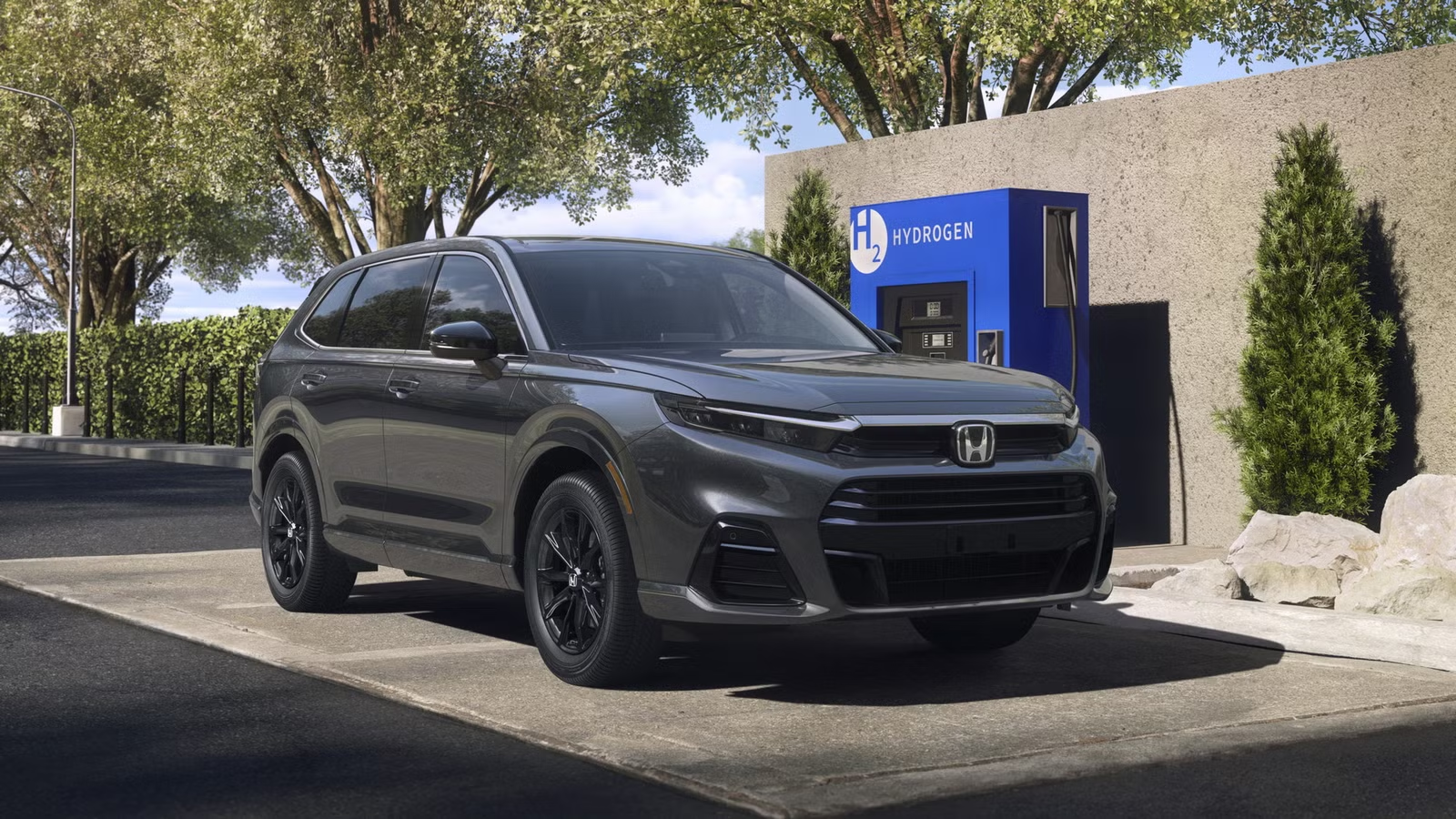
Hydrogen fuel-cell vehicles have long occupied a fascinating but frustratingly narrow corner of the automotive world — promising clean mobility while struggling with infrastructure and cost realities. The Honda CR-V e:FCEV puts a fresh face on that challenge, pairing a conventional fuel-cell system with a plug-in electric setup to create the first PHEV-style hydrogen crossover sold in the United States. If you live in California and are weighing whether this technology makes financial sense, here is everything you need to know about what it actually costs to keep the tank full.
The Honda CR-V e:FCEV Produces 174 Horsepower

Honda makes the CR-V e:FCEV the first plug-in hydrogen fuel-cell vehicle sold in the U.S. — a meaningful distinction that sets it apart from every other FCEV on the market. It runs on a conventional fuel-cell system supplemented by a separate plug-in electric setup, and together the two produce 174 horsepower and 229 pound-feet of torque to the front wheels. Honda has not published an official 0–60 mph figure, but for context, the Sport Touring Hybrid takes 7.9 seconds to complete the same sprint.
The EPA estimates this drivetrain will return a 61/52/57 MPGe energy consumption average on the city/highway/combined cycle. That falls short of what you get from a conventional PHEV, but it is considerably more efficient than a standard hybrid. For reference, the Sport Touring Hybrid returns a 27/32/29 MPG estimate from its 2.0-liter four-cylinder engine and two electric motors.
It’ll Cost Around $154.80 To Refill The Honda CR-V e:FCEV
Hydrogen remains a very expensive fuel in the U.S., with prices that have hovered around $36 per kilogram, though costs can vary by location and market conditions. Researchers and industry players around the world are actively working to bring that figure down through improvements in production, distribution, and storage. At current rates, filling the CR-V e:FCEV’s 4.3-kilogram tank runs approximately $154.80 — a substantially higher running cost compared to the conventional gasoline or hybrid CR-V models.

Honda has not confirmed whether its FCEV crossover will include the same complementary fuel allowance — typically around $15,000 — that buyers and lessees of the Toyota Mirai and Hyundai Nexo receive. Such a stipend would almost certainly be necessary, given that Honda offered a similar allowance for Clarity FCV customers. Without it, the CR-V e:FCEV would be a difficult sell, even with its supplementary plug-in system.
The Honda CR-V e:FCEV Covers 270 Miles On A Tank

Running on hydrogen alone, the CR-V e:FCEV delivers an EPA-estimated 270 miles per tank — notably less than the Clarity FCV’s 360-mile range. The plug-in electric system helps bridge that gap, adding an estimated 29 miles of electric-only range from its 17.7 kWh lithium-ion battery.
Honda CR-V e:FCEV Energy Consumption
|
MPGe Ratings (City/Highway/Combined) |
61/52/57 MPGe |
|
EV Range |
29 miles |
|
Driving Range |
270 miles |
Californian drivers average around 12,500 miles a year, which means you can expect to fill the CR-V e:FCEV’s tank roughly 46 times annually. At current hydrogen prices, that works out to approximately $7,281.60 per year in fuel costs. Even accounting for a $15,000 stipend, those figures make the CR-V e:FCEV most practical for drivers who cover significantly shorter distances. It’s also worth noting that the plug-in system will reduce overall running costs, since recharging the battery is estimated to cost between $2.22 and $7.43 depending on local electricity rates.
The Honda CR-V e:FCEV Produces Zero Tailpipe Emissions

The Honda CR-V e:FCEV is a completely emissions-free crossover — the only byproduct of its hydrogen system’s energy-generating process is water vapor. Owners also qualify for an HOV carpool sticker, allowing access to less-congested lanes during rush hour.
FCEVs generate electricity by combining hydrogen with oxygen drawn from the car’s air intake, much as an internal combustion engine draws in air — but instead of burning fuel, the system conducts a reverse electrolysis electrochemical reaction. Honda builds the CR-V e:FCEV on its Advanced Compatibility Engineering architecture, the same platform used across most of its global production lineup. The model also comes standard with Honda Sensing safety and driver-assistance technologies.
It Looks Slightly Different Compared To The ICE CR-V

The CR-V e:FCEV wears a subtly distinct look, especially up front, where a more expressive fascia features an aggressive bumper with wider air intakes and more sculpted fenders. Honda has not released an official drag coefficient figure for the e:FCEV, but it is likely close to the standard CR-V’s 0.33 Cd.
At the rear, clear taillights give a nod to early-2000s tuner culture, but that is about the extent of the visual differences between the hydrogen and ICE variants. Honda has not yet released full pricing details for the CR-V e:FCEV, so check Honda’s official channels for the latest availability and cost information.
How The Honda CR-V e:FCEV Compares To Other CR-Vs

Honda ensures the CR-V e:FCEV matches the ICE CR-V’s handling characteristics through optimized structure and suspension tuning. Revisions to the front MacPherson strut and rear multilink suspension increase rear lateral rigidity by 10 percent and torsional rigidity by nine percent.
Inside, the cabin is nearly indistinguishable from the conventional models, sharing the same clean surfaces and premium finishes. These include metal honeycomb mesh dashboard inserts, a 10.2-inch digital instrument cluster, and a 9.0-inch HD touchscreen. Standard features also include wireless Apple CarPlay and Android Auto, a wireless smartphone charger, a 12-speaker Bose premium audio system, power-adjustable heated front seats, a heated steering wheel, and dual-zone climate control.
Hydrogen Is Expensive In The U.S.

Hydrogen car owners currently have access to dozens of hydrogen stations located throughout California, with the majority concentrated in the San Francisco and Los Angeles metro areas, along with some facilities in Sacramento and other cities.
- Electrolysis stands out as the costliest method for producing hydrogen.
- Solar and wind emerge as crucial renewable energy sources for reducing the carbon footprint of hydrogen production.
- Despite initial high costs, advancements in technology have driven down the expense of constructing hydrogen refueling stations.
- Incentives and subsidies play a pivotal role in mitigating the costs associated with hydrogen production and infrastructure.
- Scaling up production and enhancing distribution systems represent the most effective strategies for lowering hydrogen costs.
- Ongoing research and development endeavors focus on innovating technologies and processes to continue reducing the cost of hydrogen in the USA.
The network was more comprehensive until Shell closed several hydrogen stations in California. This was a considerable blow to the small but dedicated FCEV community, affecting the fuel’s day-to-day viability and practicality. Shell cited limited FCV usage as the primary reason — the same chicken-and-egg problem that has long hampered hydrogen’s growth in the U.S., though dedicated firms continue working to change that.
Honda Still Values Hydrogen Technology

Beyond the e:FCEV, Honda’s hydrogen division has ambitious plans in the pipeline. Four core domains anchor the brand’s broader hydrogen strategy: FCEVs, commercial vehicles, stationary power stations, and construction machinery. Initial production is focused on Honda’s own internal needs, with external deliveries planned to scale up over time.
Honda is currently testing stationary fuel cell power stations in both California and Japan, with future commercial units set to feature next-generation Honda fuel-cell systems. The brand is also collaborating with Isuzu to co-develop zero-emission heavy-duty trucks, targeting a market introduction around 2027, while simultaneously exploring fuel cell applications for construction equipment and space technologies.
Sources: Honda, EPA, Car and Driver, The Zebra, and The Department of Energy.

Related posts





Latest Post


No Comments