
The Cheapest Car That Can Keep Up With The New Corvette ZR1X
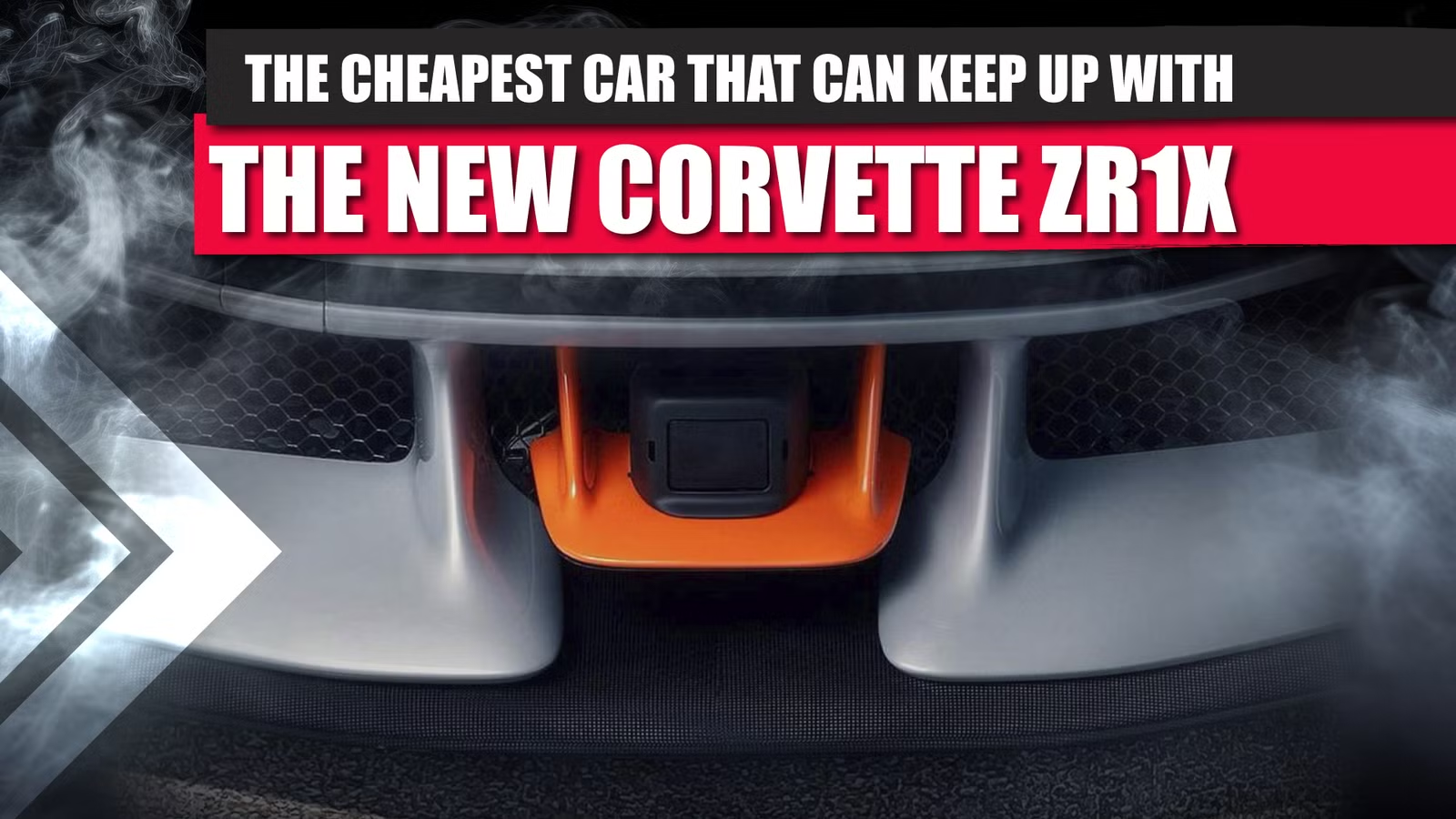
Numbers like these used to require a wire transfer to Maranello or Molsheim. The General Motors Corvette ZR1X changes that calculus entirely: 1,250 hp, a claimed 0–60 mph time of under 2 seconds, a quarter mile in less than 9 seconds, and a trap speed north of 150 mph. By any global measure, those are hypercar figures — not supercar figures, not muscle-car figures.

What makes those numbers genuinely disruptive is the price. The hybrid Corvette ZR1X is expected to start around $250,000 — a sum that sounds large until you compare it to the half-million-dollar-plus machines it rivals. With this move, Chevrolet has redrawn the horsepower-per-dollar map. Until now, this tier of acceleration meant shopping among limited-run Ferraris, Koenigseggs, or Rimacs — cars that routinely cost two to seven times as much.
The ZR1X doesn’t just punch above its weight — it competes with machines that cost far more. That raises a genuine question for enthusiasts and collectors: how much more do you actually need to spend to match or beat it?
Below, we break down the true cost of matching the ZR1X’s power and straight-line speed, focusing on the closest two-door coupe alternatives with at least 1,000 hp and 0–60 times approaching 2 seconds. We start with the hybrid Italian exotic that comes closest on paper, then work up to the cars that actually beat it — and what they cost to do so.

Here’s how deep your wallet needs to be to keep up with America’s latest performance benchmark.
Ferrari SF90 XX Stradale: Slower Than The ZR1X, Yet Costs Twice As Much
If you’re looking for a car that matches the Corvette ZR1X’s headline numbers, the Ferrari SF90 XX Stradale is the closest direct competitor on paper. It uses a 4.0-liter twin-turbocharged V8 paired with three electric motors to produce a combined 1,030 hp and 664 lb-ft of torque. Ferrari claims a 0–60 mph time of 2.3 seconds, though multiple independent tests put it closer to 2.2 seconds — nearer to the ZR1X, but still slower than GM’s claims.
Where things diverge sharply is price. The SF90 XX Stradale starts at $511,250, and many examples land closer to $570,000 before options — more than double the ZR1X’s expected sticker. Despite sharing broadly similar acceleration and power outputs, the Ferrari commands a steep premium for its brand cachet, engineering pedigree, and strictly limited production run.
Ferrari limits the SF90 XX to 799 units globally, and the model represents the first road-legal car in Ferrari’s XX program. It features advanced aerodynamics — including an active rear wing and increased downforce — along with track-focused software upgrades. None of those elements, however, translate into a meaningful straight-line advantage over the ZR1X.
While the SF90 XX Stradale delivers the full Ferrari experience with elite hardware and exclusivity, it offers no measurable edge in acceleration over the flagship Corvette. For drivers chasing performance numbers rather than nameplates, the ZR1X makes a compelling case. You no longer need Maranello money to run with Maranello’s best.
How GM Built The 1,250-HP Corvette ZR1X Hybrid Hypercar For A Fraction

The 2026 Corvette ZR1X marks a turning point in American performance engineering. At its heart is GM’s LT7 — a 5.5-liter twin-turbocharged flat-plane-crank V8 carried over from the ZR1 — producing 1,064 hp at 7,000 rpm and 828 lb-ft of torque at 6,000 rpm. An upgraded front-axle electric motor derived from the E-Ray contributes an additional 186 hp and 145 lb-ft, bringing the combined system output to 1,250 hp. The result is the most powerful production Corvette GM has ever built.
The ZR1X accelerates from 0 to 60 mph in under 2 seconds, per GM’s estimates, and completes the quarter mile in under 9 seconds with a trap speed exceeding 150 mph. Chevrolet engineers achieved this without exotic materials or boutique manufacturing. The ZR1X relies on ultra-lightweight carbon components, active aerodynamics, and lessons absorbed from Corvette Racing. It generates more downforce than any Corvette before it, and top speed is expected to exceed 210 mph — figures that match or surpass some of the world’s fastest and most expensive hypercars.
GM built the ZR1X to scale using existing architecture and supply chains, which helps hold the price near $250,000 — including its hybrid assist system, advanced cooling, and a strengthened chassis derived from the C8 platform.
By combining extreme performance with realistic production volumes, Chevrolet has created a car that redefines the value proposition of a hypercar. The ZR1X isn’t just a milestone for Corvette — it’s a wake-up call for the rest of the industry.
It Takes A $1.7 Million Hypercar To Beat The Sub-2-Second Barrier

If you want to beat the Corvette ZR1X’s sub-2-second acceleration, prepare to spend nearly seven times more. The Czinger 21C is currently the least expensive hypercar that matches those numbers. Powered by a 1,233 hp hybrid powertrain combining a 2.9-liter twin-turbo V8 with twin electric motors, the 21C achieves a 0–60 mph time of 1.9 seconds. It is street legal and built in limited numbers, using a 3D-printed chassis and a tandem seating layout. Starting at $1.7 million, the Czinger sits at the entry point of the sub-2-second hypercar segment — yet still sits far above the ZR1X’s expected price.
Sub-2-Second Million Dollar Hypercar Alternatives

Other cars that perform in this league include the Rimac Nevera, which also claims 0–60 in 1.9 seconds from a quad-motor electric setup producing 1,914 hp, with a base price of around $2.2 million. The Pininfarina Battista, built on the same platform, offers similar specs: 1,874 hp, a 1.86-second 0–60 mph time, and a price tag exceeding $2 million.
While not purely about acceleration, the Bugatti Chiron Super Sport 300+ represents the upper limit of combustion-only performance, with 1,577 hp and a verified top speed over 300 mph. Its 0–60 time is slower, however, at around 2.3 seconds, and it costs well over $3 million.
All of these cars push the boundaries of engineering, but they also exist in a rarefied tier of ownership. The Corvette ZR1X, by contrast, delivers comparable straight-line performance through a hybrid V8 and front-axle assist at a fraction of the cost.
It may not carry a boutique badge or arrive in single-digit production numbers, but the ZR1X democratizes the kind of acceleration once reserved for millionaire garages. If raw speed matters more than carbon-titanium prestige, there is simply no better value in the hypercar space today.
Sources: Chevrolet, General Motors, Ferrari, Czinger, Rimac, Bugatti, Pininfarina.

Related posts
Latest Post


No Comments