
The Buick Torque-Monster That Out-Ran A 1970 Hemi ‘Cuda At The Strip
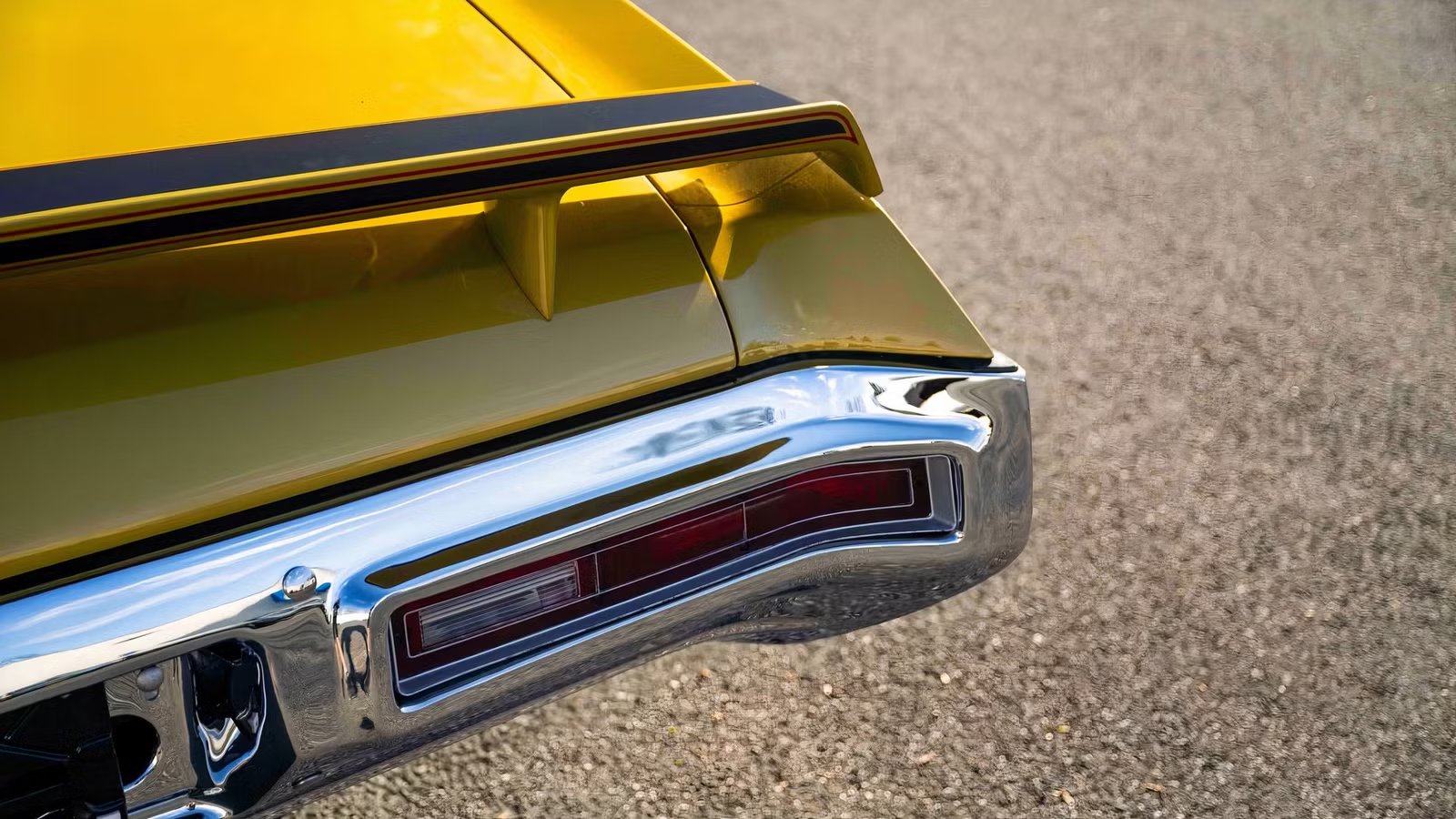
The year is 1970, and the average price of gasoline is less than 50 cents. The streets are clouded in a fog of war as Detroit’s Big Three fight tooth and piston for horsepower supremacy. Chrysler, General Motors, and Ford were battling for new ground, one-quarter mile at a time. In 1970, one of the fastest production cars on the street was the Plymouth Cuda, packing a 426 Hemi. This pony car had the muscle to take on all challengers, like the LS6 454 Chevelle or Ford Mustang Boss 429. But there was one muscle car that nobody saw coming until it blew past them.

The year the muscle car peaked, Chrysler was dominating the NHRA with Ronnie Sox’s Pro Stock Sox & Martin Plymouth Hemi Cuda. The famed winged Plymouth Superbird was earning NASCAR championships. Yet Buick, with no motorsport pedigree to its name, unleashed a posh muscle car powerful enough to give the big block V8 streetlight brawlers a run for their money.
Blindsided By Buick, The Torque King Hits The Streets
Did you know Buick is one of the oldest car companies in the world? The Buick name goes all the way back to 1899. Throughout its extensive history, Buick has garnered a reputation for exceeding unexpected expectations in the form of unassuming performance cars like the 1987 Buick Grand National GNX. But before Buick gave us a turbocharged black sheep, it gave the world a torque monster, powered by a 455 big block V8, which still holds the title of the largest-displacement engine offered by Buick.

This muscle car represents the ultimate evolution of the Buick Skylark. When it debuted, you needed a trained eye to know what the bright red letters on the front grille and emblem on the front fender of a Buick meant. If the thunderous rumble from its dual exhaust didn’t give it away, popping the hood left no doubt. This unveiled the high-caliber 455 V8 tuned from the factory to solve all its problems with torque.
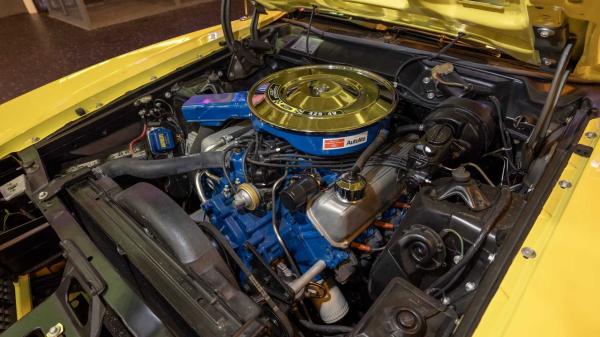
The Forgotten Big-Block Monster That Deserved More Fame
It beat the Road Runner in period testing, won Motor Trend Car of the Year, and costs a fraction of what a Chevelle SS 454 commands today.
Meet The GSX Stage 1

The 455 in the Buick GSX Stage 1 produced 360 horsepower, a figure multiple sources have since claimed was deliberately underrated by Buick. At the time, insurance companies were placing outrageous premiums on vehicles with rowdy V8s and flashy pinstripes. So, Buick decided to underplay the engine’s horsepower rating and write headlines that focused on the other measurement of performance — torque. What made the Buick GSX Stage 1 special was that it could produce 510 lb-ft of torque at under 3,000 rpm. That put the Buick in the heavyweight division of muscle cars.
Buick had two variants of the 455 cubic-inch V8 for the GS lineup. The standard GS 455 offered 350 hp and 510 lb-ft with a three-speed transmission. Those with the extra cash to select the Stage 1 package gained 10 more horsepower and a host of upgrades, including heavy-duty suspension, an improved cooling system, and a four-speed manual transmission.
1970 Buick GSX Stage 1 Vs 1970 Hemi Cuda

In 1970, Motor Trend called the Buick’s 455 Stage 1 package the “quickest American production vehicle” for that year. This high praise came after it ran a Buick GS with a 455 Stage 1 engine, a Turbo Hydra-Matic 400 automatic transmission, and a 3.42 posi-trac rear end down the quarter mile, setting a time of 13.38/105.5 mph. This was in addition to a reported 0-60 time of 5.5 seconds.
GSX Stage 1 vs Hemi ‘Cuda Drag Race
|
Car |
0-60 |
Quarter-Mile |
|
Buick GSX Stage 1 |
5.5s |
13.38s |
|
Hemi ‘Cuda |
5.8s |
14s |
That same year, Motor Trend would test a 1970 Plymouth Hemi ‘Cuda and document its performance as zero to 60 in 5.8 seconds, and a quarter-mile time of 14 seconds. Now, Mopar loyalists will argue that the Buick test car was “prepped” from the factory to perform better than stock. Or that the driver missed the mark. Other national car magazines at the time released their test numbers with varying decimal points. But Motor Trend declared the Buick GSX Stage 1 the winner in print.
Moreover, the Buick won with a vinyl bench seat stuffed with a mattress, an ashtray big enough to double as an urn, air conditioning, and fake wood grain veneers on the dash. It wasn’t a stripped-down, track-focused street machine. It was a plush gentleman’s muscle car built by a brand one notch below a Cadillac. That’s like beating a track star wearing leather loafers. The real victory came from proving to the world that this mid-sized executive coupe could keep pace with, and even overtake, the fastest, motorsport-tested muscle cars of its time.
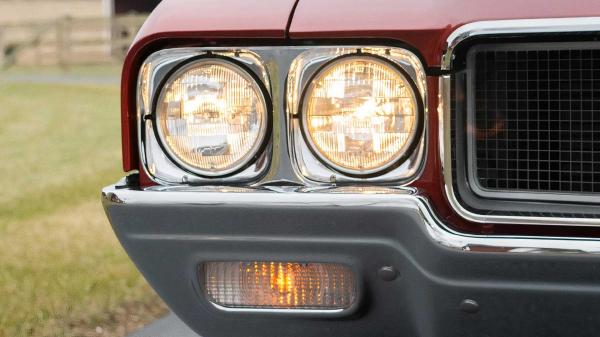
The One Muscle Car That Quietly Outran Everything In Its Era
The quickest muscle car of 1970 wasn’t the poster hero, one overlooked V8 bruiser humbled the legends where it mattered most.
The Secret To The Buick 455 Stage 1 Success Is In The Valves

Buick had spent the 1960s experimenting with oversized valves on its 400 and 430 V8s. These larger valves, when fitted on the Stage 1 455, improved the engine’s capacity to breathe and flow air more efficiently.
Stage 1 variants of the 455 V8 were also bored out and fitted with specially machined cylinder heads to accommodate the larger valves. A lot of mechanical massaging, like a high-lift camshaft, forged steel connecting rods, ported heads, and a tuned Rochester Quadrajet carburetor, ensured the V8 had plenty of room to mix air and fuel and deliver a powerful punch.
Yet, Buick’s largest V8 wouldn’t have been possible if General Motors hadn’t lifted its ban on large-displacement engines in 1970. Prior to this, GM restricted engines larger than 400 cubic inches to mid-size vehicles, with the Corvette as the only exception. But when GM realized it needed to compete against Chrysler and Ford’s big blocks, the suits at the top decided to lift the displacement ban. Buick, Pontiac, Oldsmobile, and Chevrolet were free to shoehorn massive engines into compact and mid-sized cars, creating motorized icons in the process.
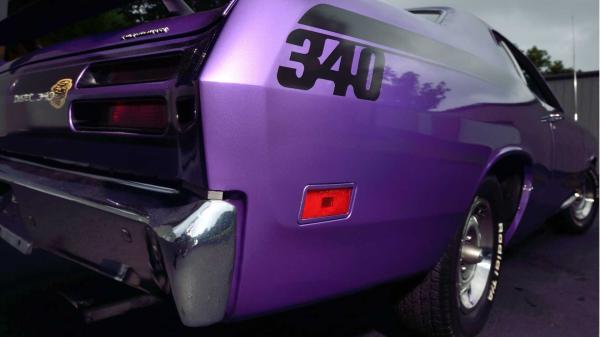
10 Forgotten Muscle Cars That Still Look Dangerous
Forget the predictable Camaros and Chevelles — these 10 forgotten muscle cars from Detroit’s golden era still look absolutely dangerous today.
An Underrated, High-Dollar Muscle Car

Even though the 1970 Buick GSX Stage 1 could run with, and sometimes beat, the best. Most people don’t remember it or have never heard of this muscle car. It got lost in the shadow of Hemis, Cobra Jets, and Chevy SS badges. But car collectors haven’t forgotten Buick’s muscle masterpiece, and they show their appreciation for these cars at the auction block.
An original 426 Hemi or LS6 454 can often break the hammer at a classic car auction, but a pristine GSX Stage 1, due to its limited production numbers and underrated legend, can give these famed muscle cars another run for their money. According to Hagerty, during the summer of 2025, the value of a 1970 Buick GSX Stage 1 ranged from $83,000 to over $200,000, depending on condition and factory options. The highest selling price for a GSX Stage 1 within the last three years, as of the time of this publication, was $236,500.
Hagerty’s report shows the value of these cars has decreased slightly in 2026, but that could be due to several factors. The fact remains that these desirable collector cars demand a pretty penny to experience their legendary performance. According to Hagerty, if you have your heart set on buying a 1970 Buick GSX Stage 1, expect to pay over $75,000 for a “good” condition example. Good, referring to the car’s condition as not pristine, but good enough to enjoy a Sunday morning at a local car meet.
Source: Motor Trend, Hagerty, Hot Rod Magazine, Buick

Related posts




Latest Post


No Comments