
The British Motorcycle That Owners Rarely Sell
Japanese, American and European bike makers have come a long way when it comes to how a motorcycle feels to ride and also the ownership experience that it offers. With modern tech, loads of comfort and convenience features and performance that keeps getting better, these motorcycles are a thrill to ride.

But there’s something about British motorcycles that are backed by heritage and sheer mechanical riding feel that all these modern motorcycles cannot match. The tactility, the heritage-inspired design, and simplicity that these bikes have to offer remain unmatched. Without complicated tech and electronics, these motorcycles are easier to maintain, making the ownership experience quite effortless compared to modern motorcycles.
Why Some Bikes Keep Making Sense In Your Garage For Years
To some, motorcycles are just a way of commuting and for a fun weekend away, while others adore and keep these motorcycles for years. It is part of growing up as a motorcyclist to replace one bike and upgrade to experience different types of bikes. However, there are a few motorcycles that make you feel at home as soon as you swing your leg around and get onto the saddle – these are the motorcycles people end up keeping forever. A motorcycle with great character that speaks more than what the spec sheet says is something you may need.
It’s Not Always About Spec Sheets And Features


There are a plethora of motorcycle options to choose from — be it a cruiser, a roadster, a sports bike, or an adventure motorcycle. All of these are loaded to the brim with features and tech to make your life easier and safer. A few other features are simply gimmicks that you may not even use a few years into ownership. The spec sheets tell you what the automaker wants you to know. It could be about the motorcycle’s performance, handling, or features. However, the one motorcycle you ride that fits you like a glove is all because of the character and how it suits your riding style.
Modern Doesn’t Always Mean The Best

All modern motorcycles with an electronic suite, safety features, and comfort and convenience features come at a cost. The cost of maintaining and running these motorcycles is much higher than it would be for a simpler motorcycle. While a few British motorcycles like the Triumph Street Triple, Norton Manx and many others offer a slew of features and tech, many other British motorcycles still try to keep things simple and uncomplicated. These bikes are easier to maintain and less of a hassle to operate.
You Would Want To Keep The Triumph Bonneville Speedmaster Forever
MSRP: $14,795

There are bikes you buy, and then there are bikes you end up settling into for years – the Triumph Bonneville Speedmaster belongs to the latter. It takes everything that made the original Bonneville a legend and carries it forward into a motorcycle built for long, relaxed miles, with a low-slung cruiser stance, a torquey 1200cc parallel-twin, and just enough chrome and heritage detailing to remind you what you’re riding.
It is also one of only four models in Triumph’s entire lineup that gets to wear the Bonneville name, alongside the T100, T120, and Bobber, which says a lot about how much weight this badge still carries. However, for most owners, it was never about performance figures or a long features list. It is about how the motorcycle feels to live with, year after year, without asking for much in return. That kind of dependability, paired with genuine road presence, is exactly why people end up keeping this motorcycle for good.
A Nameplate That May Never Go Extinct

First introduced in 1959, the Bonneville nameplate is one of the most, if not the most, successful nameplates. Over the years, the Bonneville has aged like fine wine, keeping the same formula intact with a few necessary changes to only enhance how the motorcycle looks and feels. This motorcycle was responsible for putting Triumph’s twin-cylinder engineering on the map, and it has continued to shine ever since.
Even as trends came and went, from café racers to superbikes to the whole retro wave, Triumph never let the Bonneville name fade into a museum piece. The design language has stayed loyal to its roots too, all tracing back to what made the original so instantly recognizable. It is this rare mix of cultural weight and mechanical trust, earned over decades and not marketing, that keeps the nameplate as relevant today as it was back in 1959.
Powered By A Torque-Rich 1200cc Parallel-Twin Engine

At the heart of the matter is a 1200cc liquid-cooled parallel-twin engine which amplifies the character of the motorcycle by quite some margin. The parallel twin mill produces 77 horsepower, which may not seem like a lot on paper. However, the highlight of this engine is its torque – 78 pound-feet, with the majority of it arriving at just 3,750 RPM.
The low-end pull is what makes the Speedmaster feel alive at everyday speeds, especially at low speeds, as just a blip of the throttle gets you going quite effortlessly. This kind of character is not visible on spec sheets or numbers, and can only be experienced when you ride it.
Long Highway Runs Are Fun And Effortless

Being a cruiser, the Bonneville Speedmaster is a relaxed and comfortable mile-muncher. Even when cruising on the highway, the motorcycle feels quite sublime to ride. The low-end grunt helps quite a bit, especially when you need to build up speed – no downshifts needed, just roll on the throttle. What helps even more on a long highway run are the ergonomics of the motorcycle — a laid-back handlebar, a low-slung comfortable seat, and a riding triangle that helps you relax. All of these combined ensure an effortless touring experience.
Simple Underpinnings Boost Dependability

Part of what gives the Speedmaster its honest, no-nonsense character comes down to how simple its underpinnings are. The tubular steel frame, Showa front forks, and preload-adjustable monoshock keep things straightforward, without any electronic suspension or rider modes to worry about. This simplicity is what keeps the motorcycle dependable over the years, with fewer things to go wrong and even fewer reasons to visit a service center. For a bike people plan to keep forever, this kind of mechanical character counts for a lot more than a lengthy spec sheet.
A Timeless Design That Will Leave You In Awe

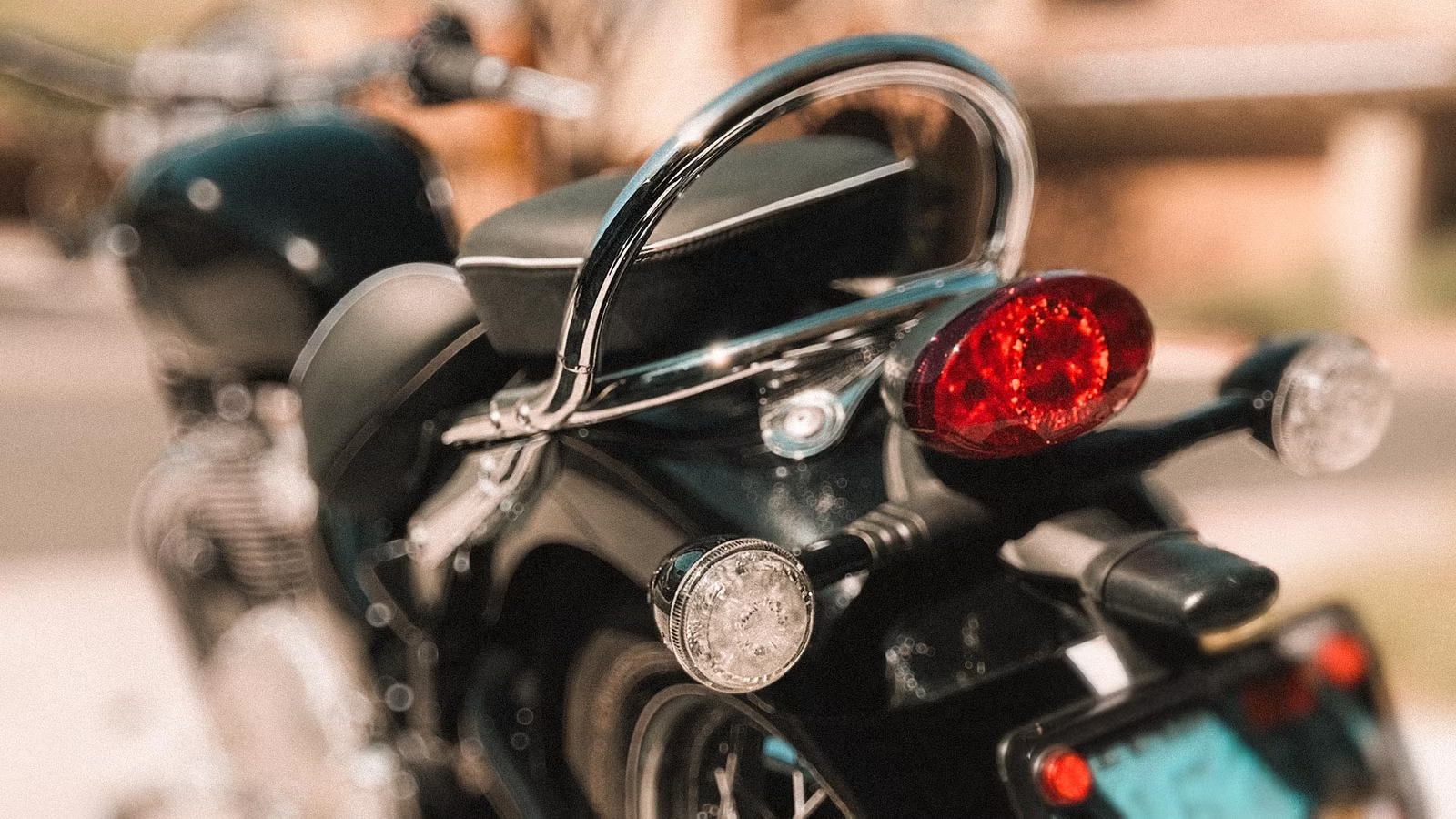
The Bonneville Speedmaster lives up to its decades-old heritage when it comes to design. However, with time, Triumph has ensured that even with modern solutions, the motorcycle should continue to offer the old-school charm. The Speedmaster gets all LED lighting while still encasing that in the classic design with a round headlight, round indicators and an oval stoplamp.
Even though this is a liquid-cooled motorcycle, Triumph has added fake air-cooling fins and carburetors to resemble the classic Bonneville. The color schemes, fit and finish levels, and the silhouette of the motorcycle all come together to give it the authentic old Bonneville design carved out of modern elements. Anywhere you see this bike, you will end up looking twice just to admire the beauty and charm of the Bonneville Speedmaster.
Traction Control And Cruise Control, Hidden Behind An Analogue Face

Triumph has done a great job blending the simplicity and beauty of the motorcycle with modern features for added convenience. The Bonneville Speedmaster gets ride-by-wire, switchable traction control, ABS, cruise control, and a few more. However, unlike other modern motorcycles with massive TFT screens and loads of switches, the Bonneville encloses these features without making a fuss about it. You still get a simple analogue speedometer and only essential buttons on the handlebars to keep this minimalistic. So, you get only the necessary modern features that quietly work in the background while the exquisite chrome details grab your eyeballs.
The Ownership Experience That Explains The Loyalty

Owning a Triumph Bonneville Speedmaster is refreshingly uncomplicated, and that is exactly why so many owners end up keeping the motorcycle for years and years. No complicated electronics, no complex screens, and very few features – keeping things as simple as they can get. This is a bike that roars to life, runs smoothly and does it consistently without much hassle. A motorcycle that performs consistently and requires very few visits to the workshop results in a sublime ownership experience – an experience not many would want to give up.
Low Running Costs And Easy To Maintain

With no electronic suspension, elaborate riding aids, and a very simple parallel-twin engine, the Bonneville Speedmaster will be quite easy on your wallet. Service intervals are long, parts are easily available, and if things go wrong, you won’t have to break the bank to fix it. For a motorcycle that you plan to keep forever, this kind of low-maintenance ownership makes all the difference.
At $14,795, The Speedmaster Justifies The Moolah

While the Bonneville Speedmaster is on the more expensive side compared to its rivals, you won’t feel like you are at a loss. The heritage that the motorcycle carries, the character that the motorcycle offers, and the timeless design that you could spend days admiring make the Bonneville Speedmaster good value.
Rivals like the Harley-Davidson Nightster Special start around $12,499 and the Indian Scout starts at $12,999, which is not drastically cheaper than the Triumph. For your money, you get a motorcycle with a potent parallel-twin mill and something that is built to last for years without causing much trouble. The Triumph Bonneville Speedmaster might just be the motorcycle you will keep forever, and it justifies every penny that you spend on it.
Source: Triumph, Harley-Davidson, Indian

Related posts



Latest Post


No Comments