
The Bike To Buy If You Want The Harley Experience Without Buying A Harley
A big air-cooled V-twin, a low-slung silhouette, a detachable windshield, saddlebags, and that unmistakable exhaust rumble. That’s the Harley-Davidson formula that has captivated American riders for decades. Still, plenty of riders want the recipe without owning the same bike as half the parking lot. There’s an American rival that cooks from the same cookbook, just with a personality of its own. Its heavyweight cruisers offer familiar ingredients, a distinct identity, and a few modern conveniences that make a compelling case for looking beyond the usual choice.
The Harley-Davidson Experience Can Come With Caveats

Take the Harley-Davidson Heritage Classic, for instance. Harley advertises it from $19,999 for 2026, which sounds like a gift. Read the fine print, though. That price belongs to the Solo Trim Package: a single seat, Dark Billiard Gray paint, and cast wheels, and that’s it. Want to carry a passenger? You’re paying an additional $2,000. Color is its own line item. Laced wheels are another $850. Spec a two-up Heritage in two-tone, and you’re around $23,100 before the $895 freight charge.
Another American Brand Sells A Similar Experience Without The Caveats
This brings us to Indian Motorcycle, a manufacturer with its own long history of big-twin cruisers. Rather than competing solely on nostalgia, Indian has found room for modern electronics and touring equipment within its traditional designs.
The result is a motorcycle that can deliver much of the familiar American cruiser experience without copying Harley-Davidson’s styling or identity. More importantly, it comes equipped for two-up riding and weekend touring straight from the factory, making it worth considering before spending money on a more basic cruiser and adding equipment afterward.

The Indian Super Chief Limited Is Loaded From The Factory
Base Price: $21,999

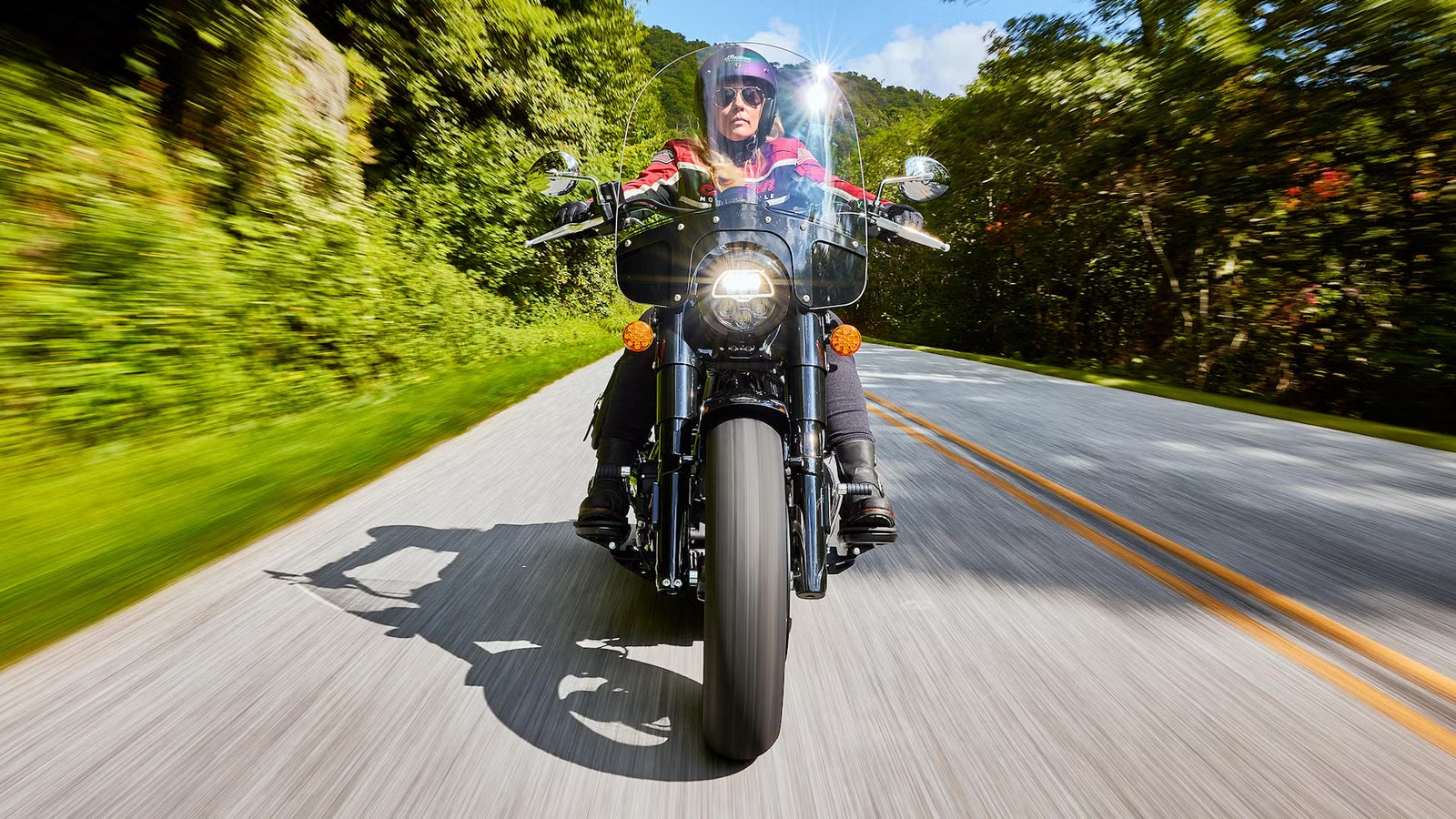
Meet the Indian Super Chief Limited, the brand’s heavyweight touring-flavored cruiser in its highest trim. Official US pricing starts at $21,999, plus $725 destination for the 2026 model year. It combines the company’s Thunderstroke 116 engine with a traditional two-up saddle, floorboards, leather saddlebags, a detachable windshield, and a touchscreen instrument display. All standard fitment.
Chrome pipes and engine covers, fork covers, and script badging on the tank complete the look. Indian does charge extra for some paint, but the touring hardware doesn’t change with the color you pick.
How The Price Stacks Up Against The Heritage Classic

The Heritage Classic’s $19,999 starting MSRP makes it the cheaper motorcycle on a basic price-sheet comparison. The initial difference is $2,000. Factoring in the listed destination charges of $895 for the Harley and $725 for the Indian narrows that entry-to-entry gap to approximately $1,830.
Remember, though, that the Harley is a solo bike. Add a passenger seat, and the two land in nearly the same neighborhood, and every color beyond Dark Billiard Gray pushes the Harley higher. The Indian isn’t a bargain, and it shouldn’t be sold as one. What the extra money buys is a different identity, a touchscreen with GPS navigation and Bluetooth, and three ride modes that the Heritage doesn’t offer.
Why The Super Chief Feels Like A Proper Big-Twin Cruiser
116 Cubic Inches Of Old-School Character, With One Modern Trick

The heart of the Super Chief Limited is its air-cooled, 116-cubic-inch Thunderstroke V-twin. It uses an 11.0:1 compression ratio and produces a claimed 120 pound-feet of torque at 2,900 rpm. Power reaches the rear wheel through a six-speed transmission and belt final drive. Rear-cylinder deactivation is also part of the package, helping manage heat when the motorcycle is stationary or moving slowly.
The air-cooled engine’s exposed fins and traditional V-twin layout also give the motorcycle the mechanical presence that cruiser enthusiasts expect. Indian has retained that old-school personality while incorporating modern thermal management. The result is a powertrain that feels appropriately substantial without demanding constant attention from the rider.
The frame is tubular steel with a cast-aluminum rear subframe, riding on 16-inch wire-spoke wheels. Up front, there’s a telescopic fork; out back, dual preload-adjustable shocks with about three inches of travel. Stopping duty falls to 300 mm discs at both ends with ABS. Wet weight is around 739 pounds, and the four-gallon tank is a full gallon smaller than the Heritage’s. That is a serious cruiser mass, but the relatively compact proportions and 26.2-inch seat height help make the overall package approachable for many riders.
A Vintage-Looking Gauge That Hides A Full Touchscreen

The standout modern feature is the four-inch Ride Command touchscreen integrated into a round instrument housing. It supports Bluetooth connectivity, customizable displays, ride information, and turn-by-turn navigation. Sport, Standard, and Tour ride modes let the rider adjust the engine’s character to suit the conditions. Keyless ignition and a 12-volt charging port add everyday convenience.
The round gauge preserves the classic cockpit appearance, but the touchscreen gives the Indian a technological advantage over the Heritage Classic’s conventional analog speedometer and smaller digital readouts. Harley still provides useful modern features, including ride modes and rider-safety electronics; it simply takes a more traditional approach to displaying information.
All The Touring Gear You’d Add To A Harley, Already Fitted And Removable

This is where the Super Chief Limited makes its strongest everyday-use argument. A quick-detach windshield, two-up touring saddle, leather saddlebags, floorboards, and traditional cruiser handlebars all come standard. You can keep the windshield and bags fitted for a weekend trip, then remove the screen when you want a cleaner profile around town.
Multiple owner discussions and test reports suggest that the Indian’s windshield is taller and more upright than the one fitted to the Heritage Classic. Windshield height can be a matter of personal fit, however, so riders should assess sightlines and buffeting themselves.
Where The Heritage Classic Still Has The Edge

Harley-Davidson retains several practical advantages. The 2026 Heritage Classic offers 4.4 inches of rear suspension travel compared with the Indian’s three inches. That extra movement gives it an advantage when dealing with rough roads, although suspension tuning and rider weight also influence comfort. Its rigid, lockable saddlebags are another useful difference. They offer more structure and security than the Indian’s softer leather bags, which use straps and plastic clips.
The Harley also has a longer-established accessories and aftermarket ecosystem, giving owners plenty of options for changing the seat, exhaust, luggage, and other components. Finally, the Harley has the lower starting MSRP, even if the price advantage may shrink when comparing equivalent seat and paint configurations. Still, if you want the Harley experience without the Harley badge, the Super Chief Limited is the one to ride first.
Source: Indian Motorcycle, Harley-Davidson

Related posts

Latest Post


No Comments