
The Big-Displacement Cruiser That Nails Vintage Style And Modern Reliability
Nostalgia sells–that’s a hard fact in the motorcycle world, and you’ll find all kinds of bikes trying to exploit this. Cruiser bikes, in particular, are a prime example. The general ingredients comprise: oodles of chrome, round lights, and simple construction. That silhouette has been unchanged for decades now, still continuing to turn heads wherever you go. Accordingly, there’s no shortage of vintage-styled cruisers on sale today. What makes life difficult, though, is finding something with vintage style, modern reliability, and a big-displacement engine. That’s where America’s favorite brand offers a solution.
Only American Brands Bank On Big Displacement And Vintage Style Today

The cruiser segment has been a mixed bag. Japan has tried to take on the large-displacement cruiser segment, birthing some brilliant examples in the past. The Kawasaki Vulcan 2000 comes to mind. It not only looked American with all the massive proportions and chrome, but it actually beat American bikes by being the world’s largest V-twin cruiser.
Today, Japan has waved the white flag. It has no fresh big-displacement cruiser bikes on offer, meaning you’re left with European and American brands. Among these, most European cruiser bikes have superbike-derived engines that barely breach 1,000cc and they want nothing to do with vintage styling.

In the end, we’re left with the two brands from America–Harley-Davidson and Indian. They are market leaders in the vintage cruiser department, given their century-old know-how of the market. Both brands have also leveled up their reliability game in the recent past, so you can’t go wrong with neither. But there is a clear winner in our books.

The Fat Boy Has Chrome-Laden Swagger With Milwaukee-Eight Refinement

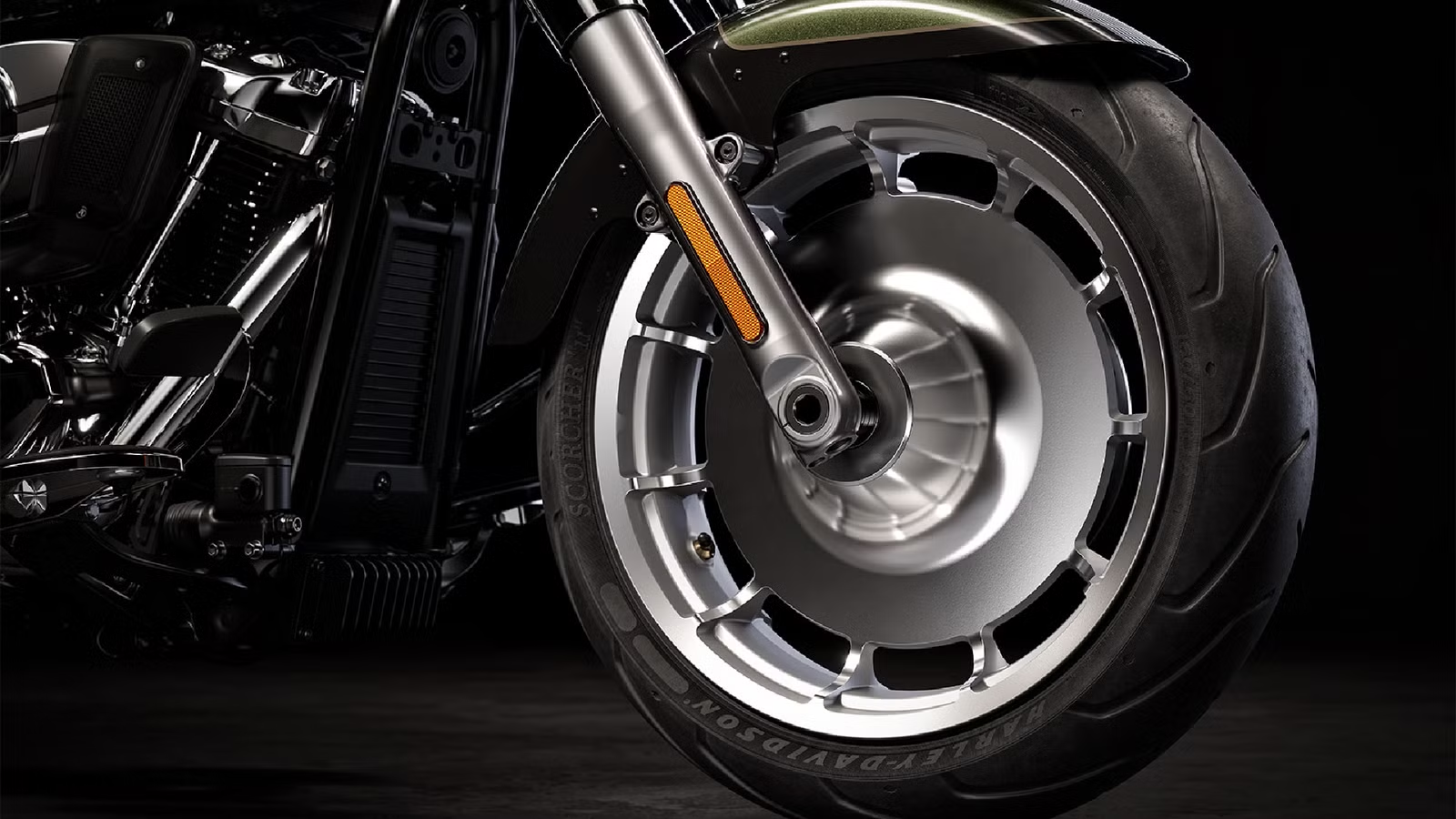
Our pick here is the Harley-Davidson Fat Boy, with the Indian Chief Vintage in a close second. There are a couple of reasons for that. Chief among them is that the Fat Boy’s aesthetic is directly inspired by the OG Fat Boy from the 90s. The Lakester slot wheels, chunky headlight cover, massive fenders, 240-section rear tire–these create a unique design unlike anything else on the road today. On top of that, a healthy helping of chrome ups the vintage charm. In comparison, the Chief Vintage has ample retro touches, but there’s barely any chrome.
The other reason is the powerhouse. The current model is the biggest version of the Fat Boy capacity-wise, featuring the popular Milwaukee-Eight 117. That’s slightly larger than the Chief’s Thunderstroke 116 powerhouse. So with the Harley, you get an impeccable blend of large-displacement thump and Harley’s modern refinement standards. Compile all that, and you get a big-displacement cruiser that nails vintage styling and modern reliability.
The 2026 Fat Boy Justifies Its MSRP With Quality Components

The Fat Boy sits at the premium end of Harley’s Softail lineup, and that means a premium base MSRP of $22,599. That’s for the base Dark Billiard Gray colorway, while all other colors require extra money. Most notably, Olive Steel Metallic will set you back by a whopping $1,100. As high as that is, the Fat Boy comes very close to justifying the moolah with its high-quality elements nearly everywhere. Here’s a refresher on what you get.
Milwaukee-Eight 117 Powertrain For Over 100 HP

As mentioned, this is the largest Fat Boy ever capacity-wise. And in addition, it is also the most powerful Fat Boy ever. The Milwaukee-Eight 117 here is in its Custom tune, which means more emphasis on power and torque. Accordingly, you have 103 horsepower and 126 pound-feet–around 10 and 7 up from the previous-gen 2024 Fat Boy. All the power is low in the RPMs as expected from a Harley and reaches the wheel via a six-speed transmission driven by a low-maintenance belt. The tractable performance also ensures a fuel efficiency of 47 MPG.
Showa Suspension Paired With Harley’s Sturdy Softail Frame

The engine sits inside Harley’s sturdy double cradle chassis. It is carved from high-tensile steel, focusing on offering stability at high speeds on the freeway. The suspension works on the same principle. Showa supplies its beefy 49 mm dual-bending telescopic forks and a preload-adjustable monoshock hidden under the bodywork. All this while, the wheels measure 18 inches, each of which houses a single disc brake. While we get the single rotors help put the Lakester wheels on full display, double rotors up top make more sense considering the hefty 694-pound curb weight.
Six-Axis IMU And Ride-By-Wire Ensure A Premium Tech Package

Lastly, the Fat Boy is properly tech-savvy behind the chrome. A six-axis IMU and ride-by-wire take center stage here, both of which work in tandem to allow a handful of electronic rider aids. These include cornering ABS, cornering traction control, cornering drag-torque control, and ride modes. You also get cruise control for effortless freeway riding. All of this is accessible via a basic instrument cluster in line with the retro appeal. It’s a circular semi-digital setup with an analog speedometer and an LCD for all other information. Nitty-gritty touches like a USB port, LED lights, and TPMS complete the package.
Source: Harley-Davidson

Related posts
Latest Post


No Comments