
The Best Features Of The Toyota Chaser JZX100
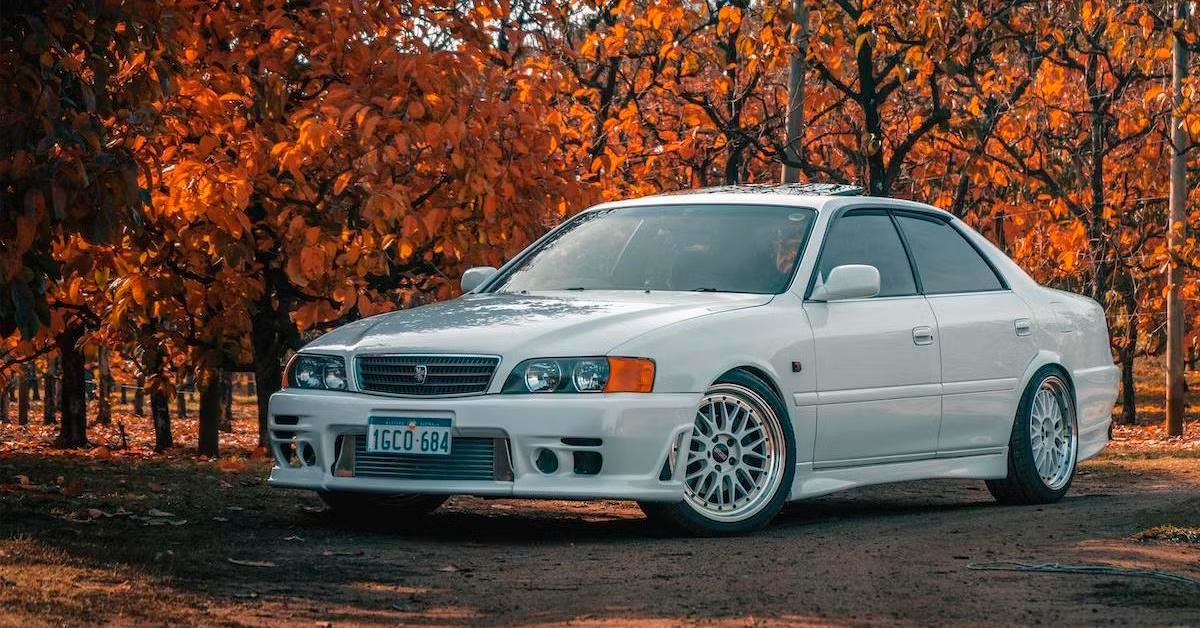
A Toyota Chaser Tourer V gives rear passengers their own doors. Up front, four round lamps sit inside a pair of rectangular housings. The Chaser’s drift reputation starts under the hood with a turbocharged 2.5-liter straight-six that drives the rear wheels. Toyota offered a five-speed manual, so you could get three pedals and still have room for five. Production ended in June 2001. By late 2026, even the last Chasers had reached the 25-year threshold for the federal safety exemption on U.S. imports.

The Chaser’s Turbo Six Has Roots In The A70 Supra

Bring a Trailer
Toyota gave the Japanese-market A70 Supra something special in 1990: a twin-turbo, 2.5-liter straight-six called the 1JZ-GTE. It had 24 valves and made 280 PS, or about 276 hp. Six years later, that engine family found another home in the JZX100 Chaser Tourer V. Toyota dropped the twin turbos for one turbocharger and added variable valve timing, which adjusts when the engine’s valves open to suit its speed.

The horsepower didn’t change. The way it delivered its punch did. The earlier JZX90 Tourer V reached peak torque at 4,800 rpm; the JZX100 delivered more torque at just 2,400 rpm. Imagine pulling away from a slow corner and feeling the engine surge without having to chase the top of the rev counter. That’s what earlier torque can do, although it isn’t a promise of instant boost at every speed. And Toyota did it in a regular four-door sedan.
Unlike the twin-turbo AWD Mitsubishi 3000GT, the Chaser drove its rear wheels. Buyers could choose a five-speed manual or four-speed automatic. One last catch: JZX100 also covered the naturally aspirated Tourer S. The 3.0-liter, non-turbo 2JZ-GE Avante G was a JZX101. Check the chassis code before assuming there’s a turbo under the hood.
Why The Chaser Lent Itself To Drift Builds

The Chaser Tourer V was built with two things drifters love: a turbocharged straight-six and rear-wheel drive. Its factory-rated 276 horsepower went to the rear tires, so there was plenty to work with when the driver wanted to kick the tail out. Holding that slide through a corner takes throttle control and skill, not just horsepower. Still, what a starting point for a four-door sedan.
A 1997 Tourer V sold for $14,300 through Cars & Bids in December 2024 shows how surprisingly mild the changes could be. It kept its four-speed automatic and added a Fujitsubo cat-back exhaust, giving the turbo six a mellow voice without transforming the car into a racer. Hard drift sessions call for more serious preparation: larger radiators and oil coolers help control heat, while intercoolers and turbo upgrades can support greater power. Some heavily modified JZX100 examples reportedly exceed 500 horsepower. An exhaust by itself won’t get you there, of course.
Martin Wonnacott’s JZX100, photographed sliding around Norfolk Arena, shows the transformation: race livery, wide bodywork, and tire smoke. You can see the same appetite for wild looks in the GR86’s retro NEO86 body kit. A 2JZ-swapped Chaser takes another route by replacing the engine altogether.
The Tourer V Kept Its Sedan Comforts

The Tourer V’s biggest surprise wasn’t under the hood. It was the fact you could enjoy that turbocharged straight-six and still bring four friends along. Toyota kept the Chaser’s sporty Tourer line separate from the more luxurious Avante, but didn’t turn the Tourer V into a stripped-out weekend toy. It had five seats and enough everyday conveniences to make the drive home enjoyable too.

Automatic climate control kept the cabin comfortable, with buttons in the middle of the dashboard where a passenger could reach them. Power windows spared everyone the old-fashioned arm workout. More importantly, Toyota fitted anti-lock brakes and two front airbags as standard across the sixth-generation Chaser range. The Tourer V’s traction control could help prevent the rear tires spinning when you accelerated too hard on a slippery road. Drift fans might prefer wheelspin, but you probably won’t on your commute.
The TRD Sports Chaser added another twist: a deeper front bumper, side skirts and a tall rear wing that gave the family sedan some serious track-day attitude. TRD records 2,924 sales over four years after its 1997 launch. That’s one part of Toyota’s wilder TRD history. It still looked like a Chaser, only much harder to ignore.
What $21,500 Bought In A Chaser Tourer V

Four-door sports sedan with lower aero trim.
A 1998 Chaser Tourer V sold for $21,500 on Bring a Trailer in August 2026, tempting anyone who loves a manual. Toyota built it with an automatic, but someone fitted a five-speed. You choose the gear before a bend or overtake, not the automatic. A GReddy intercooler helped cool compressed air headed into the turbo six, and adjustable BC Racing coilovers let an owner tune the car’s ride and handling. Sounds entertaining. But flares covered wheel arches that had been cut, while anti-lock braking and traction control didn’t work. Some removed factory parts came with the car; restoring factory condition still meant bodywork and mechanical repairs.

A 1997 Tourer V with a four-speed automatic fetched $30,000 on the same site in August 2025. It showed about 62,000 miles and included Japanese service records. That $8,500 gap looks like a bargain until you remember these were individual sales of very different cars, not a price guide.
Before bidding, ask for the chassis number and paperwork. Paying for a factory five-speed? Verify what Toyota originally installed. With a conversion, request parts and labor receipts and have an independent shop inspect the work. Put flared cars on a lift to check cut arches, sealed edges, and restoration costs. A five-speed can make driving more fun, but a lucky charm won’t replace working ABS and traction control.

Related posts





Latest Post


No Comments