
The Australian Family Wagon With A Corvette Engine And A Stick Shift
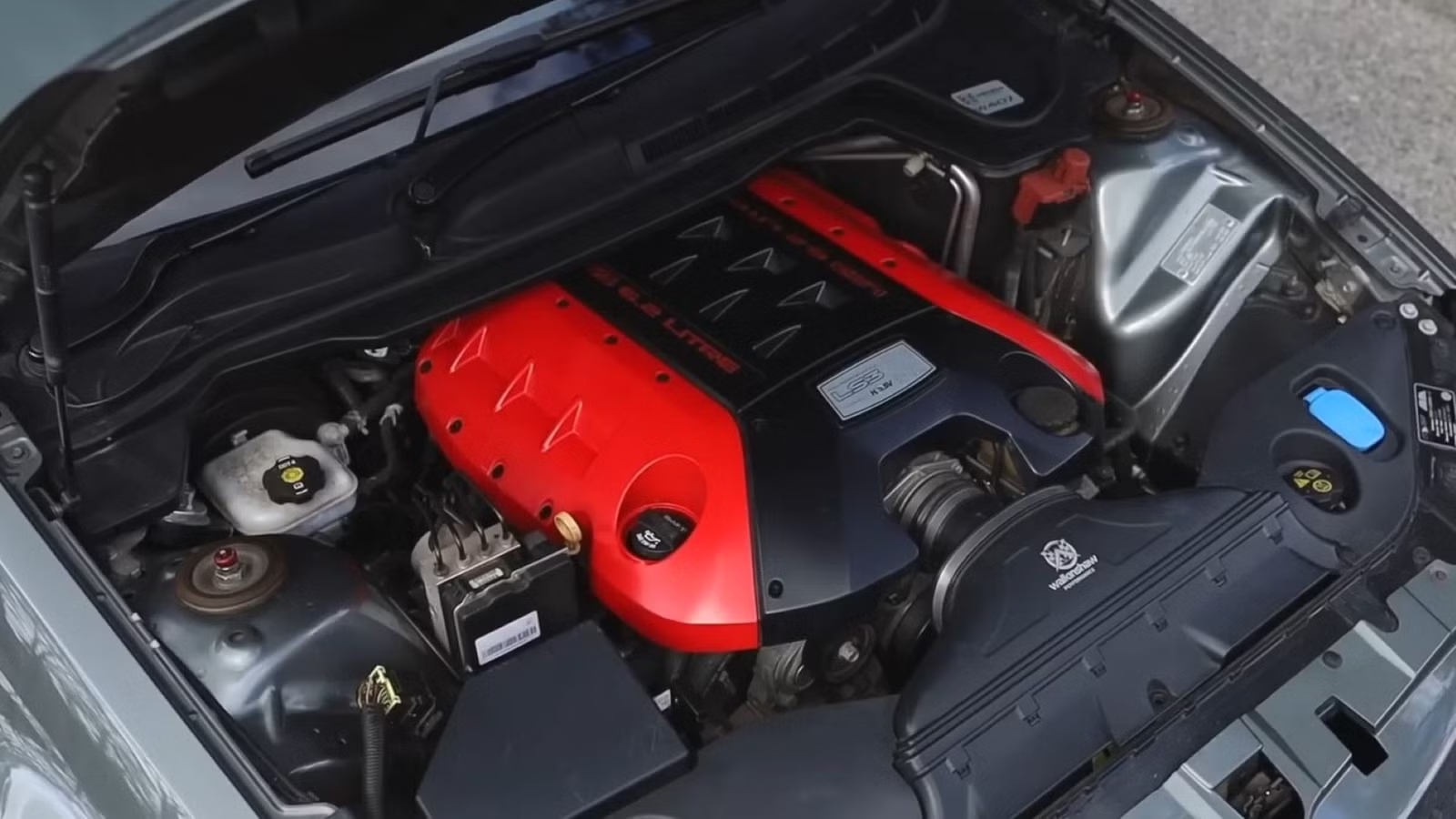
There are fast cars, and then there are fast cars that can swallow a family, a dog, a full load of camping gear, and still embarrass sports cars at the traffic lights. Australia’s Holden and its performance arm HSV quietly mastered that formula for decades, building V8-powered wagons that the rest of the world either ignored or simply couldn’t believe existed. The HSV Clubsport Tourer R8 is the most extreme example: a Corvette-engined, manual-gearbox station wagon that could sprint to 60 mph in under five seconds while hauling the whole family across the outback. It remains one of the great unsung performance cars of the modern era. wagons Think refined European performance and Audis, AMGs, and M-models with supercar levels of performance will probably come to mind. Think raw, affordable muscle, and it’s likely the United States will be what most people think of, starting in the ’60s with cars like the Pontiac GTO. muscle cars But when it comes to mixing up the two and throwing in plenty of spice, it is neither continent that does it best. That would be Australia, a purveyor of fine, affordable, and downright bonkers load luggers. If you absolutely had to get across the outback with the whole family and your Cavapoo at ridiculous speeds, Australia (up until recently, at least) had you covered.
Holden Is No Stranger To Fast Cars

If you haven’t been to Australia, you’d be forgiven for not really knowing what Holden is. If you have been, you’ll see these cars literally everywhere. Imagine if sensible European sedans had crashed a bachelor party full of outrageous muscle cars and came home wearing neon body paint and blasting AC/DC — and you kind of get the picture.
Holden started in 1856 as a saddlemaker but was bought out by General Motors in 1931. From then on, it churned out domestic models, such as the Monaro and the Commodore, which often used the best of GM’s engineering from around the world. Holden’s first proper fast wagon arrived in 1965 with the HD, and before long, customers could spec a 308 ci (5.0-liter) V8 that expanded on and later replaced the 307 ci engine option in Holden’s HT family grocery getter. By the time Holden launched the VE in 2008, it was available with a 6.0-liter V8.
The Commodore Sportwagon Is A Forgotten Corvette Grocery Getter


Go back to 2006 and things couldn’t be looking better for Holden. The VE Commodore was launched — a sedan designed and engineered from the ground up in Australia. The Zeta rear-wheel-drive architecture would not just go on to underpin the Chevrolet Camaro, but the Commodore would be rebadged as the Pontiac G8 (and the wild GXP) in America and the Vauxhall VXR8 in Britain. Australia, with its population of around 28 million, was suddenly ruling the world — in the affordable V8 segment, at least.
Not content with bossing the coupe and sedan market, Holden then released the VE Sportwagon SS. Despite being a wagon designed to carry the partner, kids, dog, and barbecue, this thing also came fitted with a 6.0-liter L98 V8 from GM’s Gen IV Small Block engine family, and later a 6.0-liter L77. That meant 362 hp (270 kilowatts) and 391 lb-ft on tap, not to mention the Tremec T56 manual. But for people who really wanted Mad Max-style muscle, there was one model to seek out. That was the HSV Tourer R8, which came fitted with a 6.2-liter LS3 shared with the Chevrolet Corvette.
The HSV Tourer R8 Was A Modern Muscle Car For The Whole Family

The E-Series HSV Clubsport Tourer R8 is every inch a modern muscle wagon. That 6.2-liter LS3 produces 425 hp and 406 lb-ft of torque, making it one of the most powerful wagons produced anywhere in the world. A Tremec TR6060 six-speed manual was standard, with the six-speed automatic available at extra cost over the original sticker price when new. The R8 Tourer has AP Racing-developed 365mm brakes on the front and 350mm at the rear, with grooved and ventilated rotors and HSV-specific four-piston front calipers.
The wagon is a useful 30% stiffer than the sedan, although it is 200 lbs heavier in manual form. The towing capacity is rated at around 3,500 lbs, and there are 2,000 liters of cargo space with the seats down. For anyone who had finally given up on having a big, brawny V8 when family and parenting duties arrived, HSV (Holden Special Vehicles) had the answer.
These Commodore Wagons Were Bargain AMG Fighters
One of the closest rivals to the Tourer R8, at least when it comes to engine displacement and output, is the 2007 Mercedes-Benz E63 AMG Wagon (S211). The Benz’s 6.2-liter V8 pumps out 507 hp and 565 lb-ft, but here’s the rub: the German car cost almost twice the price of the HSV when new. But that doesn’t mean the Merc is twice as fast. The Holden can hit 60 mph in 4.7 seconds, while the E63 is only marginally quicker at 4.0 seconds. Where the German car falls short, for fans of stick shifts, is the fact that it comes with a seven-speed automatic with manumatic shifting.
GM’s Zeta Platform Helped Make The HSV Clubsport Tourer R8 Possible

The HSV Clubsport Tourer R8 owes its existence to far more than a big LS V8. Underneath was GM’s all-new Zeta rear-wheel-drive architecture, introduced with the VE Commodore in 2006. Far from being just another Australian sedan, the VE was the first Commodore engineered entirely in-house by Holden, with development reportedly costing close to a billion Australian dollars. Holden led the project after GM decided it needed a replacement for the aging Commodore platform, creating an architecture flexible enough to support multiple wheelbases, body styles, and powertrains — including wagons, utes, luxury sedans, and fire-breathing muscle cars. It remains one of the most influential GM vehicle platforms ever engineered outside North America.
That flexibility allowed one Australian platform to underpin everything from the Holden Commodore and HSV range to the Pontiac G8, Chevrolet SS, fifth-generation Chevrolet Camaro, Vauxhall VXR8, and even the Chevrolet Caprice PPV police cruiser. GM originally envisioned Zeta underpinning a much broader family of rear-wheel-drive vehicles globally, but the 2008 financial crisis, tougher fuel-economy standards, and the automaker’s bankruptcy forced those ambitions to be scaled back before the platform was eventually succeeded by Alpha. The HSV Clubsport Tourer R8 ultimately became one of Zeta’s finest performance expressions. Curiously, while America received several Zeta-based sedans, the wagon never made the trip.
Why America Never Got The HSV Clubsport Tourer R8

American enthusiasts already received one of Holden’s greatest exports when the VE Commodore became the Pontiac G8, culminating in the Corvette-powered G8 GXP. That naturally raises another question: if the sedan made the trip across the Pacific, why not the wagon? The answer isn’t because GM never considered it. A Pontiac G8 Sportwagon was reportedly included in the original rollout plans before accountants forced the company to choose which variants made financial sense. The G8 GXP and G8 ST survived the cut, while the wagon didn’t. Although additional certification costs have often been cited as part of the equation, GM ultimately concluded that Americans simply weren’t buying performance wagons in meaningful numbers.
That was a painful irony considering the U.S. helped establish the fast wagon formula in the muscle car era with legends like the Chevrolet Kingswood Estate and Ford Country Squire. Over the following decades, however, buyers migrated toward SUVs, leaving European manufacturers to dominate the niche. Even charismatic homegrown efforts like the LT1-powered Buick Roadmaster Estate and Dodge’s Hemi-powered Magnum SRT8 failed to reverse the trend, with the Magnum’s disappointing sales reinforcing GM’s concerns. Then came the financial crisis, Pontiac’s cancellation, and GM’s restructuring — ending any realistic chance that the HSV Clubsport Tourer R8, or a rebadged G8 Sportwagon, would ever reach American showrooms.
The Holden Super Wagon Could Be Turned Up To 11

Holden wasn’t going to let Mercedes take that one lying down. HSV later shoehorned a supercharged 6.2-liter LSA unit into the ClubSport R8, pushing output to 550 horsepower and 510 lb-ft of torque. Throw in options like the AP Racing six-piston brake package with two-piece front and rear rotors and 20″ x 9″ SV Rimfire forged alloy front wheels, and you have a very serious sedan and wagon offering. The sprint to 60 mph takes around 4.6 seconds.
Here’s where it gets a little tricky, however. Many sources say that the Tourer version wasn’t offered with a manual gearbox, although HSV states on its website that the “ClubSport R8 Tourer LSA features a Tremec TR-6060 (MG9 spec.) 6-speed manual transmission as standard and is also available with the optional 6L90E 6-speed automatic transmission with Active Select and paddle shifters which enable manual-like gear changes.”
These Hot Holden And HSV Wagons Are The Only Ones Of Their Kind On The Market

The idea of dropping a big, brawny muscle car V8 into a relatively compact wagon is something uniquely Holden and HSV. These cars could only come from a country where open roads and vast distances demand a vehicle that can carry a serious load and cover ground at a serious pace — all legally, of course. Manual versions are extremely rare compared to automatics in Holden and HSV wagons, but a few do surface. Values have climbed as the cars have become collectible, so prospective buyers should expect to pay a premium for clean, low-mileage examples — particularly the rare manual-gearbox HSV ClubSport R8 Tourer.
Holden Sadly Disappeared Not Long After

But there won’t be any more of these wacky V8 wagons coming from Holden in the future. GM closed the iconic Australian automotive brand on December 31, 2020, ending a 164-year history. Changing consumer preferences and high production costs were blamed for the closure. It was a stark contrast to just a decade before, when Holden and HSV seemed to be at the forefront of the second muscle car era, lending their particular brand of space, value for money, and V8 power to models around the world. With EVs reshaping the American performance car market, if Holden ever wanted to come back with a roaring eight-cylinder wagon, it would have our undivided attention.
Sources: Carsales.com.au; Automobile-catalog.com

Related posts

Latest Post


No Comments