
The AMC Mid-Engine Prototype That Sat In A Michigan Barn For Nearly 50 Years
Some barn finds are more impressive than most. That was certainly the case when an old AMC prototype that had been missing for decades turned up in Michigan. This particular barn find was one of the last surviving remnants of a car that could have changed the American auto industry forever. It looked incredibly promising on paper. But it had serious flaws that led to it never going into production.
AMC’s High-Performance Models Were Typically Muscle Cars

When you think of high-performance AMC models, you’ll think of their muscle cars. AMC fully bought into the golden age of the muscle car. Its muscle car offerings could compete with rivals from Detroit’s Big Three, and enthusiasts still love them to this day. There was one time, though, when AMC decided to go for something that was much riskier than a traditional muscle car. It wanted to develop a sports car that could legitimately compete with Europe’s best.
The AMC AMX/3 Is A Prototype Sports Car That Went Where No American Automaker Dared At The Time

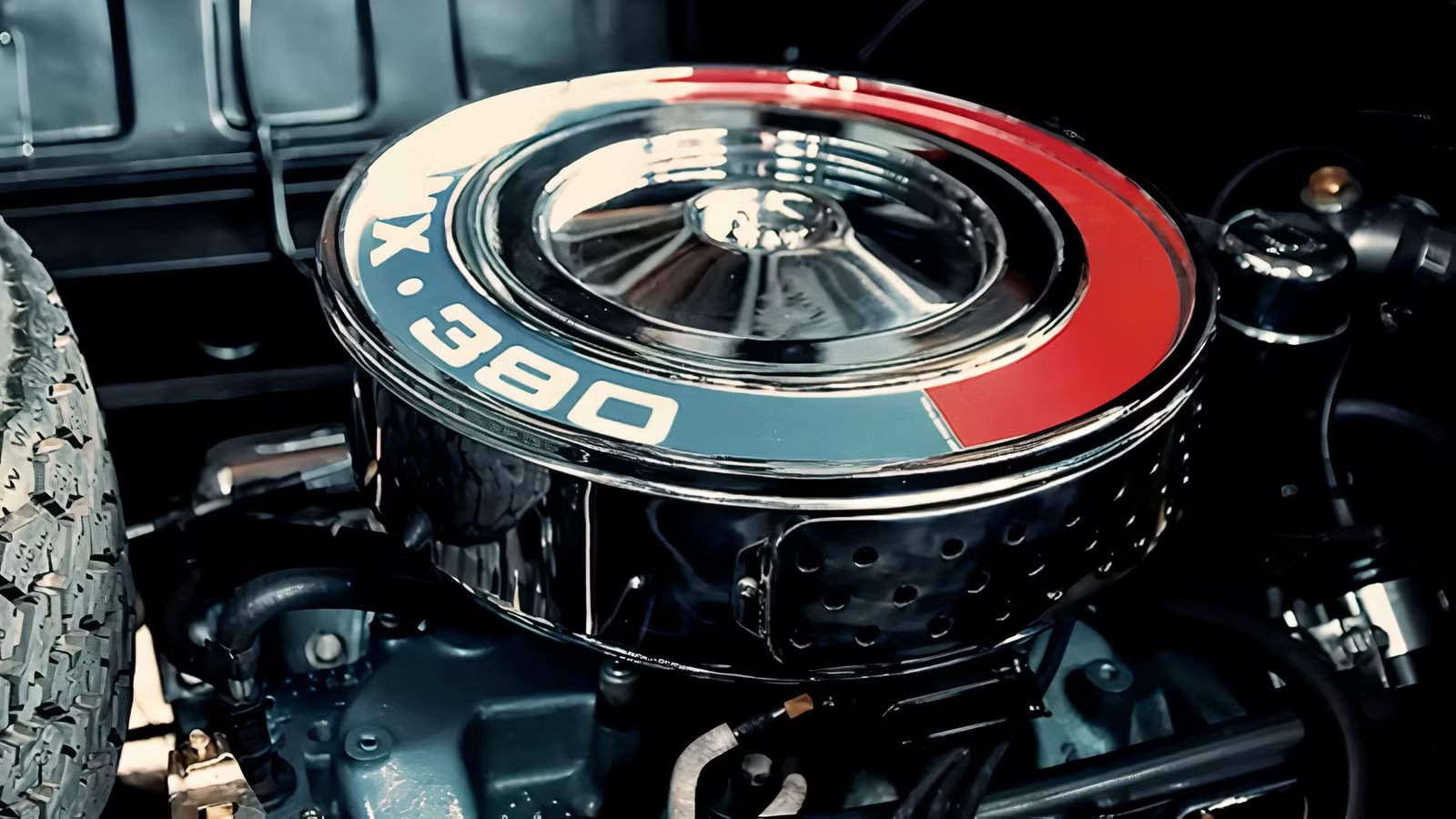
When you look at the AMC AMX/3, you can clearly see that it was supposed to go after the established European sports cars. It eschewed the boxy, muscle car looks of AMC’s other performance models and went for a sleek, more European-inspired aesthetic instead. Surprisingly, this smooth and exotic design came from an American (Dick Teague), who had to compete against European design houses like ItalDesign to get that spot. The way the car was laid out was very European, too, with the engine being placed in the middle. That engine was as American as they come: a 390 cubic inch V8 that produced around 340 hp.

That might not sound like much for a car that was supposed to compete against Ferraris and Lamborghinis. That power actually went a long way, though, thanks to the AMX/3’s light weight (3,090.9 pounds) and sleek aerodynamics. The AMX/3 managed a top speed of 170 mph during tests at Monza, achieving a 160+ mph target that AMC had set for it.
It Was Built Around Collaboration Between European and American Designers And Engineers

One of the key parts of the AMC AMX/3’s development is that it wasn’t just an American effort. AMC realized that if it wanted to compete with the European establishment, it had to hire people who worked with that European establishment. As a result, an unlikely dream team ended up being assembled that paired the big American automaker with experienced European designers and engineers.
With AMC wanting their car to have the same kind of flair as its potential Italian rivals, it’s no surprise that some of the greatest designers and engineers from Italy ended up working on this car. While it missed out on winning the competition for the overall design, Giugiaro’s ItalDesign still worked with AMC on the AMX/3 in a smaller role. The legendary engineer Giotto Bizzarrini also worked on the engineering side of the AMX/3.
AMC Worked With BMW To Help Develop Its Chassis

Perhaps the most important part of the AMC AMX/3’s development, however, comes from the Germans and not the Italians. AMC forged a working relationship with BMW to help make sure the AMX/3’s engineering was good enough to compete with European sports cars. As part of this, the AMX/3 was given an internal BMW chassis code (E18).
While there were some promising results (the AMX/3 recorded a lap time of 1:59.8 at Monza during BMW’s stability tests), the German engineers found some glaring issues with the design. The frame was considered to be too weak. The lower frame rails were especially a problem. They flexed near the front pivot points of the rear A-arms under any hard acceleration or hard braking, causing serious problems with the steering and suspension geometry.
Barely Anything Of The AMX/3 Survives
With all the issues that BMW encountered with the AMX/3, it’s not surprising that the entire program ended up being canceled in 1970. This left the AMX/3 as a “what could have been,” with only 6 confirmed prototypes and 3 incomplete chassis being produced. Because it was canceled while it was still in the prototype stages, barely anything of the project survives.
Giotto Bizzarrini Tried To Revive The Project Himself

After the program ended, Giotto Bizzarrini refused to let the car he’d helped develop die. Bizzarrini acquired chassis number 6, and tried to market it under his own name. This car would have been called the Bizzarrini Sciabola. It looks like it would have stayed similar to the original AMC concept, blending European flair with American V8 power in the same way that he’d done with the Iso Grifo. Nothing went beyond the marketing materials. But this AMX/3 chassis does seem to still be around.
One AMX/3 Chassis Managed To Survive, And It Was Given A High-Tech Restoration
The other AMX/3 chassis that’s known to survive is the one we alluded to earlier. Originally painted green, this chassis was imported to the US by Dick Teague himself in 1972 and repainted yellow. It was then later sold to Scotty Dawkins (one of Teague’s colleagues at AMC), who fitted it with a fully-working 390 V8 and kept it in storage in Michigan. When Dawkins passed away in 2016, his family sold the car to Michael Chetcuti and Kyle Evans. Chetcuti and Evans are known as AMX/3 specialists, and they immediately got to work on restoring the car.
Using modern restoration techniques that included 3-D scanning the body and Computer Aided Design (CAD), they were not only able to completely restore the car but also to fix the flaws that BMW had flagged during the development phase. This work was carried out by Detroit Metal Shaping, who documented it as a demonstration of how modern techniques can be used to restore classic cars. The result of this entire process is not just a restored AMX/3, but the AMX/3 that we really should have gotten.
Source: AMC, amx3.org, Detroit Metal Shaping, mycarquest.com

Related posts





Latest Post


No Comments