
The Adventure Motorcycle That Could Be The Best Long-Term Ownership Bet
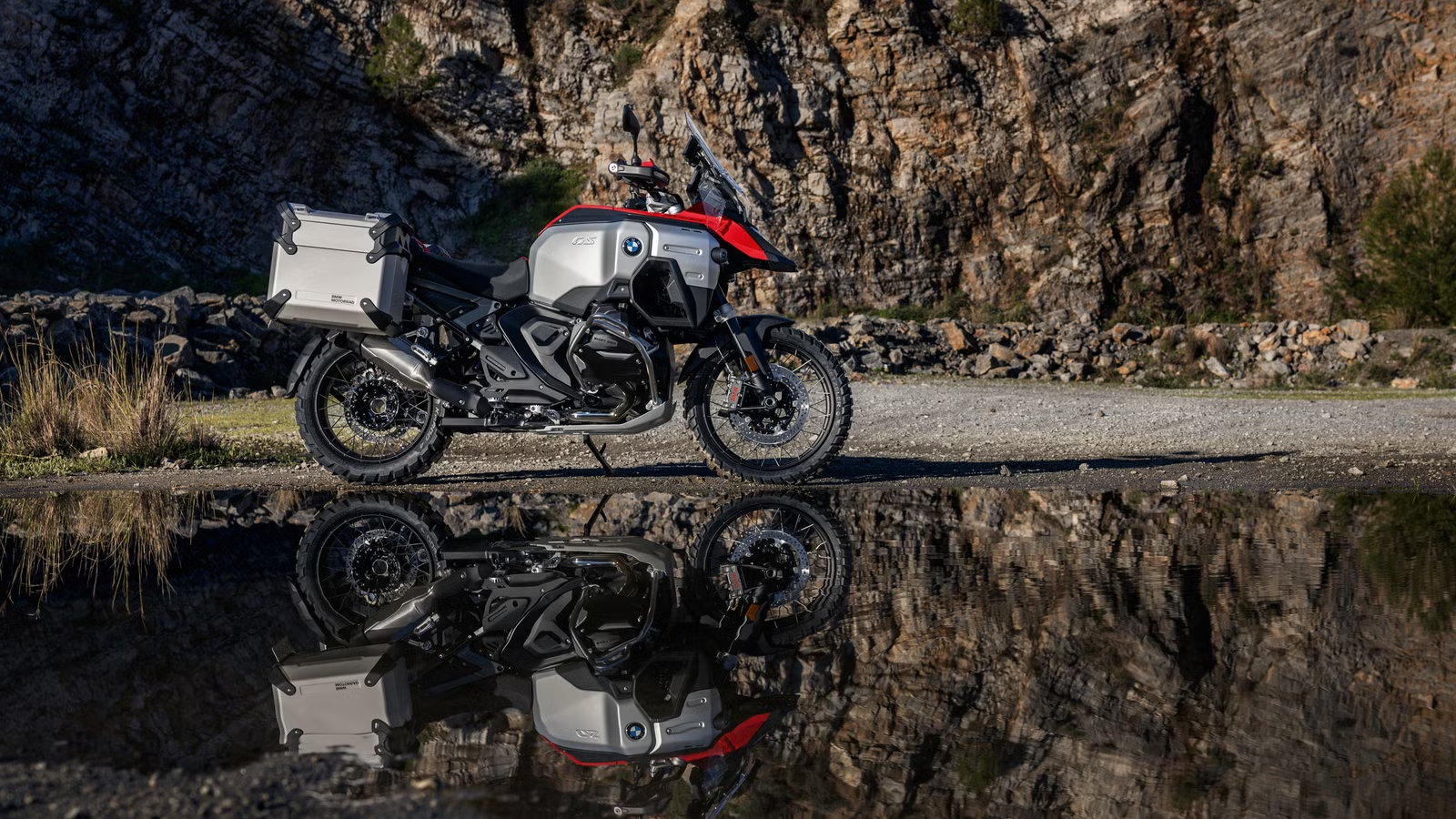
Not every adventure motorcycle is built with long-term ownership in mind. Some are built to rack up miles—not just in terms of range, but over years of ownership. An off-road-ready ADV that looks good on paper may not be one that a rider wants to own for years to come. A genuinely good ADV needs to do more than handle dirt roads. It needs to be comfortable on the highway, manageable around town, and practical enough to live with for years. As the list of these long-term requirements grows larger, the balance becomes harder to achieve for the bikemaker. Luckily, however, some do-it-all long-term ADVs from reputed brands nail that balance, and here’s a prime example.
What Makes An Adventure Bike Worth Keeping For Years

The best adventure motorcycles aren’t necessarily the ones with the biggest engines or the longest equipment lists. Firstly, they should still make sense after the first few months of ownership. Then, these bikes are expected to cover a lot of ground, sometimes literally. The same motorcycle might handle the commute on Monday, spend Saturday covering hundreds of highway miles, and then leave the pavement when the route gets interesting.
Just Being Good Off-Road Isn’t Enough

Yes, off-road ability matters, but it’s only one part of what makes an adventure bike useful. A motorcycle that is brilliant on dirt but exhausting on the highway isn’t particularly useful for someone planning a cross-country trip. The same works in reverse: a bike that feels effortless on pavement but becomes unmanageable and intimidating when the surface gets rough isn’t particularly convincing as an ADV.
Weight, suspension, ergonomics, throttle response, and low-speed balance all matter. The ability to carry luggage or a passenger without throwing off that balance is another advantage. That balance is what makes an ADV easy to live with. You shouldn’t have to change the way you ride every time the road surface changes.
It Has To Be Fast, Comfortable, And Practical, Too


Elsewhere, a strong engine and high peak power make overtaking easier and reduce the effort involved in carrying luggage. Good wind protection matters when the day’s route stretches into hundreds of miles, while comfortable ergonomics can be the difference between enjoying a long ride and simply tolerating it. Lastly, useful electronics, adjustable suspension, and a comfortable passenger seat matter as well. All of these are the nitty-gritty things owners tend to appreciate after thousands of miles.
The BMW R 1300 GS Adventure Gets A Lot Right

That brings us to the BMW R 1300 GS Adventure. This follows the same basic philosophy that made the previous GS bikes no-brainer picks for long-term ADV aficionados and globe-trotters. The Bavarian manufacturer kept the fundamentals intact while refining the areas that matter most in a long-distance ADV. Accordingly, you can cover hundreds of highway miles, carry its rider and luggage, and still have enough capability when the asphalt ends. The result is an undeniably large and expensive motorcycle, but one that attempts to cover an unusually broad range of riding.
Premium Pricing For A Premium Product

The BMW R 1300 GS Adventure is not a cheap motorcycle at a starting MSRP of $23,795. But its appeal comes from how much BMW has packed into one package: a powerful engine, long-distance touring equipment, electronic rider aids, and enough capability to venture well beyond paved roads. So even though the price is hard to ignore, so is the amount of motorcycle you’re getting for it. For someone planning to keep the bike for years, you’ll simply forget about the price in two or three years.
The R 1300 GS Adventure Has What It Takes For Big Adventures

The GS Adventure’s biggest strength isn’t any single feature. It’s how the engine, chassis, suspension and touring equipment work together. The large 7.9-gallon fuel tank makes long stretches between fuel stops easier, while the 8.3 inches of front suspension travel and 8.7 inches at the rear give the motorcycle plenty of room to deal with rough surfaces. On that note, let’s dive deeper.
A Boxer Engine With Dollops Of Torque

At the heart of the GS Adventure is BMW’s 1,300cc air/liquid-cooled boxer twin engine with BMW ShiftCam technology. This motor churns out 145 horsepower at 7,750 rpm and 110 lb-ft of torque at 6,500 rpm, paired with a six-speed manual transmission. 145 horsepower isn’t class-leading, but the torque output surely is. Plus, it comes in at under 7,000 RPM, so you will have no shortage of punch at any given RPM. For added convenience, BMW also offers the option of Automated Shift Assistant (ASA), an optional automated manual system that provides clutchless manual or fully automatic gear shifting using electromechanical actuators.
Unique Suspension Helps Boost Comfort

Suspension plays a major role in the GS Adventure’s long-distance ability. BMW’s EVO-Telelever front and Paralever rear suspension remain central to the GS Adventure’s handling, while electronically controlled damping allows the chassis to adapt to different loads and riding conditions. The Dynamic Suspension Adjustment automatically adjusts the damping and spring preload, while Adaptive Vehicle Height Control helps make the large ADV easier to manage at low speeds without compromising stability at higher speeds.
When equipped with Adaptive Vehicle Height Control, the system raises the motorcycle by 1.2 inches when setting off and lowers it again before stopping. Automatic Load Compensation also detects whether the bike is being ridden solo, with a passenger, or with additional luggage, and adjusts the spring preload accordingly. Lastly, the upright position gives the rider a commanding view of traffic and plenty of leverage over the bike. Wind protection is also present, which should mean less fatigue after several hours on the freeway.
It Isn’t Short On Features Either

The GS Adventure has plenty of electronics, but the important question is whether those features are useful in a motorcycle this large and versatile. Cruise control is particularly useful on long highway stretches, while heated grips can become valuable when the temperature drops or a long-distance trip crosses several climates. On the go, you’ll also appreciate the four standard riding modes — Eco, Rain, Road and Enduro — while the optional Riding Modes Package adds Dynamic Pro and Enduro Pro. These modes give riders greater control over throttle response, traction control and ABS intervention depending on the riding conditions.
The R 1300 GS Adventure can also be equipped with BMW’s Riding Assistant package, which uses radar technology to provide features such as Active Cruise Control, Front Collision Warning and Lane Change Warning. The 6.5-inch TFT color display serves as the main interface for vehicle information, settings and connectivity. When paired with BMW’s Connected ecosystem, it can also provide access to navigation and other connected functions.
The BMW R 1300 GS Adventure Could Be The Only ADV You’ll Need
There are better motorcycles for specific jobs. A lighter ADV will usually be easier in technical terrain, while a smaller touring bike may be easier to live with every day. The GS Adventure’s advantage is that it can do both reasonably well. It does not need to be the best at what it does, only good enough at everything. It can cover a long highway day without exhausting its rider, carry luggage without becoming completely unwieldy, and tackle rough terrain when the asphalt ends.

That’s what makes the GS Adventure interesting as a long-term motorcycle. It may be too big, too expensive, and too complicated for some riders, but for someone looking for a single motorcycle that can handle everything from long highway trips to rough trails, its ability to fill so many roles makes it a motorcycle worth keeping for years.
Source: BMW Motorrad

Related posts
Latest Post


No Comments