
The 400-HP Infiniti That BMW M340i Buyers Keep Ignoring
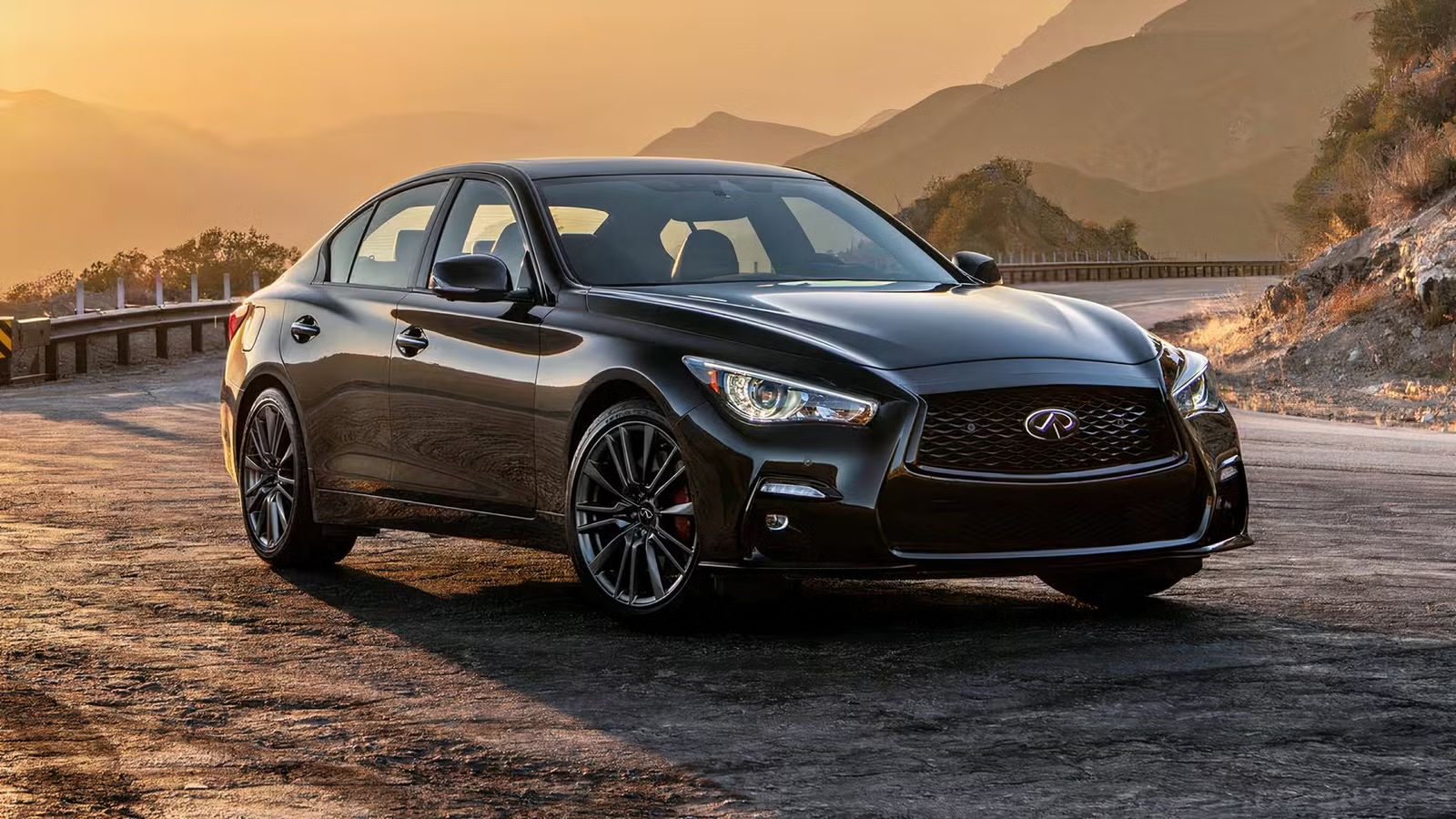
The Infiniti Q50 left showrooms after the 2024 model year, which makes this a used-car story. It is also a puzzling one. The Red Sport 400 packs 400 horsepower from a twin-turbo V6, topping the BMW M340i’s 382 horsepower on paper and undercutting it on price today. Yet when sport sedan shoppers build a shortlist, the Infiniti rarely survives the first cut. Some of that is deserved, and some of it is habit. Here is how a discontinued underdog stacks up against the sedan most buyers choose instead.
The Q50 Red Sport 400 Has The Numbers To Challenge The BMW M340i

The Infiniti Q50 Red Sport 400 uses the VR30DDTT, a 3.0-liter twin-turbocharged V6 making 400 horsepower and 350 pound-feet of torque. The M340i answers with a turbocharged 3.0-liter inline-six rated at 386 horsepower and 398 pound-feet. So the Infiniti wins on horsepower by 14, while the BMW takes the torque figure by 48 pound-feet.
On a spec sheet these two are competitive, and the Q50 is also priced to attract bargain hunters. Both are available with rear-wheel drive or all-wheel drive, and both pair their engines with automatic transmissions, a seven-speed in the Infiniti and an eight-speed in the BMW. Anyone cross-shopping a Mercedes-AMG C43 or Lexus IS 350 F Sport will recognize the pattern: the Q50 matches the headline numbers, so the question becomes what the numbers do not tell you.
How The Twin-Turbo V6 Delivers 400 HP But Not Always Quicker Acceleration


Here the story gets more nuanced. CarBuzz cites a 0-60 mph time of 4.5 seconds for the rear-wheel-drive Red Sport 400, which is a strong figure and the one most often repeated online. Measured results for all-wheel-drive cars are slower, with some tests landing around 5.7 seconds. That 1.2-second gap is large in a segment where tenths decide arguments.
The reason is mostly traction and weight. The all-wheel-drive Q50 carries extra mass and drivetrain loss, and the V6 builds boost with a touch of lag before the surge arrives. In the real world, a rear-wheel-drive car on warm tarmac and an AWD car on a cold, damp morning feel like different machines.

The M340i, particularly in xDrive form, tends to post quicker independent times, helped by its launch-friendly gearbox and strong low-rev torque. The Infiniti is properly fast, but its horsepower lead does not automatically translate into a quicker car. If straight-line performance is your core priority, check which drivetrain you are actually looking at.
Where Infiniti Gets The Chassis Right And The Steering Wrong

Infiniti deserves real credit for the Red Sport’s chassis. The suspension is sport-tuned, the car turns in cleanly, and it stays flat and composed through quick direction changes. The ride is also more forgiving than many rivals, which matters if your daily commute includes broken pavement. It is a sedan you can live with every day and still enjoy on a back road.
The steering is the problem. Many Q50s were fitted with Direct Adaptive Steering, a steer-by-wire system that replaces the direct mechanical link between wheel and rack with electronic actuators (a backup mechanical connection exists for safety). In theory, it filters out road noise and sharpens response.

In practice, many drivers and reviewers found it numb, with little sense of what the front tires were doing. That matters because feedback is what the BMW does best. The M340i’s steering is not perfect, but it communicates grip and load in a way the Infiniti struggles to match. Take a long test drive and decide whether the trade-off suits you.
Dated Cabin Tech And BMW’s Brand Advantage Explain The Perception Gap


Step inside and the Q50’s age shows. The dual-screen InTouch setup was ahead of its time when it launched, but the interface now feels slow and cluttered next to BMW’s iDrive. Apple CarPlay and Android Auto support arrived later in the car’s life, which helps, but the menus still lag behind.
The tech package adds useful features such as adaptive cruise control and a surround-view camera, though none of it feels modern. Material quality is a mixed bag. The seats are comfortable and the cabin is quiet, yet some plastics and switchgear feel a generation behind the BMW’s tighter, more premium interior.
Then there is the badge. BMW has decades of sport sedan credibility, and buyers pay for that confidence. It shows up in resale values, in dealership perception, and in the simple fact that friends and neighbors recognize what an M340i is. Infiniti has never carried the same cachet, and with the Q50 now discontinued, it has no momentum either. These intangibles do not appear on a spec sheet, but they steer a lot of purchases, and they explain why a car with similar numbers keeps getting passed over.
Used Prices, Reliability, And Resale Make The Infiniti A Compelling Alternative

This is where the Q50 makes its strongest case. Because the Infiniti depreciates harder than the BMW, a used Red Sport 400 typically costs thousands less than a comparable M340i. Check current CarGurus and CarFax listings for your area, as prices vary widely with mileage and drivetrain, but the savings are consistently meaningful.
Reliability is another strength. The VR30DDTT has a reasonable track record, and routine maintenance on Infiniti products tends to cost less than on German rivals. Infiniti’s original warranty ran four years or 60,000 miles for basic coverage and six years or 70,000 miles for the powertrain, so many used examples will have little or no coverage left. Budget for a pre-purchase inspection and consider a reputable extended warranty.

The same depreciation that makes the Q50 cheap today means it will likely lose value faster than a M340i when you sell. For buyers who keep cars for years, that matters less. For those who flip every few seasons, it matters more. So is it worth buying? If you value performance per dollar, ride comfort, and low running costs over brand prestige and steering feel, the Red Sport 400 is a smart used buy. It is not the best driver’s car in its class, but it is a seriously quick, well-built sedan that most shoppers never test drive. That alone is reason enough to put it on your list.
Sources: Infiniti, BMW, Motortrend, KBB

Related posts





Latest Post


No Comments