
The 2027 Corvette’s Pushrod V8 Is Exactly 409 Cubic Inches On Purpose
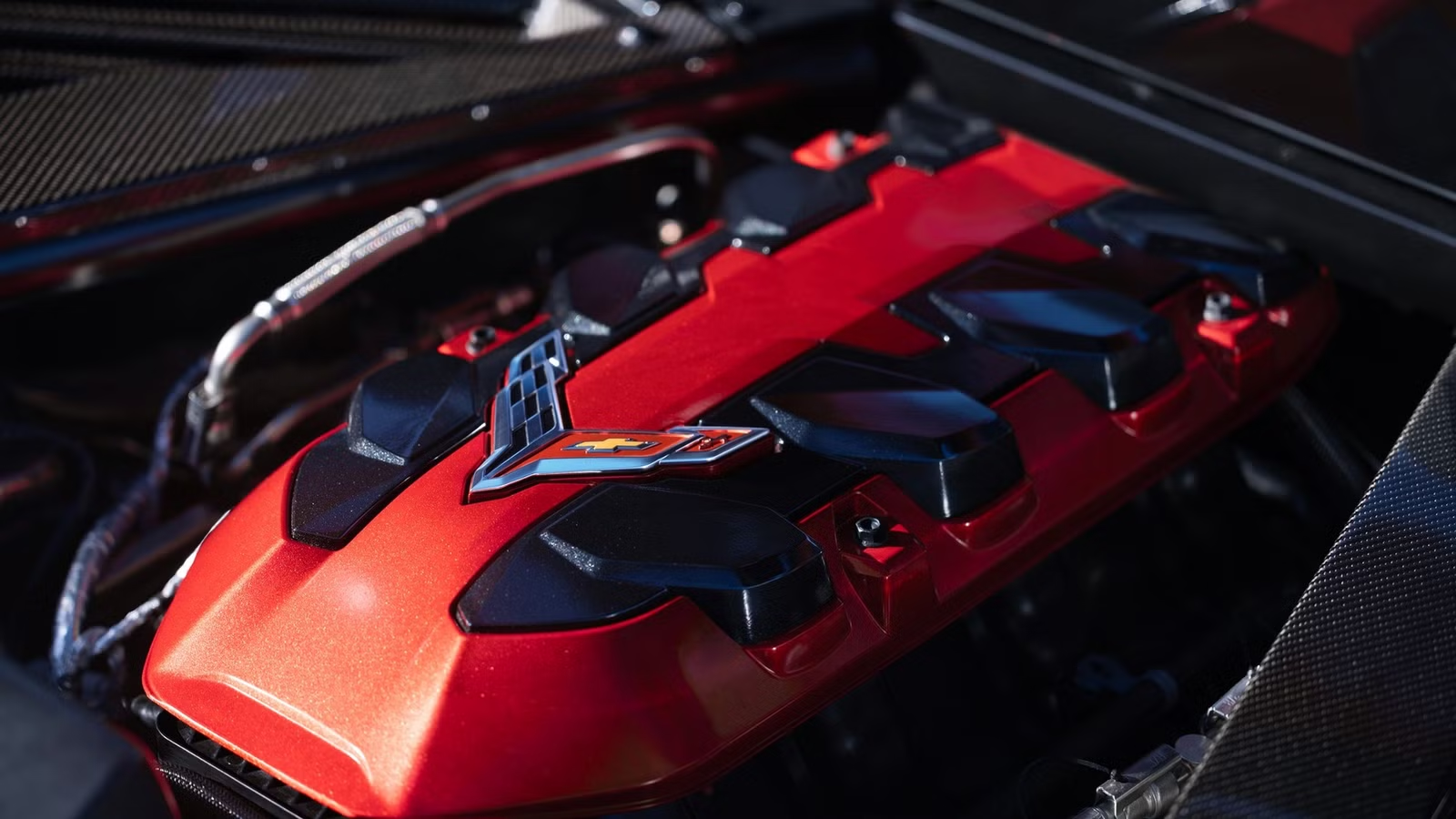
Every rival in the sports car world seems to be chasing boost, batteries, or both. Chevrolet just went the other way. The 2027 Chevrolet Corvette gets an all-new V8 with two valves per cylinder, a single camshaft buried in the block, and no turbochargers at all. Then there’s the number on the spec sheet. Convert its displacement into cubic inches and it lands on a figure that meant something very specific to anyone who haunted a drag strip in the early 1960s. GM didn’t hide from the coincidence. It leaned all the way into it.
Why Chevrolet Kept Pushrods And Natural Aspiration

A pushrod V8 sounds like a relic in 2026. Overhead cams, forced induction, and electric assistance now define most high-performance engines, and the logic is hard to argue with on paper. Smaller engines with turbos make big numbers and pass emissions tests more easily.
The small-block’s answer has always been packaging. A cam-in-block layout keeps the engine short and low, which matters in a mid-engine car where every inch behind the seats counts. GM says it has built more than 100 million small-block V8s over 72 years, and every one of them has used an overhead-valve design. The new engine keeps the family’s 4.4-inch bore spacing too, the same dimension the very first small-block used.
The 1960s Chevy 409 Behind The Number


The original 409 wasn’t a small-block at all. It was a W-series big-block, introduced midway through the 1961 model year as Chevrolet’s new top performance engine. With a 4.3125-inch bore and a 3.5-inch stroke, it displaced 408.89 cubic inches and debuted at 360 hp and 409 lb-ft of torque on an 11.25:1 compression ratio.
A dual-quad version made 409 hp for 1962, and the 1963 top option reached 425 hp. The engine ruled drag strips and inspired the Beach Boys’ 1962 song “409,” which cemented the number in American car culture. It never made it into a factory Corvette, though, which makes its return in Chevrolet’s sports car all the more pointed.
The LS6 Small-Block And How Chevrolet Reached 409 Cubic Inches
The engine is the LS6, a 6.7-liter V8 making 535 horsepower at 6,100 rpm and 520 lb-ft of torque at 4,600 rpm. That’s 40 hp and 50 lb-ft more than the outgoing 6.2-liter LT2’s best figures, and Chevrolet calls it the most powerful base engine in Corvette history, with the highest torque of any production naturally aspirated V8. Chevrolet quotes 0 to 60 mph in 2.75 seconds for the Grand Sport and a 200 mph top speed for the Stingray.
Yes, there was an LS6 before. Two, in fact. The first was a 454-cubic-inch big-block from the muscle car era, and the second was the 5.7-liter small-block in the C5 Corvette Z06. GM revived the name as a nod to that history and to what it calls the sixth generation of the small-block. The math behind the 409 is simple: Chevrolet kept the LT2’s 103.25 mm bore and stretched the stroke from 92 mm to 100 mm, about 0.32 inches more. The result works out to roughly 408.7 cubic inches, rounding to 409 just as the original did, or as GM said: “She’s Real Fine, My 409.”
The Cooling And Injection Tech Behind Its High Compression

The longer stroke means faster-moving pistons and more heat, so Chevrolet gave the LS6 cylinder heads a two-piece water jacket that targets hot spots around the exhaust valve and spark plug. That extra cooling helps the engine run a 13.0:1 compression ratio, well above the original 409’s 11.25:1.
Fueling is the other key piece. The LS6 combines port and direct injection, a system GM calls PDI. Direct injection allows precise fuel control at high compression, while port injection washes the intake valves and limits carbon buildup. Forged pistons and rods, a 95 mm throttle body up from the LT2’s 87 mm, and a tunnel ram intake round out the hardware.
The Flint Plant Where The Small-Block Story Started

GM assembles the LS6 at Flint Engine Operations in Michigan. That location carries real weight. The first Chevrolet small-block came off the line in Flint on July 9, 1954, as a 265-cubic-inch engine for the 1955 model year, and the plant went on to build more than 40 million small-blocks before production there ended in 1999.
The LS6 brings V8 assembly back after that long gap. GM framed it as a homecoming, and the symbolism fits an engine that already borrows a name from one era and a displacement from another.
Where The LS6 Lands In The 2027 Corvette Lineup

The LS6 is now the Corvette’s primary engine. It powers the Stingray, which launched at $73,495, and the revived Grand Sport at $88,495. Both send power to the rear wheels through an eight-speed dual-clutch transmission. The Grand Sport X, which replaces the E-Ray, pairs the LS6 with a front-axle electric motor for 721 hp combined and all-wheel drive, starting at $112,195.
That spread tells the story of the whole engine. Chevrolet could have chased the rest of the market with boost or a smaller, more complex V8. Instead, it built a bigger, simpler pushrod engine and sized it to land on the most famous number in Chevrolet performance history. Sixty-five years after the original rolled out, the 409 has finally found its way into a Corvette.
Sources: Mecum, Chevrolet.

Related posts



Latest Post


No Comments