
Pontiac’s 1989 AWD Sedan Is A Near-Unicorn With Fewer Than 1,400 Built
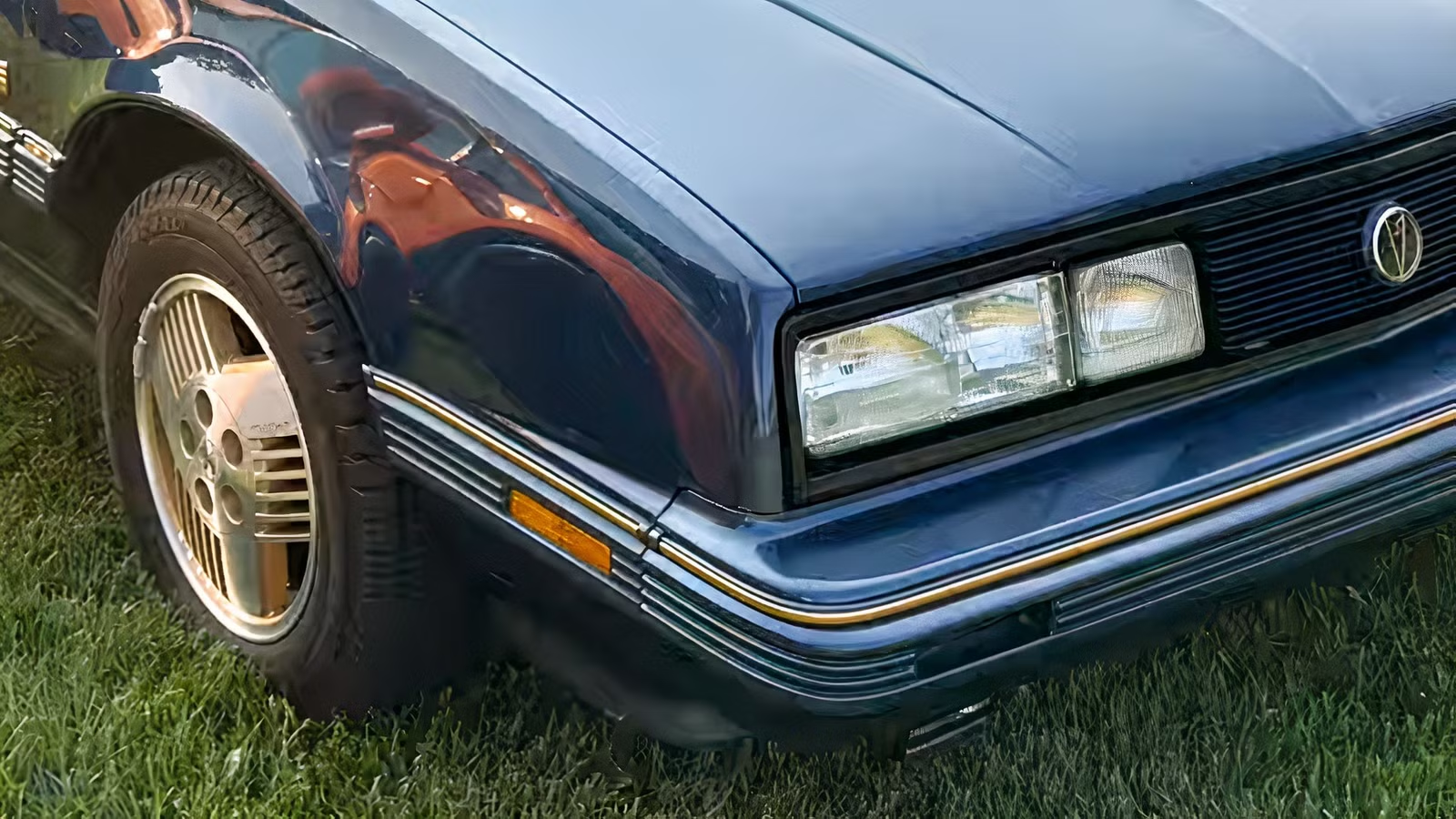
Pontiac built its reputation on American muscle, with flamboyant styling and grunty V8 engines defining some of its most memorable cars. So, when the brand turned its attention towards challenging European sport sedans in the 1980s, it was stepping into unfamiliar territory. Instead of relying on a big V8, Pontiac took a different road, pairing a V6 with full-time all-wheel drive and independent rear suspension, and complementing it all with technology rarely seen in any sedan at the time, including digital instrumentation, on-board diagnostics, and steering-wheel-mounted audio controls. With fewer than 1400 examples built in its final AWD iteration, this Pontiac is now a rare reminder of a time when the American brand was willing to venture beyond its muscle-car roots.
Pontiac’s Bid To Challenge European Sport Sedans

By the early 1980s, European sport sedans had carved out a distinct identity. They offered the comfort and practicality of everyday cars without giving up the handling and driving engagement enthusiasts expected. BMW 528e and Audi 5000 were among the names setting the pace, and Pontiac wanted to prove that an American manufacturer could play in the same league. Its answer arrived in 1983, in the form of a fully loaded premium midsize sedan designed to bring a more sporting character to the American family-car formula.
It was not just a cosmetic exercise. The car received a carbureted 2.8-liter V6, quick steering, a sport-tuned suspension, and self-leveling rear shocks; other chassis upgrades helped reinforce its sporting intentions over the standard model. At $13,572, it commanded a considerable premium of around $5,000 over the basic model, justifying its price with standard equipment that covered almost everything a buyer could want.
The 1989 Pontiac 6000 STE Was More Than Just An Ordinary American Family Sedan


The classic in focus is the Pontiac 6000 STE, short for Special Touring Edition, introduced in 1983 with a striking 6-lamp headlight setup. Its sporting credentials were only part of its story; Pontiac also wanted the STE to feel like a glimpse of what the modern car could become. In 1984, it introduced a digital dashboard featuring a digital speedometer, an analog tachometer, and a Driver Information Center. By 1986, the STE had gained steering-wheel-mounted audio controls, letting drivers operate the stereo without taking their hands off the wheel.
These features might seem ordinary today, but they were unusual additions to a mainstream American sedan at the time. Not every idea was perfectly executed, and some of the digital equipment could feel more novelty than necessity. Still, Pontiac was clearly thinking beyond the conventional dashboard and trying to make the STE a more connected, driver-focused car. By 1988, it introduced an optional AWD system with a larger 3.1-liter V6, which by 1989 was standard for the model, with just under 1,400 examples built for this all-weather iteration.
Its European Ambitions Were Not Matched By Its Powertrain, But That Wasn’t The Point

Under the hood, however, the STE had a harder time making its case. The original 2.8-liter, 60-degree V6 produced around 130–135 hp and 145 lb-ft of torque. Mated to a three-speed automatic, it was not a performance powerhouse. As for acceleration, the 6000 STE clocked a 0–60 mph time of approximately 10.2 seconds, a noticeable shortfall against European alternatives such as the BMW 528e, whose inline-six produced 170 lb-ft of torque.
Pontiac did make improvements, introducing multi-port fuel injection in 1985 and raising the engine’s output to around 140 horsepower. The regular front-wheel-drive STE eventually gained a four-speed automatic with overdrive in 1987, along with a five-speed manual option. The later AWD version, however, could only retain the three-speed automatic. This limitation arose from packaging constraints in positioning a four-speed automatic with the AWD drivetrain. It was an obvious weakness, but judging the STE solely by its acceleration overlooks what the brand was trying to achieve. Its broader experiment involved its architecture, traction, and cabin technology, not simply extracting more power from a V6.
All-Wheel Drive Made The Final Pontiac 6000 STE A Technical Outlier

The biggest engineering departure came in 1988, when Pontiac introduced an all-wheel drive version of the 6000 STE, and this was no ordinary pivot. The system paired a 3.1-liter V6 with a modified three-speed automatic transmission and an integrated transfer unit. Power was distributed with a 60% front and 40% rear torque split, giving the sedan the added traction of AWD without requiring the driver to engage a conventional four-wheel drive system.
The rear suspension was equally interesting. The AWD model used an independent setup with a differential derived from GM’s GMT400 pickup platform and a transverse composite single-leaf spring borrowed from the Grand Prix. Drivers could also use a console-mounted switch to engage an electro-mechanical center differential lock. Its transmission carried the THM A-1, or Hydra-Matic 3T40-A, designation and incorporated a transfer unit developed specifically for this application. The three-speed automatic remained a compromise, but given the complexity of the AWD drivetrain, the available space could only accommodate a three-speed unit.
Fewer Than 1400 Examples Made The 1989 6000 STE A Rare Classic

In the final year of the 6000 STE, all examples came with an all-wheel drive set-up. Production was limited, with just under 1,400 cars built; some accounts put the figure precisely at 1,376, and this scarcity is exactly what made this modestly popular model an underdog of its time, one that found its place in critics’ circles. The 6000 STE was never quite the European sport-sedan rival Pontiac had hoped it would be, particularly when it came to outright performance.
Its three-speed automatic and modest power output were difficult to overlook. But there was more to this car than simply its acceleration figures. The combination of a transverse V6, full-time AWD, independent rear suspension, and early driver-focused technology, along with its distinctive button-rich steering wheel, turned out to be a precursor to the modern car, marking it as a visionary effort from an American brand.
Sources: Pontiac

Related posts


Latest Post


No Comments