
The 2027 Corvette Stingray’s LS6 Upgrade Makes It The Strongest Base C8 Ever, And That Changes The Grand Sport Math
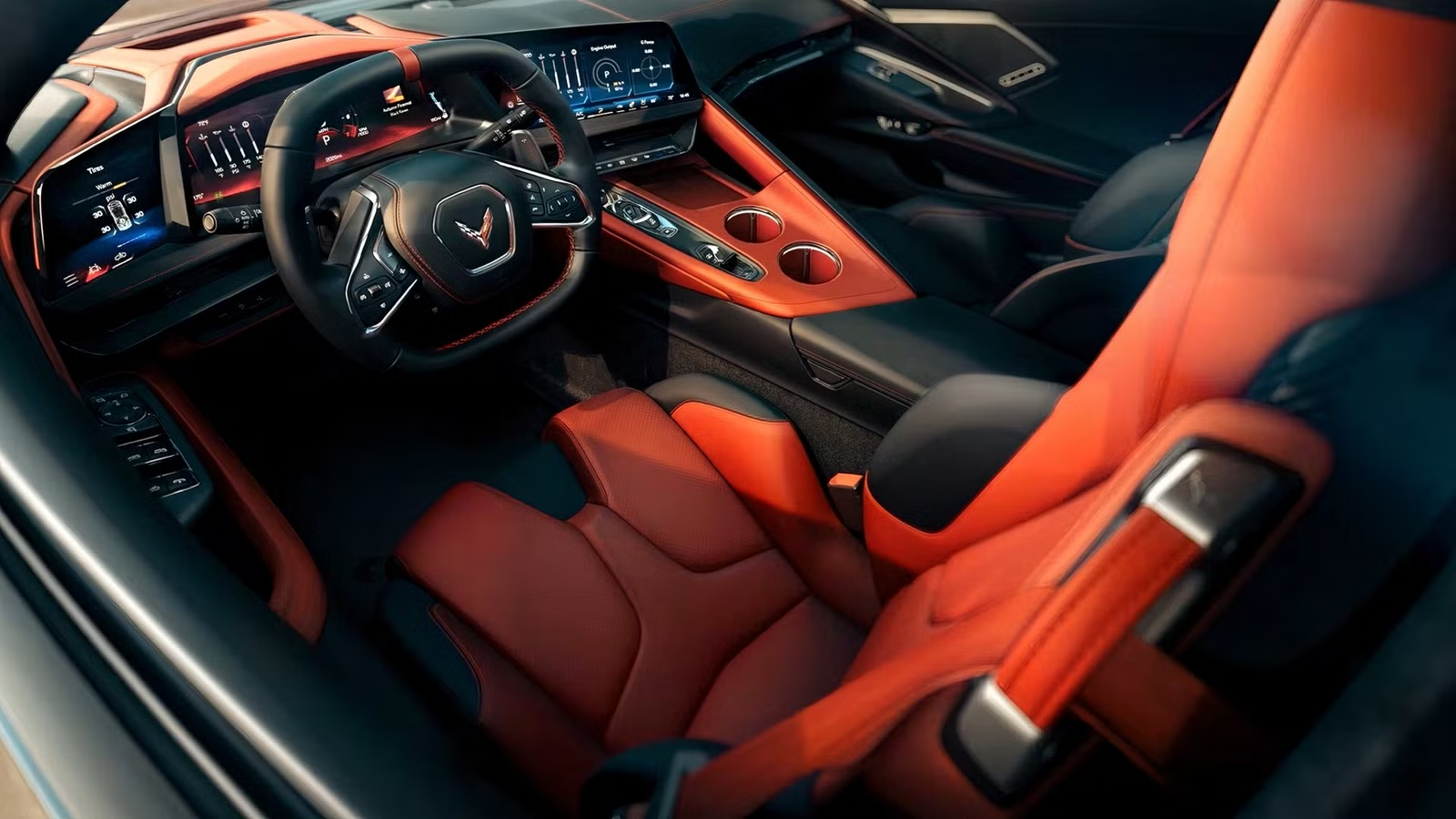
Car and Driver’s first drive of the 2027 Chevrolet Corvette Stingray, published this week, confirms what the spec sheet has been hinting at: the base C8 is now a genuinely different car. The new 6.7-liter LS6 V-8 produces 535 horsepower and 520 lb-ft of torque — up 40 hp and 50 lb-ft over the outgoing LT2 — and in standard 1LT trim, starting at $73,495, it will pull to 200 mph. That was never possible in a base Stingray before.

The performance jump reframes the C8 buying decision heading into the 2027 model year, particularly for buyers weighing the base Stingray against the Grand Sport. When the entry-level car hits 60 mph in 2.8 seconds and tops out at 200 mph, the question of how much more performance the Grand Sport’s premium actually buys becomes a lot more interesting.
What the LS6 Actually Is, and Why It Matters
The LS6 is a significant engineering step, not a displacement bump dressed up in press-release language. Chevrolet stretched the bore and added stroke to reach 6.7 liters (409 cubic inches), then pushed compression to 13.0:1 — the highest ratio ever fitted to a production Corvette. Forged pistons and connecting rods handle the load. A 95-mm throttle body feeds a tunnel ram intake with high-velocity ports, and the fuel system combines both port and direct injection, a first for the Stingray.

The result is an engine that delivers its full 535 hp and 520 lb-ft without requiring the optional performance exhaust — something the LT2 couldn’t claim at its peak 495-hp output. Quarter-mile time is 11.0 seconds at 124 mph. These are supercar-adjacent numbers in a car that starts under $75,000.
The 200-MPH Number Has a Specific Explanation

The base Stingray’s 200-mph ceiling isn’t magic — it’s geometry. The standard 1LT rides on a 4.89:1 final-drive ratio paired with Michelin all-season tires, a combination that allows the eight-speed dual-clutch transaxle to pull long enough in top gear to reach that number. It’s a legitimate spec-sheet achievement, but context matters: you’ll need a closed course, legal permission, and a fair amount of nerve to actually use it.
What the 200-mph figure really signals is that the LS6’s power delivery is broad and strong enough to sustain high-speed pulls without running out of breath. That translates into real-world benefits — stronger mid-range pull, more confident highway passing, and a powertrain that feels unhurried at legal speeds.
The Z51 Package Trades That Top Speed for Something Better

Add the $5,395 Z51 Performance package and the 200-mph number disappears. The culprit is a swap to a 5.56:1 final-drive ratio — the same ratio used in the Z06 — which, combined with the front splitter, rear wing, and additional brake cooling ducts, trims top speed to approximately 180 mph. That sounds like a loss, but Car and Driver’s testers put it plainly: they’d take the Z51 every time.
The shorter gearing makes the car feel like it has a close-ratio gearbox. Michelin Pilot Sport S 5 summer tires replace the all-seasons, sharpening turn-in dramatically. Stiffer springs and revised damping add body control without wrecking ride quality. The electronically controlled limited-slip differential rounds out the package. For anyone who actually drives their Corvette hard — on a back road or a track day — the Z51 is the more useful configuration, even if it costs the headline number.
Where the Grand Sport Fits After the Stingray’s Upgrade

The Grand Sport shares the LS6’s 535 hp and 520 lb-ft ratings in rear-wheel-drive form — the same engine, the same output. According to The Drive’s first-drive coverage, the Grand Sport adds a suite of handling and appearance upgrades over the Stingray, and it carries a higher price point. The Edmunds long-term review source was inaccessible at time of writing, so Grand Sport pricing and final-drive specifics couldn’t be confirmed from that source; buyers should verify current Grand Sport MSRP and configuration details directly through Chevrolet’s order guide before making a final call.
What the available data does confirm is that the power-per-dollar argument has shifted. When the base Stingray and the Grand Sport share an identical horsepower and torque rating, the Grand Sport’s premium has to be justified by chassis tuning, braking hardware, and badge — not by a power advantage. For buyers who were previously stretching to the Grand Sport specifically for more engine, the 2027 Stingray removes that reason entirely.
The 2027 Stingray’s LS6 upgrade doesn’t make the Grand Sport irrelevant — the chassis refinements and track-focused hardware still matter for the right buyer. But it does mean that a base C8, configured thoughtfully, now delivers a level of performance that would have required stepping up a trim level in any previous model year. For C8 shoppers in the final year of the generation, that’s a calculation worth running before clicking “add to cart” on the Grand Sport.

Related posts




Latest Post


No Comments