
The 10 Cheapest Used Superbikes With More Than 150 Horsepower
By the late 90s, motorcycles were getting more powerful than ever. Liter-class sport bikes, in particular, had also captured the imagination of the buying public, all offering incredible performance on a budget. When the debate about who made the fastest motorcycle in the world got settled by regulators, a different kind of performance debate took shape.

While overall speed had become an important marketing tool for superbike manufacturers, track performance suddenly became the focal point in the 00s. All the way through the decade, we were treated to one incredible 150-plus horsepower sport bike after another, and today these dream machines are more accessible than ever.
Buying a used motorcycle always has an element of risk attached, so please do your research, and proceed with caution. The motorcycles on this list go from oldest to newest.
10
1996 Honda CBR1100XX
Price Range: $3,000 – $5,000

After several years of Kawasaki dominance, the Super Blackbird was crowned the fastest production motorcycle in the world. With a top speed of 177 MPH, it is still a pretty fast motorcycle even by modern standards, but was never particularly dynamic. Today, this relatively comfortable superbike offers riders a quite brilliant sport tourer on a budget, and has proven more than capable of crossing the 100,000-mile threshold.
9
1999 Suzuki Hayabusa (1st Generation)
Price Range: $3,000 – $5,000

After a three-year reign, the Blackbird was usurped by the very intentionally named Hayabusa (the Blackbird’s natural predator). It rather effectively ended the speed wars, and provided us with a neat transition to more dynamic offerings at the beginning of the 00s. Even when they were new, these bikes had too much power for their own good, so paying more for a good one is prudent.
8
2000 Kawasaki Ninja ZX-12R
Price Range: $3,000 – $5,000

With the optional ram air fitted, the Ninja ZX-12R was capable of producing 190 horsepower. That is an astonishing amount of power for an analog machine, and if the brakes and suspension have not been refreshed recently, we highly recommend factoring that expense into the purchase price. In the right condition, these bikes offer unbeatable bang for the buck, but in the wrong condition they are death traps …
7
2002 Yamaha YZF-R1
Price Range: $3,000 – $5,000

Upon its release in 1998, the original R1 proved to be a game-changing motorcycle. It offered the usual kind of performance associated with a liter-class bike, and the weight and handling associated with a 600. By 2002, the model got fuel injection for the first time, and anyone who has ever tried to balance four carbs, or simply cleaned out an old carb, will appreciate this upgrade.
6
2004 Kawasaki Ninja ZX-10R
Price Range: $4,000 – $6,000
The original Ninja ZX-10R was genuinely terrifying. It was able to make over 170 horsepower, and, thanks to a brand-new chassis, only weighed 430 pounds. Unfortunately, the chassis was pretty raw and unrefined. A hair-trigger throttle and a front wheel that was not particularly fond of staying planted made it a handful to ride, but if you could tame the beast, it was exceptionally fast, “scary fast” one might say.
5
2005 Honda CBR1000RR Fireblade
Price Range: $5,000 – $7,000

By the middle of the decade, things were moving along at breakneck speed, with each Japanese manufacturer trying to outdo the other. It was a great time to be a sport bike enthusiast. You had several relatively affordable superbikes to choose from, all great in their own way. This generation Fireblade was slightly slower than the other Japanese bikes (by literal 10ths of a second), but just like every Honda superbike, slightly more usable in the real world.
4
2005 Suzuki GSX-R1000 (K5)
Price Range: $5,000 – $7,000

With a dry weight of 366 pounds and an impressive 176 horsepower, the K5 GSX-R1000 wasn’t just the bike to have in 2005, it is arguably one of the best superbikes ever built. As impressive as the power-to-weight ratio was (and still is), the aforementioned Kawasaki wasn’t far off, but the chassis Suzuki developed to go along with the devastatingly powerful engine is what truly set it apart.
3
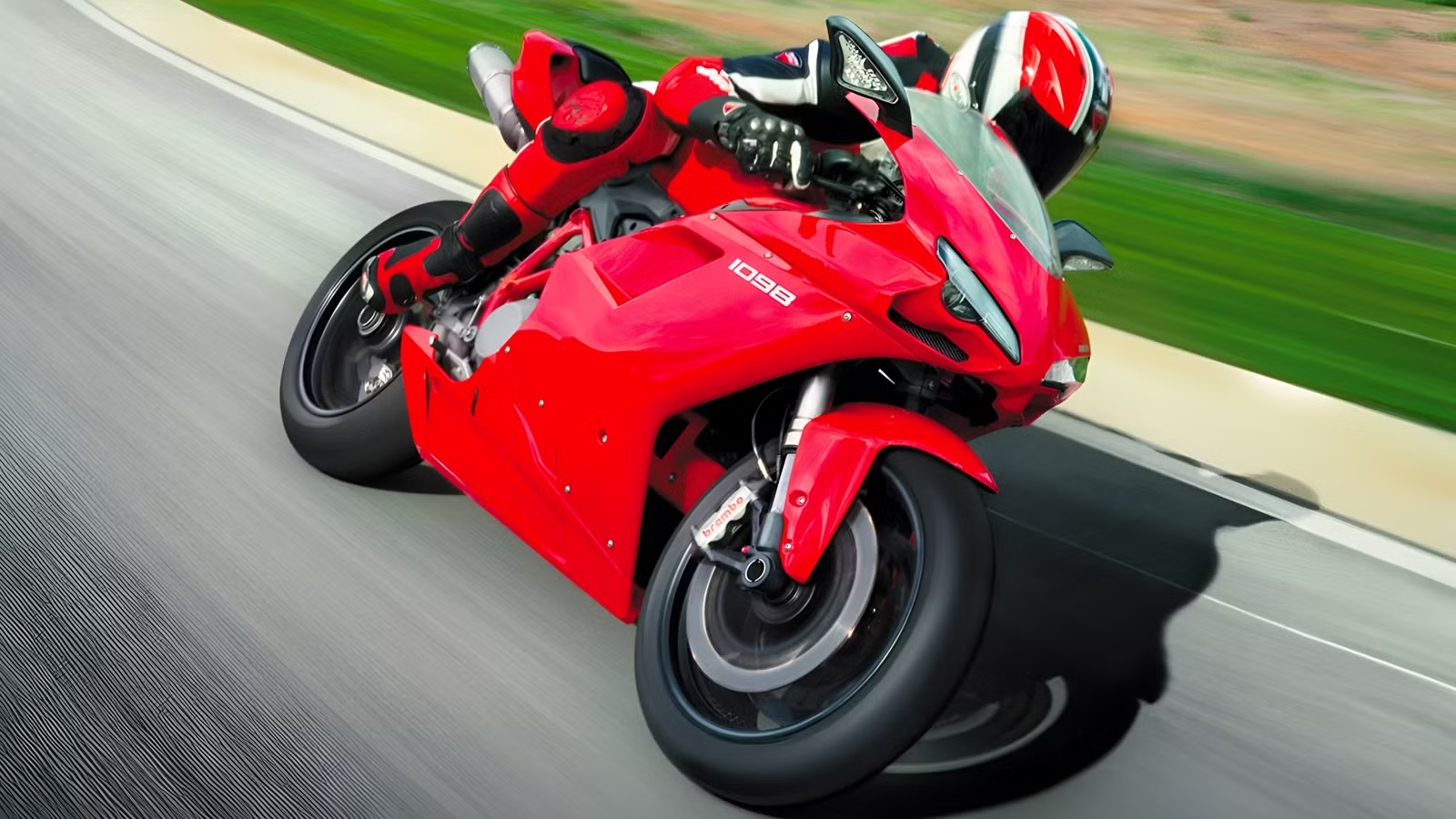
2008 Ducati 1098
Price Range: $6,000 – $8,000

When compared to all the inline-four superbikes, Ducati’s twin seemed down on power on paper, but races are rarely won on paper. The 1098 has a sublime chassis, and its superior torque delivery across the rev range made it just as quick, if not quicker, than any of its Japanese rivals. It is important to remember that this is still a Ducati built long before the brand got on top of its reliability issues. It will come with all the usual Italian “quirks” associated with these twins.
2
2012 Aprilia RSV4 R
Price Range: $6,000 – $8,000

All the way through the 00s, Aprilia served as the alternative choice. While down on power, their Rotax twins offered a different kind of character, but by the end of the decade, the brand made the bold decision to develop an all-new V4. While fantastically powerful, it was also fantastically unreliable. With some luck, the previous owners would have been able to get most of the issues sorted, but even so, this is a risky purchase by any measure.
1
2012 Kawasaki Ninja ZX-14R
Price Range: $6,000 – $8,000

It is pretty hard to believe that these bikes are now this affordable. By 2012, the “quarter mile king” (9.5 seconds straight from the factory) was very much the finished article, with over 200 horsepower on tap. Technically, you can still go out and buy a 2025 model for around $18k, but for a full $10k less, it is well worth considering a used option thanks to how reliable they are.
Source: KBB

Related posts




Latest Post


No Comments