
The 10 Biggest Adventure Bikes Ever Unleashed To The Market
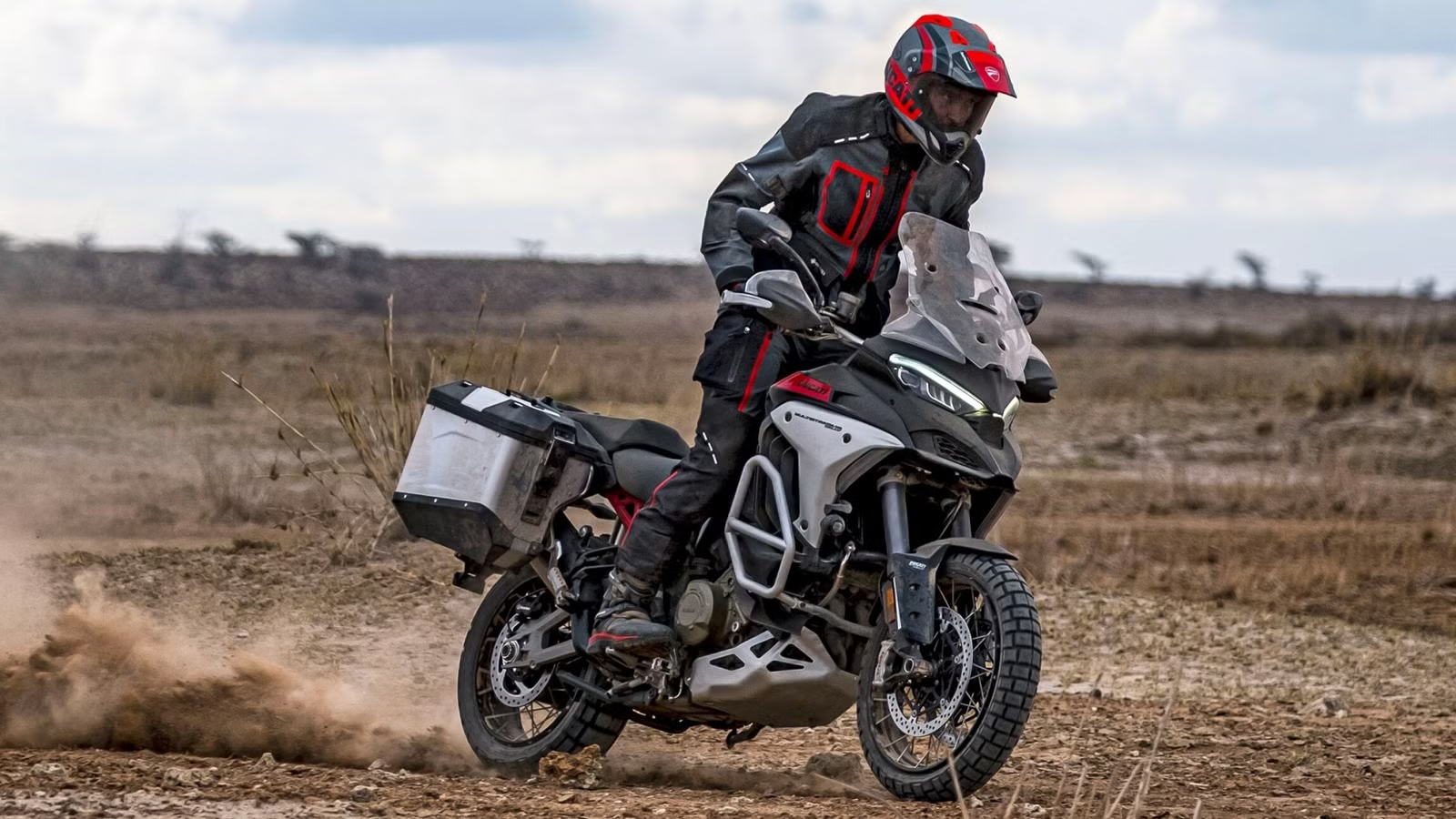
When you set out to conquer thousands of miles and rugged trails, engine displacement often becomes a great ally. That’s why, over the past decade, manufacturers have pushed hard to build larger, capable machines. As a result, these large-displacement rigs are built to haul riders, passengers, luggage, and enough fuel to disappear into nowhere for days at a time. With that in mind, here are ten of the biggest adventure motorcycles ever brought to market, ranked by engine displacement.
10
2026 KTM 1390 Super Adventure R
Engine Displacement: 1,350 cc

KTM takes the top spot with the 1390 Super Adventure R, built around a 1,350cc, 75-degree LC8 V-twin. The mill gets Camshift technology, offering two cam profiles to support stronger performance across the rev range. And with an output of 173 horsepower and 107 pound-feet of torque, it sits among the most powerful adventure bikes to rule the roads and trails alike.
Furthermore, its 6.1-gallon fuel tank and 547-pound fully fueled weight take care of stability and long-distance range. For rough terrain, the fully adjustable WP XPLOR suspension provides 9.4 inches of travel at both ends, along with 21/18-inch spoked wheels. You also get cornering ABS, adjustable traction control, five ride modes, cruise control, and an 8-inch touchscreen display.
9
2026 BMW R 1300 GS Adventure
Engine Displacement: 1,300 cc


BMW’s GS series has long been considered the benchmark, and the latest R 1300 GS brings a massive 1,300cc boxer twin to the top end of the segment. The boxer layout keeps the cylinders positioned horizontally, and BMW’s ShiftCam technology balances low-end with higher-rpm performance. Sure, its 145 horsepower and 110 pound-feet of torque might not be the strongest in the class, but you get meaty pulling power for real-world use.
Meanwhile, the 593-pound Adventure version brings a larger 7.9-gallon fuel tank, a stretched 60.4-inch wheelbase, upright ergonomics, and substantial wind protection. Then there is the state-of-the-art electronic Telelever suspension with the Dynamic Suspension Adjustment system. Elsewhere, a comprehensive electronics package with riding modes and cornering-focused safety systems completes the package.
8
2020 Ducati Multistrada 1260 Enduro
Engine Displacement: 1,262 cc

Before Ducati moved to V4 power, the Multistrada 1260 was the largest twin-cylinder adventure machine the brand ever produced. Its 1,262cc Testastretta DVT L-twin engine delivers 158 horsepower and 94 pound-feet of torque, serious muscle for long-distance adventures. More importantly, the Desmodromic Variable Timing system adjusts valve timing to support a broader spread of usable power.
In addition, the Enduro version adds a 7.9-gallon tank, semi-active Sachs electronic suspensions with 7.3 inches of travel, and 19/17 spoked wheels to handle rougher surfaces. Accordingly, the 560-pound curb weight ensures stability, while cornering ABS, traction control, multiple riding modes, and Ducati’s Vehicle Hold Control add useful assistance across changing conditions.
7
2026 Harley-Davidson Pan America 1250 Limited
Engine Displacement: 1,252 cc

Introduced in 2021, Harley-Davidson’s Pan America 1250 has been around for some time, and it packs a 1,252 cc Revolution Max liquid-cooled 60-degree V-twin. You get 150 horsepower and 94 pound-feet of torque to easily climb up steep highway grades and tackle trails. Plus, a 5.6-gallon fuel tank with a claimed 46 mpg efficiency gives you a long range before fuel stops.
The Limited version comes fully equipped from the factory with aluminum luggage, tubeless-laced wheels, a skid plate, auxiliary lighting, and a 6.8-inch touchscreen TFT. On top of that, its semi-active suspension adjusts damping electronically, while Adaptive Ride Height lowers the motorcycle when you come to a stop. And Harley-Davidson’s Cornering Rider Safety Enhancement Suite covers safety on open roads.
6
2021 Honda VFR1200X Crosstourer
Engine Displacement: 1,237 cc

Next up is Honda’s VFR1200X Crosstourer powered by a liquid-cooled 1,237 cc 76-degree V4 engine derived from the VFR1200 sport tourer. This four-cylinder engine makes 127 horsepower and 93 pound-feet of torque, giving smooth performance for high-speed mile munching. In addition to a six-speed manual gearbox, it was one of the first flagships offered with Honda’s Dual Clutch Transmission (DCT), allowing fully automatic shifting.
Furthermore, the Crosstourer’s touring hardware includes a maintenance-free shaft final drive, a 5.7-gallon fuel tank, a 33.5-inch seat height, and a 19/17-inch tubeless spoked wheel setup. Its 43mm front fork and Pro-Link rear suspension provide adjustment for different riding conditions, while combined ABS supports controlled braking. Meanwhile, the wet weight sits at 606 pounds, giving that planted feel.
5
2024 Yamaha Super Ténéré ES
Engine Displacement: 1,199 cc

Although Yamaha discontinued the Super Ténéré ES in 2024, it is still a significant example of the large-capacity parallel-twin formula. Its 1,199cc liquid-cooled twin-cylinder engine uses a 270-degree crankshaft and churns out 110 horsepower and 86 pound-feet of torque. While not the most powerful bike in the class, it offered excellent touring manners and proven durability.
Meanwhile, the ES version came with a 6.1-gallon tank and an electronically adjustable suspension setup. Its 43mm inverted fork and rear monoshock both offer 7.5 inches of travel. Yamaha also provides ABS and a Unified Braking System, along with selectable throttle response through its D-Mode system. Cruise control and a four-position windshield add touring convenience.
4
2027 Triumph Tiger 1200 Rally Explorer
Engine Displacement: 1,160 cc

In the full-size segment, Triumph’s Tiger 1200 series is famous for its raw T-plane inline triple performance. Powered by a liquid-cooled 1,160cc three-cylinder motor, it delivers 156 horsepower and 96 pound-feet of torque. As such, you get a strong low-RPM pull on technical trails alongside top-end rush on open highways. A shaft drive and a six-speed gearbox with a quickshifter round out the drivetrain.
Because this is the Rally Explorer version, it rolls on 19-inch front and 17-inch rear spoked wheels and gets a bigger 7.9-gallon tank. Moreover, the semi-active Showa suspension adjusts damping electronically and also includes automatic ride-height adjustment. As standard, you also get front- and rear-facing radar-based rider aids, a 7-inch TFT display, cornering ABS, traction control, and multiple riding modes.
3
2026 Ducati Multistrada V4 Rally
Engine Displacement: 1,158cc

Though slightly smaller in displacement than the 1260, the current Multistrada V4 delivers more peak horsepower. Its 1,158 cc 90-degree Granturismo V4 engine belts out 170 horsepower and 91 pound-feet of torque, helping you blast through miles at superbike pace. Ducati also gave the engine a cylinder-deactivation system that shuts the rear cylinder bank at stops or slower speeds to reduce fuel consumption and heat.
The hardcore Rally version brings a bigger 7.9-gallon fuel tank and a unique aluminum monocoque chassis built for globe-trotting. It tips the scale at 529 pounds wet and comes with semi-active Skyhook EVO suspension providing 7.9-inch travel while managed in real time. As a flagship, its features are top-tier, including radar cruise control, blind‑spot detection, forward collision warning, cornering ABS, a clear 6.5-inch TFT display, and multiple ride modes.
2
2016 Moto Guzzi Stelvio 1200 NTX
Engine Displacement: 1,151cc

Among the long lineup of Moto Guzzi models, the Stelvio 1200 came with a larger 1,151cc, 90-degree V-twin, mounted transversely. However, this air-cooled engine produced 105 horsepower and 83 pound-feet of torque. But it delivered a strong low- and midrange grunt useful for touring with a full load of luggage.
Weighing nearly 600 pounds wet, the NTX version came factory-outfitted with a ginormous 8.45-gallon fuel tank (largest here) for serious overlanding. It also offered aluminum panniers, engine crash guards, handguards, and auxiliary fog lights for long-haul. Meanwhile, a fully adjustable suspension setup with wire-spoke wheels front and rear completed the package.
1
2026 Honda Africa Twin Adventure Sports ES
Engine Displacement: 1,084cc

Finally, the Africa Twin closes the list with a 1,084cc parallel twin engine known for bulletproof mechanical reliability. It uses Honda’s compact Unicam valve arrangement and a 270-degree crank, and generates 101 horsepower and 82 pound-feet of torque. You can also choose between a six‑speed manual and DCT automatic transmission, both of which deliver smooth power for real-world riding. However, Honda has unveiled the 2027 models with a bigger 1131 cc engine.
Additionally, the Adventure Sports ES brings a larger 6.6-gallon tank and has a curb weight of just 535 pounds (559 pounds for DCT trim) for liter-class ADV. Its premium electronically controlled Showa EERA suspension adjusts damping automatically, with 8.3 inches of front travel and 7.9 inches at the rear. Cornering ABS, riding modes, traction control, cruise control, and a 6.5-inch TFT display provide additional support when the pavement ends.
Sources: KTM USA, BMW, Ducati, Harley-Davidson, Powersports Honda, and Yamaha

Related posts
Latest Post


No Comments