
Stark Future Is Still Profitable While Most EV Motorcycle Startups Are Burning Cash — Here’s What That Means for Buyers
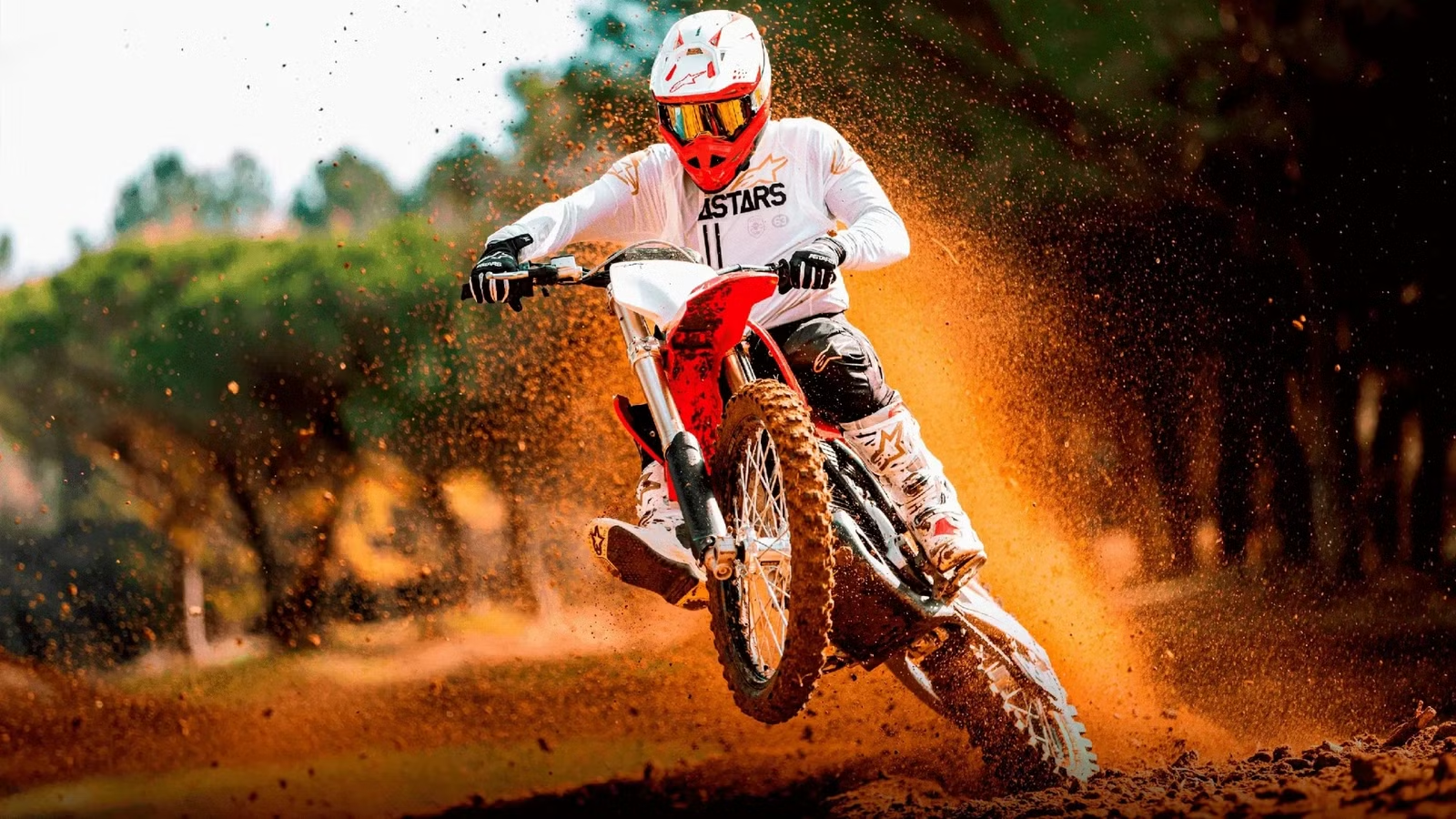
Stark Future just reported €86 million in revenue for the first half of 2026 — up 46% year-over-year — and confirmed it was both EBITDA- and EBIT-positive for the period. EBITDA hit €5.3 million on a 6.1% margin, a swing of roughly €7 million from a €1.7 million loss in the same period last year. The Barcelona-based company delivered 8,124 motorcycles in six months, 45% more than a year earlier, with Q2 setting new records for monthly revenue, dealer sell-out volume, and factory output.

For anyone shopping an electric motorcycle right now, those numbers matter beyond the balance sheet. In a segment littered with well-funded startups that have spent years burning investor cash without turning a profit, Stark’s sustained profitability is a direct signal about parts availability, warranty support, and whether the brand will still be around when your bike needs a software update in 2030.
Why Stark Succeeded Where LiveWire, Zero, and Damon Have Struggled
The short answer is focus. Stark builds one product — the VARG electric enduro platform — for one segment: off-road riding. That discipline kept development costs manageable, allowed manufacturing to scale efficiently, and let the company price the bike for real demand rather than aspirational positioning.

The contrast with competitors is stark. LiveWire, backed by Harley-Davidson and nearly a decade into production, has yet to turn a profit despite significant R&D spend across multiple road-going models. Zero spent more than a decade building a full lineup of street EVs and is now pivoting heavily toward dirt-bike platforms with its new XE and XB models. Damon, meanwhile, spread itself across multiple product directions and ran into structural problems that had little to do with range or technology.
CEO and founder Anton Wass put it plainly in the earnings release: “We set a plan, and we exceeded it. Reaching EBIT-positive while still investing heavily in new technology is the part that matters. It shows the growth is funded by a strong underlying profitability, real demand and disciplined execution, not by burning cash.”
That last phrase — not by burning cash — is the key differentiator. Gross margin improved 9.3 percentage points year-over-year to 39.6%, and per-unit production costs fell as volumes scaled. Spare parts revenue more than tripled year-over-year, a sign the company’s ecosystem is maturing, not just its sales numbers.
The 60-Mile Range Limitation That Actually Works in Stark’s Favor

Range anxiety is the defining problem for road-going electric motorcycles. A street bike needs to cover commutes, touring legs, and highway stretches — and there simply isn’t room on a motorcycle frame to hide the battery capacity required to do all of that comfortably. That constraint has hampered LiveWire, Energica, and others trying to compete with gas-powered street bikes on real-world usability.
Off-road riding sidesteps the problem almost entirely. A typical enduro session, trail ride, or motocross day runs well within 60 miles of actual riding. Riders return to a truck or a base camp between sessions anyway. The range limitation that kills an on-road EV is essentially invisible in the dirt. Stark built a product around a segment where the technology’s biggest weakness simply doesn’t apply — and priced it to match what off-road riders were already spending on premium competition bikes.
The result is a machine that competes on its genuine strengths: near-silent operation, instant torque delivery, and dramatically lower maintenance compared to a two-stroke or four-stroke competitor. Stark even claims the VARG is the best-selling enduro motorcycle in the world, outpacing combustion rivals in its class.
What Profitability Actually Means If You Own or Are Buying a Stark
The EV startup graveyard is full of brands that left owners stranded — no replacement parts, no software support, no warranty claims honored because the company no longer exists. Profitability is the most direct hedge against that outcome.
Stark’s spare parts revenue more than tripling year-over-year is a concrete sign the supply chain is being invested in, not wound down. The appointment of a new CFO with Tier-1 automotive experience, combined with active financing discussions for the next phase of expansion, suggests the company is building institutional infrastructure rather than coasting on early sales momentum.
The broader competitive picture reinforces Stark’s position. SurRon, Talaria, Niu, and others have shifted focus toward the off-road segment, validating the market Stark helped create. LiveWire’s acquisition of Dust Moto signals that even Harley-Davidson now sees dirt as the viable path for EV two-wheelers. Zero’s pivot toward the XE and XB platforms points the same direction. More competition generally means more pressure on Stark to keep executing — but it also confirms the segment isn’t a niche experiment.
For buyers weighing a Stark against a gas-powered enduro bike or a competing EV, the H1 2026 numbers offer something most EV motorcycle brands can’t: evidence that the company will likely still be operating in five to ten years, with dealer networks intact and parts on the shelf.
Profitability isn’t glamorous, but in the EV motorcycle space it’s genuinely rare — and for buyers, it’s arguably the most important spec on the sheet. Stark Future has built a business around doing one thing well, and the financials show it. That’s worth factoring into any purchase decision.

Related posts




Latest Post


No Comments