
The Signs You’re Ready To Move Up To A Bigger Motorcycle
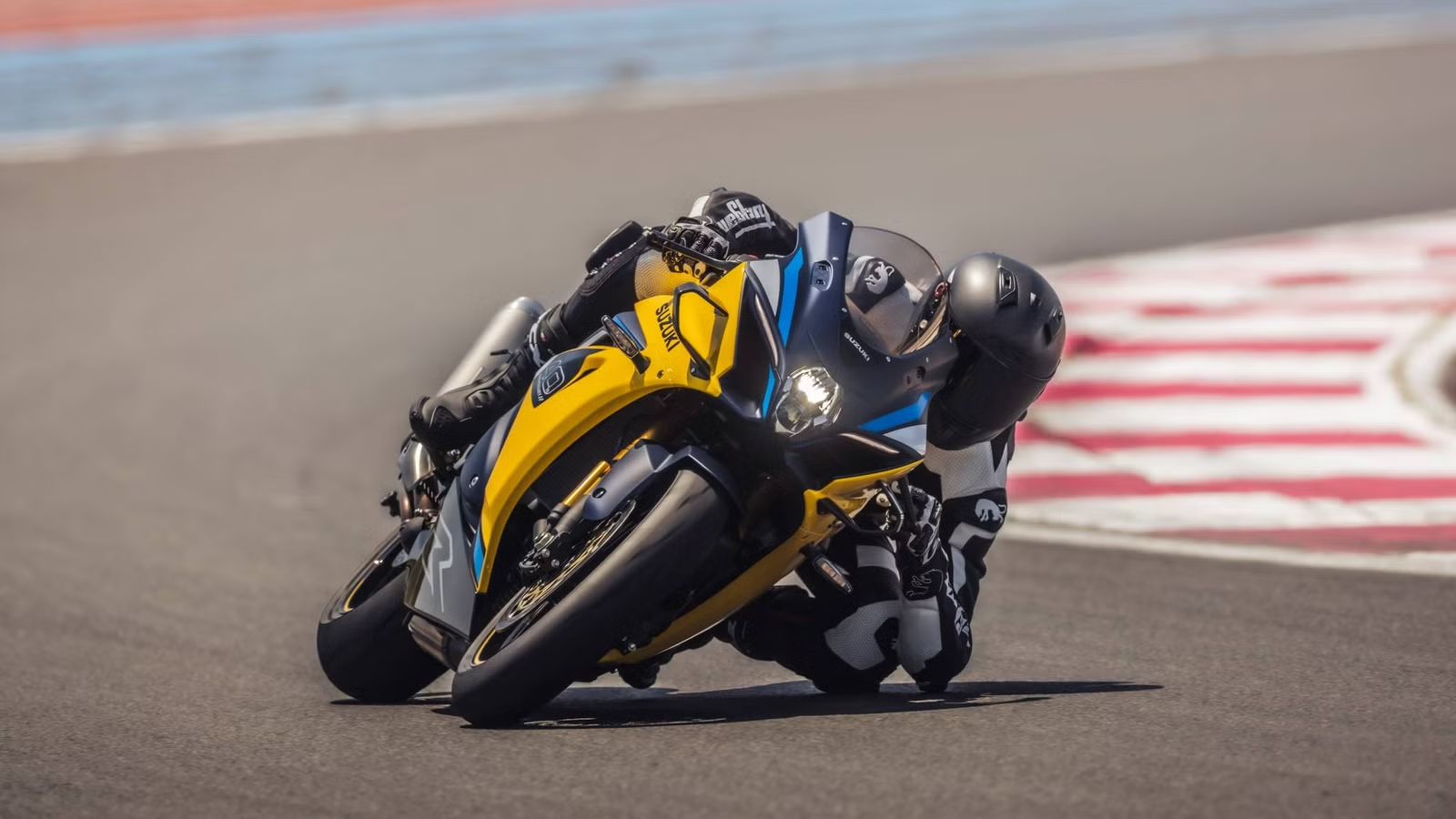
Bringing home your first motorcycle is equal parts excitement and apprehension. Will it live up to expectations? Will those dreams of long rides and track days ever materialize? The first few miles answer some questions, while the next few thousand teach you what kind of rider you want to become. As braking, cornering, and throttle control become second nature, you begin noticing the motorcycle’s limitations. But have you actually outgrown the bike, or simply grown accustomed to it? Before chasing more power, consider these signs that you’re genuinely ready to move up.
You’ve Mastered The Basics Without Getting Complacent

Years in the saddle aren’t necessarily a measure of skill. Repeating the same commute builds familiarity, but doesn’t always prepare you for unexpected changes in traffic or road conditions. How consistently you control the motorcycle when things don’t go as planned says more about your readiness for an upgrade than the miles you’ve accumulated.
Slow-Speed Maneuvers Feel Like Second Nature
There’s truth to the saying that riding faster begins with mastering the art of riding slowly. The Motorcycle Safety Foundation emphasizes tight U-turns, controlled stops, and balancing a motorcycle at a walking pace for good reason. Revisit these exercises in an empty parking lot. Can you perform them without rushing, fighting the handlebars, or unnecessarily putting a foot down? These skills become even more important on a taller or heavier motorcycle, where a momentary loss of balance can be harder to recover from.
Your Responses Are More Deliberate

When a corner tightens unexpectedly, can you adjust your steering, lean angle, throttle, and braking without panicking? Recognizing a misjudgment and responding appropriately demonstrates greater control than simply being comfortable riding fast. In “A Twist of the Wrist II,” riding coach Keith Code discusses instinctive “survival reactions,” including target fixation, stiff arms, and freezing on the controls. Such reactions can interfere with steering and upset the motorcycle’s stability. Learning to recognize and overcome them is a good sign of progress in riding techniques.

Your Current Motorcycle Is Starting To Limit Your Riding

There comes a point when you’ve logged enough miles and developed the basic skills to a degree where it’s easier to recognize your motorcycle’s limitations. One type of motorcycle might still do everything it was designed to do, but just not everything you’re now asking of it. The clearest reasons to upgrade generally emerge during ordinary rides.
Highway Riding Takes Too Much Effort
Smaller motorcycles can handle highway travel, but some leave little acceleration in reserve once you’re cruising. If merging, climbing grades, and overtaking regularly require downshifts and careful timing, more midrange torque can make those journeys less demanding. Although extra power never replaces the rider’s judgment, we’re assuming you’re already aware of that.
Your Trips Now Demand More Comfort Or Carrying Capacity

A motorcycle that feels perfectly comfortable on a short commute can become tiresome over a full day. Wind exposure, cramped legroom, and limited luggage options start to matter when weekend rides turn into touring trips. Taking a passenger or packing equipment increases the demands on a bike. However, check the rated load capacity before blaming the engine. Sometimes the upgrade you need is better ergonomics or luggage accommodation, not another 50 horsepower.
You Know What You Want From Your Next Motorcycle

Most first-bike decisions involve some guesswork or a generalized requirement, maybe even peer pressure to ride with your buds. After spending time on the road, however, you have a clearer understanding of which compromises are acceptable and which ones spoil a ride. That knowledge should influence your next purchase more than the badge or displacement.
Your Preferences Are Based On The Roads You Ride
If weekends mean winding back roads, predictable steering and manageable weight may matter more than outright power. A regular commuter might prioritize easy clutch effort and low-speed response, while a long-distance rider starts appreciating a relaxed seating position and stability. Experience can even change the category you want. A middleweight adventure bike might be a more useful replacement for a small sport bike than a more powerful supersport.
You’re Not Trying To Match Someone Else’s Motorcycle

It’s easy to feel underpowered when everyone in your group rides a liter-class bike. And YouTube doesn’t help matters either, as 0-60 videos can make your perfectly capable 400cc motorcycle suddenly seem ordinary. But what suits a friend’s weekend blasts might make your daily commute miserable. If you can’t identify a practical weakness in your current motorcycle, try exploring different roads or taking an advanced riding course. There may be considerably more to learn before the bike itself becomes a limitation.
You Can Handle A Bigger Motorcycle’s Behavior

Higher engine displacement and resulting increase in power is only part of the adjustment. A taller seat, wider tank, different center of gravity, or altered steering geometry can make a motorcycle feel vastly unfamiliar. Your next bike should challenge you reasonably, but not make basic handling stressful again. There’s also the question of how much additional performance you genuinely need, and whether the compromises that come with it are worth accepting.
Kawasaki’s 2026 Ninja 500 ABS weighs 377.1 pounds, compared with 425.6 pounds for the Ninja 650 ABS. Those extra 48.5 pounds may be most noticeable at a slower pace. And the figures never tell the entire story. A wider seat or higher center of gravity can also influence your confidence. Sit on the prospective replacement, reach its controls, and try maneuvering it without putting your foot down or even paddling it around with the ignition off. It’s a simple exercise that can reveal whether you’re comfortable managing the additional weight.
The Performance Increase Has A Purpose

Moving from the 451cc Ninja 500 to the 649cc Ninja 650 brings stronger midrange performance without substantially changing the familiar, road-friendly sport-bike experience. Jumping straight to the 998cc Ninja ZX-10R, however, introduces a 190-horsepower inline-four, more aggressive ergonomics, and track-focused hardware. That’s an entirely different proposition, even though all three motorcycles wear the Ninja badge. More power requires greater discipline with throttle inputs, while a track-focused motorcycle introduces compromises that might be unnecessary for everyday riding. The progression should suit both your current abilities and the type of riding skills you want to develop.
You’re Choosing An Upgrade You Can Live With

The excitement of a new motorcycle can make it easy to overlook the practicalities of ownership. Consider how often you’ll actually ride it, and whether it suits your everyday routine as well as those occasional weekend adventures. A motorcycle that’s thrilling on an open road might prove frustrating in daily traffic, while a dedicated tourer could be excessive for occasional short rides. Your upgrade should remain enjoyable long after the novelty wears off, without introducing inconveniences that make you miss your old bike.
You Can Afford The Motorcycle After Buying It
Get an insurance quote for the exact model before placing a deposit. Scour forums and compare scheduled maintenance intervals and their associated costs. Does your new ride have unique tire choices? Factor in their costs and availability. Also, include the gas mileage and any luggage or protective equipment you’ll need with this new bike. Purchasing a bigger motorcycle is only the first expense, and running costs can change substantially between categories.
Source: Various Manufacturers

Related posts


Latest Post


No Comments