
Range Rover goes electric: £154k, 372 miles of range and 2885kg
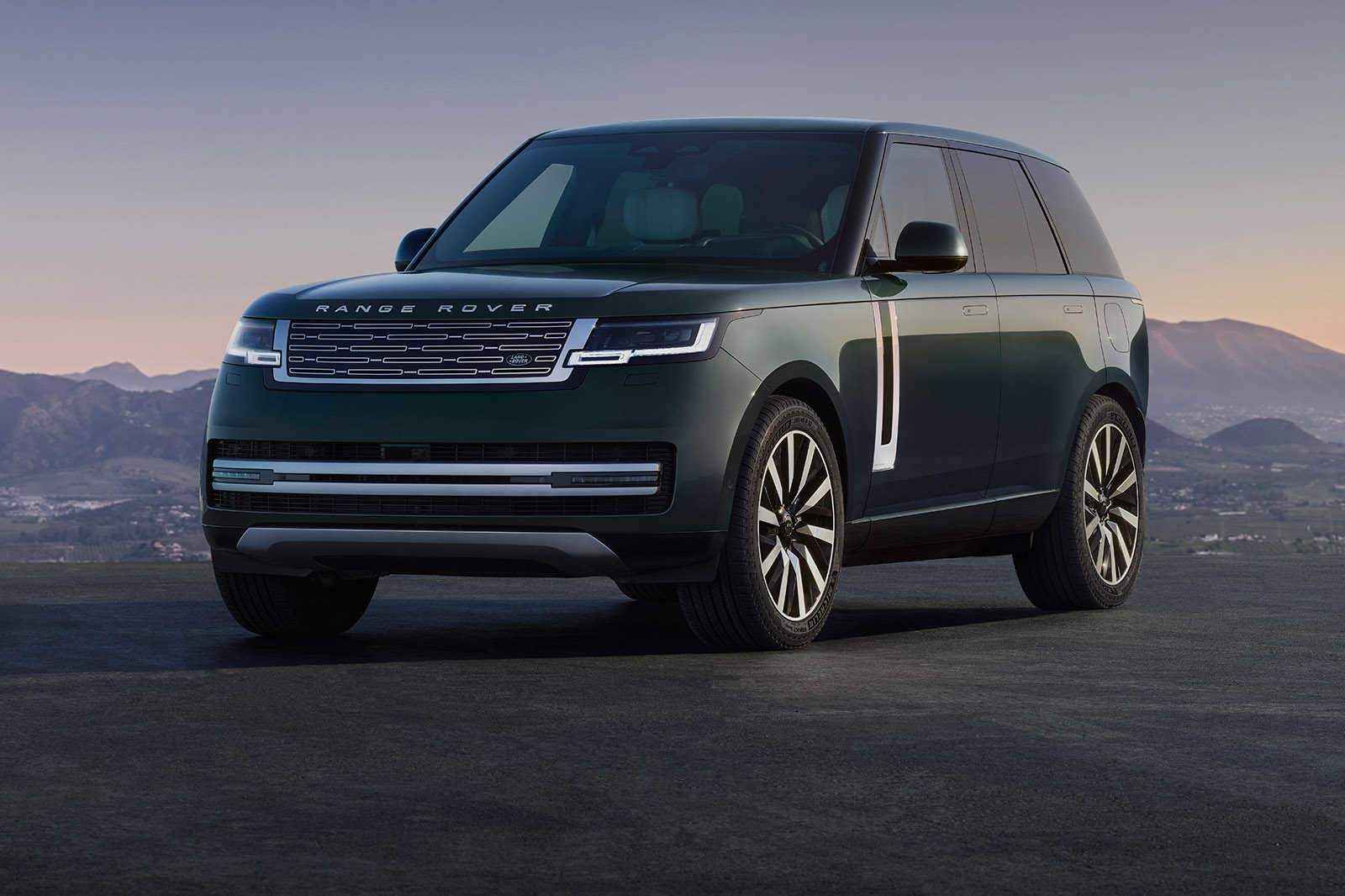
The Range Rover Electric weighs 75kg more than the PHEV, so it will come in at around 2885kg. It has an 88mm-lower centre of gravity than the V8 model, however, and gains twin-valve dampers from the Range Rover Sport SV while retaining two-chamber air springs with adjustable ride height, and the same 7.3deg of rear-steer, to help counter its girth and mass.
The on-road driving experience is meant to be as close as possible to that of the ICE car. The Range Rover Electric sits a little lower to the ground than its sibling, with a 15mm-lower ride height and 29mm-lower ground clearance, but the ride height remains adjustable and the 900mm wading depth is ostensibly unchanged from the ICE car.

The battery pack and drive elements are fully sealed at low level, but there are some high-mounted breathers that allow cooling while fording. But as with the ICE car, it’s the vehicle’s initial propensity to float and lose traction that ultimately limits its wading depth, rather than water ingress.
Extra weight and a small reduction in breakover angle aside, electric power brings some advantages off road. There is never a need to stop and engage low- or high-ratio gearsets and throttle response is, according to senior technical specialist Jason Walters, “a lot more forgiving”. He added that the quick response and controllability of an electric motor makes an EV “phenomenal” on sand.
Range Rover investigated a four-motor set-up like that of the electric Mercedes-Benz G-Class but said it brings weight penalties and the disadvantage that a single wheel can only receive as much power as one motor. Even though the Range Rover Electric’s differentials are open, once a spinning wheel is stopped via braking, a wheel with grip can receive an entire axle’s power output.
Development of the electric motors was one of the more problematic areas. Initially JLR wanted to use an induction motor on the front axle, which would “do what we want, but it wasn’t consistent”, according to Fairbrother. In extreme off-road conditions it would overheat and fail to produce its full power.

Related posts


Latest Post


No Comments